
When it comes to walking vs running for weight loss, one of the most common questions is which one is more effective for burning fat. Both are cardiovascular exercises that burn calories, but each works through a different mechanism, affecting fat loss, muscle preservation, and overall health in unique ways. In this walking vs running for weight loss guide, we’ll break down a detailed comparison so you can choose the right option for your fitness goals.
Fitness trends are evolving fast in 2026. Wearable devices, AI-based fitness trackers, and personalized coaching apps have made it easier than ever to figure out which activity works best for your body type. But the underlying science hasn’t changed — it still comes down to calories in versus calories out. Let’s dive deeper into the details.
Best Breakfast for Weight Loss and Fat Loss: 15 Healthy Indian Options (2026)
What Is Walking and How Does It Help With Weight Loss
Walking is a low-impact aerobic exercise that people of almost any age can perform. It places minimal stress on the joints, making it an ideal option for beginners, senior citizens, and anyone recovering from an injury.
When you walk, your body primarily relies on fat as fuel because the intensity is relatively low. On average, a person can burn around 150-200 calories during a 30-minute brisk walk, depending on body weight and walking speed.
Benefits of walking:
- Puts less pressure on joints
- Very low risk of injury
- Can be done daily without much recovery time needed
- Sustainable long-term for beginners
- Also improves stress levels and mental health
Walking is an activity you can easily fit into your daily routine — while commuting, during a lunch break, or after dinner. This consistency is the real key to long-term weight loss success.
Healthy Foods for Weight Loss (2026) – Top 25 Foods That Help Burn Fat Naturally
What Is Running and How Does It Burn Fat
Running is a high-intensity cardiovascular exercise where the calorie burn rate is significantly higher than walking. When you run, your heart rate increases rapidly, and your body demands more oxygen and energy, which considerably boosts calorie expenditure.
On average, a person can burn 300-400 calories in just 30 minutes of running — almost double compared to walking. Running also creates what’s known as the “afterburn effect,” or EPOC (Excess Post-Exercise Oxygen Consumption), meaning your body continues burning extra calories for hours after your workout ends.
Benefits of running:
- Burns significantly more calories in less time
- Improves cardiovascular fitness quickly
- The EPOC effect boosts metabolism
- Improves both muscle tone and endurance
However, an important consideration with running is the higher impact it places on joints, especially the knees and ankles, which can increase injury risk for beginners or overweight individuals if proper technique and footwear aren’t used.
Walking for Weight Loss at Home (2026) – Simple Daily Plan for Beginners
Calorie Burn Comparison: The Numbers
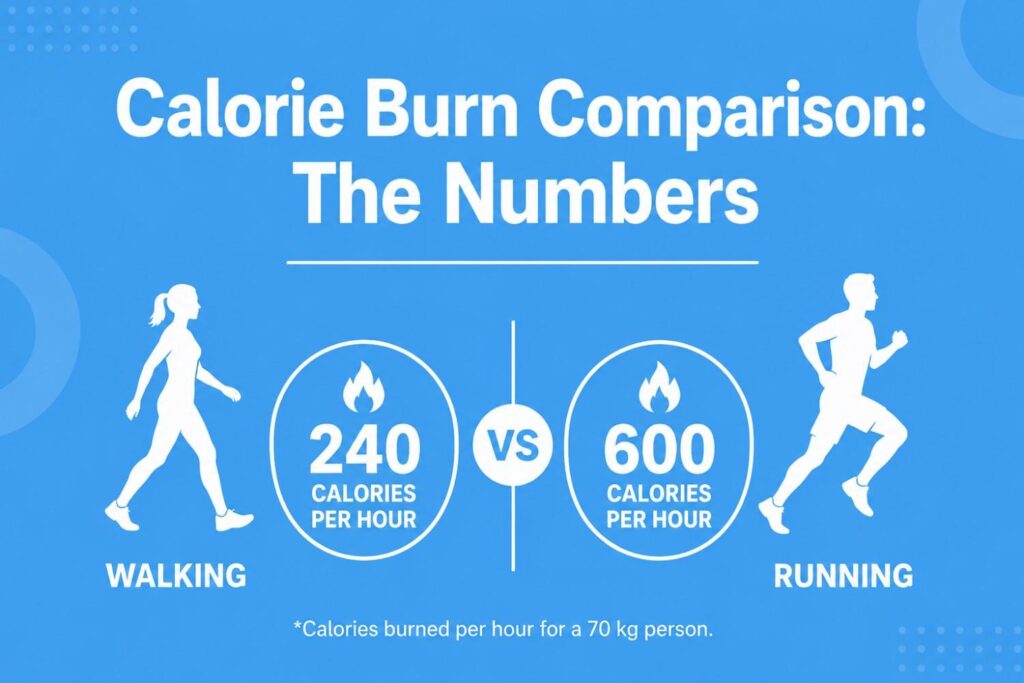
When comparing walking vs running for weight loss purely on calorie burn numbers, running clearly wins. But that’s not the complete picture. Calorie burn depends on several factors:
- Higher body weight means more calories burned
- Speed and intensity have a direct impact
- Duration — how long the activity is performed
- Terrain — flat surface versus incline or uphill
- Individual metabolic rate
A 70 kg person walking at 5 km/h for 30 minutes burns approximately 150-170 calories. The same person running at 8-10 km/h for 30 minutes can burn 300-350 calories.
This doesn’t mean running is always the better choice. If someone can walk for a longer duration consistently — say 60-90 minutes daily — their total calorie burn can match or even exceed that of running, without the added injury risk.
Lazy Girl Weight Loss Routine at Home for Beginners (2026)
Fat Loss Mechanism: How the Body Responds
Here’s an interesting scientific point many people overlook. During low-intensity exercises like walking, the body’s energy source is primarily fat (the fat oxidation zone). During high-intensity exercises like running, the body first taps into carbohydrates (glycogen), and fat’s percentage contribution is lower — but because total calorie burn is higher, the absolute amount of fat burned can still end up greater.
In simple terms:
- Walking: burns a higher percentage of fat, but fewer total calories
- Running: burns a lower percentage of fat, but more total calories, so net fat loss can still be higher
That’s why focusing solely on the fat-burning percentage of a single exercise isn’t the right approach for long-term weight loss — total calorie deficit is the most important factor overall.
Brown Bread Healthy For Weight Loss? Benefits, Calories & Best Brands
Walking vs Running for Weight Loss: Which One Is Better for You
Every individual has a different body, fitness level, and set of goals, so the answer to “which is best” in the walking vs running for weight loss debate can vary from person to person.
For beginners and overweight individuals: Starting with walking is safer and more sustainable. Since it places less stress on the joints, maintaining consistency becomes easier — and consistency is the most crucial factor in any weight loss journey.
For intermediate to advanced fitness levels: Running can deliver faster results in less time, especially if the goal is rapid fat loss or improved cardiovascular endurance.
For people with joint issues or a history of injury: Walking or other low-impact alternatives like swimming and cycling are more suitable.
For those with limited time: Running is more efficient since it burns more calories in a shorter period.
Home Workout Plan for Weight loss female: The Complete Guide for Indian Women (2026)
Combination Approach: Best of Both Worlds
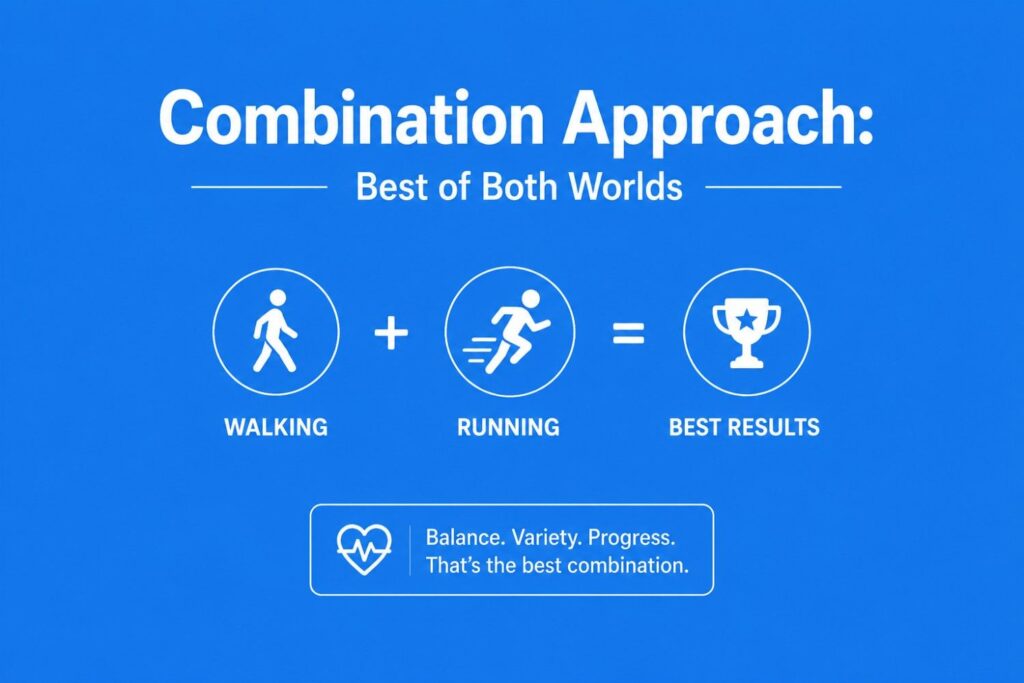
Fitness experts in 2026 are now recommending not relying on just one form of exercise. Combining walking and running — often called the “run-walk method” — can deliver the best overall results.
A simple structure could look like this:
- 5-10 minutes of walking as a warm-up
- Adding running intervals in between
- Walking again as a cool-down
This approach reduces injury risk, maximizes calorie burn, and offers beginners a gradual progression to slowly build up their running stamina.
Which Dry Fruit is Best For Weight Loss? (Complete 2026 Guide for India)
Diet Plays an Equally Important Role

Whether you walk or run, if your diet isn’t under control, weight loss results will be slow. The calorie deficit created through exercise can easily be offset if you consume more calories than you burn through food.
A balanced approach should include:
- Adequate protein intake to prevent muscle loss
- Limiting processed and high-sugar foods
- Staying properly hydrated, especially if running
- Prioritizing sleep and recovery
2026 Trends: Wearables and AI Tracking
Today’s smartwatches and fitness apps provide real-time data on calorie burn, heart rate zones, and fat oxidation. This allows people to personalize their walking or running sessions based on actual data rather than generic assumptions, making the weight loss journey more precise and motivating.
How to Build Muscle with a Busy Schedule: 30-Minute Routine for Beginners (2026)
Walking vs Running for Weight Loss: Final Verdict
If we’re talking purely about calories burned per minute, running comes out ahead of walking. But weight loss isn’t determined by a single workout session — it’s the result of consistency, sustainability, and overall lifestyle choices combined.
If you’re a beginner or concerned about your joints, start with walking and gradually increase intensity over time. If you’re already fit and want faster results, running may be the better option. The most effective strategy is often combining both, along with a healthy diet and proper recovery.
Remember — in the walking vs running for weight loss debate, the best exercise is the one you can do consistently. Whether it’s walking or running, if you follow it regularly while maintaining a calorie deficit, weight loss will follow.