
If you are trying to lose weight but do not have the time, money, or motivation to hit the gym every day, you are not alone. Millions of people around the world struggle with the same challenge — busy schedules, high gym costs, lack of energy after work, or simply not knowing where to begin. The good news is that walking for weight loss at home is one of the most effective, beginner-friendly fitness strategies you can start today — no equipment, no membership, no excuses.
Walking is not just a casual activity. It is a powerful, science-backed tool that has helped countless beginners shed unwanted weight, improve their energy levels, and build a sustainable healthy lifestyle — all without ever stepping foot in a gym. The best part is that you do not need a treadmill, a large open space, or any special gear to get started. Your home, exactly as it is right now, is the perfect place to begin.
This guide gives you a complete, practical daily walking plan designed specifically for beginners in 2026. Whether you live in a small apartment, have a backyard to use, or only have a hallway to work with, this plan is built for you. Every week is carefully structured so your body adapts naturally, your confidence grows, and your results become visible over time.
If you have tried and quit fitness routines before, this is different. Walking is gentle on your joints, easy to fit into any schedule, and simple enough that anyone — regardless of age, fitness level, or experience — can follow it from day one. All you need is the decision to start.
Why Walking Is the Most Underrated Weight Loss Tool
Before jumping into the plan, it is important to understand why walking works so well for weight loss — especially when done consistently at home.
Walking is a low-impact aerobic exercise that burns calories, improves metabolism, and reduces stress hormones like cortisol, which is directly linked to belly fat. Unlike intense workouts that can leave you injured or burned out, walking is sustainable. You can do it every single day without overtraining your body.
According to exercise science, a 30-minute brisk walk can burn between 150 to 200 calories depending on your body weight and speed. Over weeks and months, those numbers add up in a very meaningful way. More importantly, regular walking improves insulin sensitivity, which helps your body use stored fat as fuel rather than holding on to it.
The biggest mistake beginners make is thinking that weight loss requires intense, exhausting exercise. Walking for weight loss at home proves that slow and steady wins the race — and keeps the weight off long-term.
How to Stay Fit at Home Without Equipment: 15 Easy Tips for Beginners
What You Need Before You Start
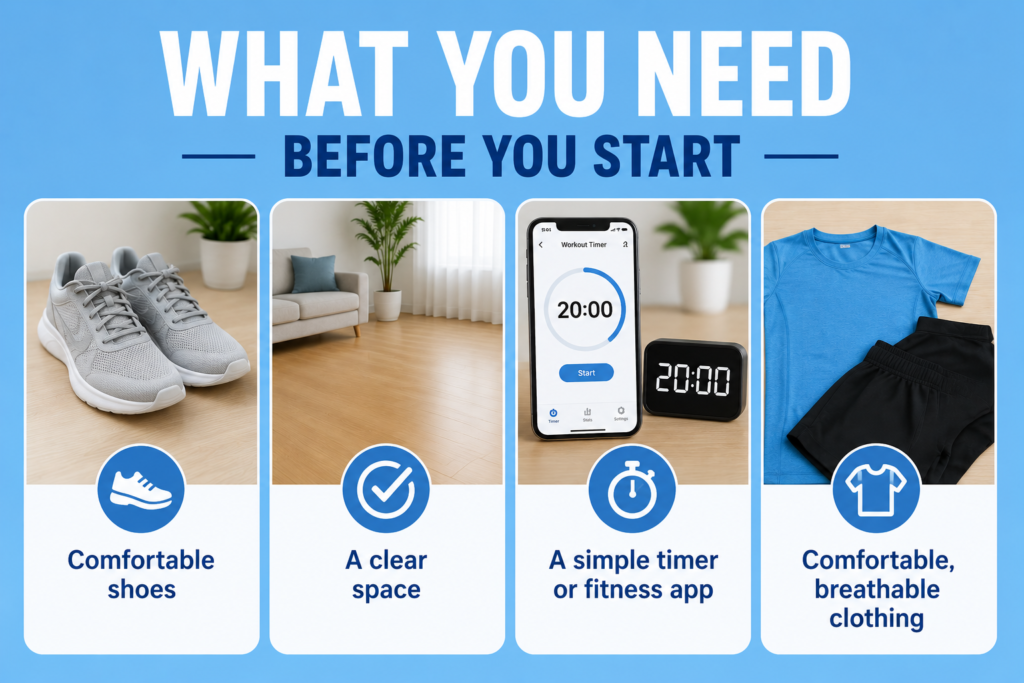
The beauty of home walking workouts is that you need almost nothing to begin. However, a few basics will make your experience safer and more effective.
Comfortable shoes are the most important investment. You do not need expensive running shoes, but you do need footwear with proper arch support to protect your knees and ankles during longer sessions.
A clear space of at least 10 to 15 feet works perfectly for indoor walking. You can walk laps around your living room, march in place, or use a staircase if you have one.
A simple timer or fitness app helps you track your progress. Many free apps like Google Fit or Apple Health count your steps automatically and can motivate you to hit daily goals.
Comfortable, breathable clothing allows your body to move freely and stay cool during longer sessions.
That is truly all you need to start your walking for weight loss at home journey.
Understanding Calorie Burn and Walking Intensity
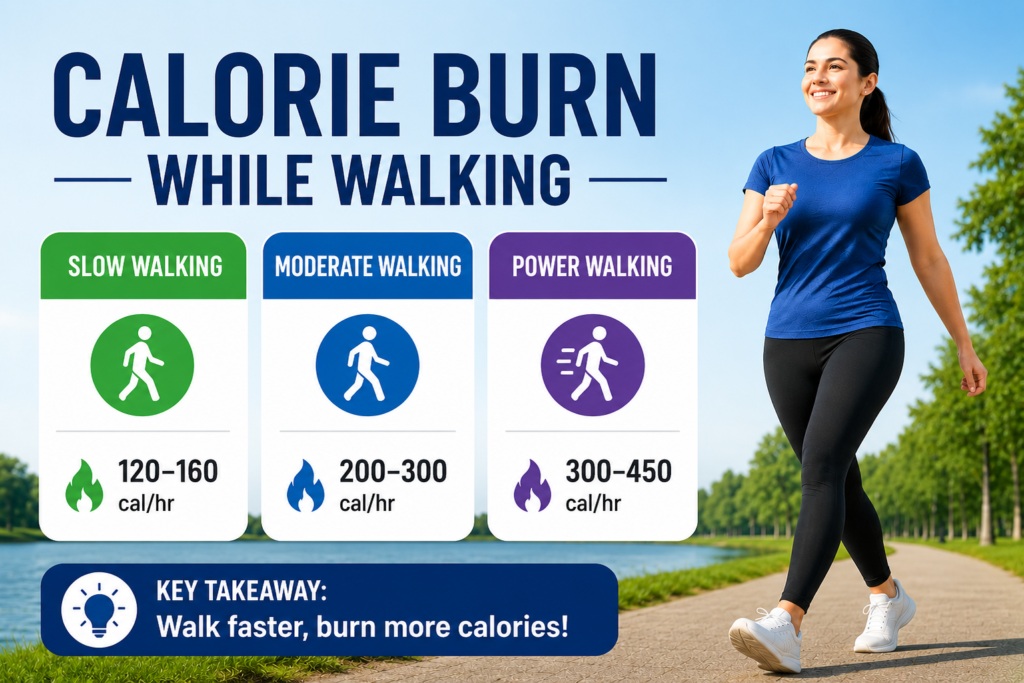
Not all walking is equal when it comes to weight loss. The intensity, duration, and consistency of your walks determine how many calories you burn each week.
There are three basic walking intensities to understand:
Slow walking (1.5–2 mph) is a comfortable stroll where you can easily hold a full conversation. This burns roughly 80–100 calories per 30 minutes and is perfect for warm-ups or recovery days.
Moderate walking (2.5–3.5 mph) is a purposeful, brisk pace where you can talk but feel slightly breathless. This is your primary weight loss zone and burns around 150–200 calories per 30 minutes.
Power walking (3.5–4.5 mph) involves a fast, energetic stride with active arm movement. This burns 200–280 calories per 30 minutes and is excellent for pushing past weight loss plateaus.
For beginners, starting at moderate walking and gradually progressing to power walking intervals is the smartest strategy. Doing too much too soon leads to soreness and quitting — which is exactly what we want to avoid.
30 Day Home Workout Challenge for Weight Loss – Complete Beginner Plan (2026)
The Simple Daily Walking Plan for Beginners (Week by Week)
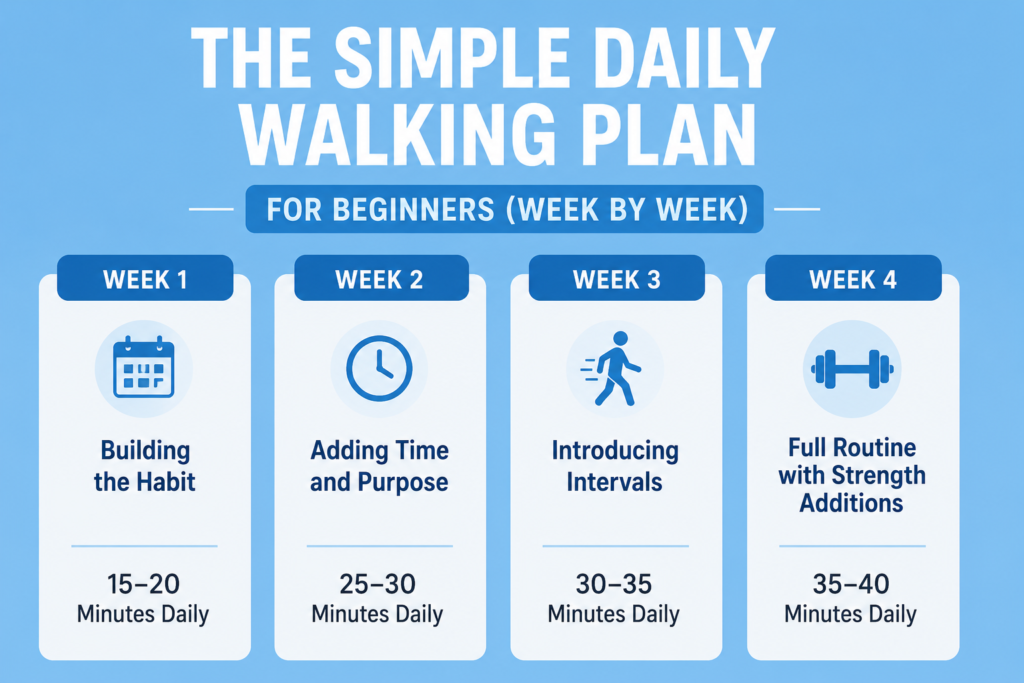
This 4-week progressive plan is designed so that any beginner can follow it comfortably. Each week builds on the last, so your body adapts without getting overwhelmed.
Week 1 — Building the Habit (15–20 Minutes Daily)
The goal this week is not intensity. It is consistency. Walk for 15 to 20 minutes every day at a comfortable, moderate pace. Focus on just showing up and moving your body.
If walking indoors, you can march in place, walk laps around a room, or step side to side in a rhythmic pattern. Keep your back straight, engage your core lightly, and swing your arms naturally.
Do this every day for 7 days. Rest one day if you feel significant fatigue, but try to keep rest days to a minimum in week one because building the habit is everything.
Week 2 — Adding Time and Purpose (25–30 Minutes Daily)
In week two, increase your daily walk to 25–30 minutes. You should still feel comfortable, but try to pick up the pace slightly — aim for brisk rather than casual.
Add one “challenge minute” every 10 minutes where you power walk or march in place at a higher intensity for 60 seconds before returning to your normal pace. This small burst of effort raises your heart rate, boosts calorie burn, and starts training your cardiovascular system.
Week 3 — Introducing Intervals (30–35 Minutes Daily)
By week three, your body is ready for more structured effort. Introduce a simple interval pattern into your daily walk.
Walk at a moderate pace for 3 minutes, then increase to a brisk power walk for 2 minutes. Repeat this cycle throughout your 30–35 minute session. This interval approach is proven to burn significantly more fat than steady-state walking alone because it keeps your metabolism elevated even after the workout ends.
Week 4 — Full Routine with Strength Additions (35–40 Minutes Daily)
In week four, extend your sessions to 35–40 minutes and add brief bodyweight strength moments. Every 10 minutes, pause for 30 seconds of squats, standing calf raises, or marching knee raises. These movements recruit additional muscles, raise your heart rate, and increase the overall calorie-burning effect of your session.
By the end of week four, you will have built a genuine daily fitness habit that your body and mind crave.
How to Make Indoor Walking More Effective
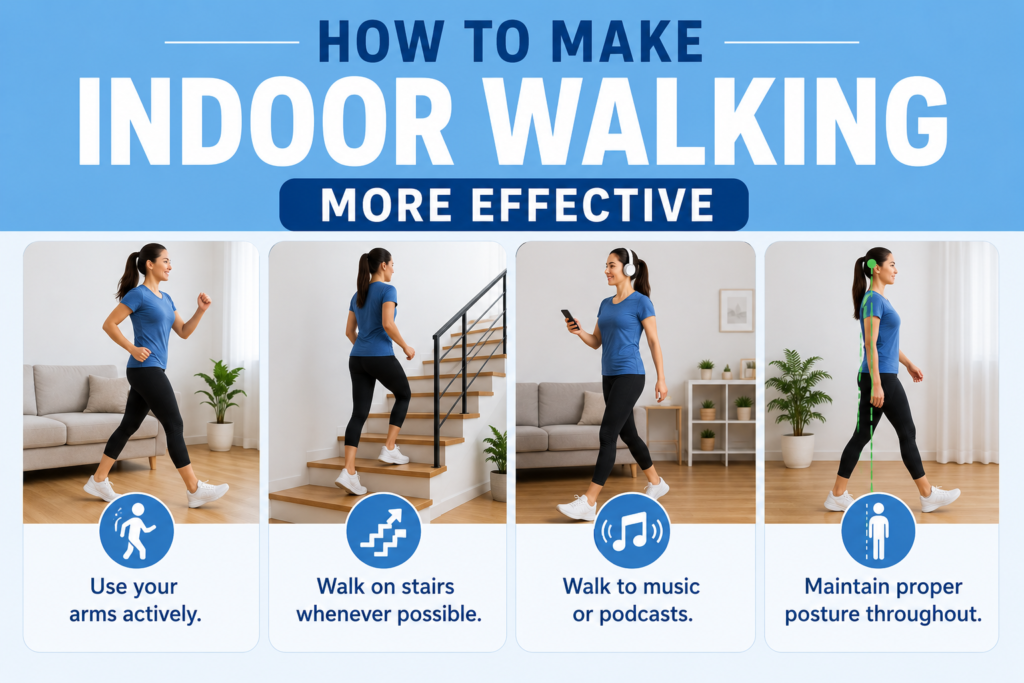
When you are doing walking for weight loss at home, a few simple strategies can dramatically increase the results you see.
Use your arms actively. Most beginners swing their arms loosely or barely at all. Bending your elbows at 90 degrees and pumping them forward and back in rhythm with your steps can increase calorie burn by up to 10 percent and naturally encourages a faster, more powerful stride.
Walk on stairs whenever possible. If your home has a staircase, incorporating stair climbing into your routine can nearly double the calorie burn compared to flat walking. Even walking up and down one flight several times during your session makes a significant difference.
Walk to music or podcasts. Research consistently shows that people who walk to upbeat music walk faster, stay motivated longer, and enjoy the experience more. Create a playlist of songs with a tempo between 120–140 BPM for the best results.
Maintain proper posture throughout. Keep your chin parallel to the floor, shoulders relaxed and back, core gently engaged, and land each step on your heel rolling through to your toes. Good posture protects your joints and makes walking more efficient.
Stay hydrated. Even light exercise causes you to lose fluids. Drink a glass of water before your walk and keep water nearby during longer sessions. Dehydration reduces your energy and makes fat-burning less efficient.
Best Foods for Muscle Gain and Faster Recovery in 2026: Complete Nutrition Guide
The Role of Diet Alongside Your Walking Plan
Walking for weight loss at home works best when paired with a sensible eating approach. You do not need to follow a strict diet, but a few nutritional habits will accelerate your results significantly.
Eating enough protein — around 0.7 to 1 gram per pound of body weight — is essential because it preserves muscle mass while you lose fat. Good sources include eggs, chicken, lentils, yogurt, and paneer if you follow an Indian diet.
Reducing refined carbohydrates like white bread, sugary snacks, and packaged foods helps control your insulin levels, which directly supports fat loss. Replacing these with whole grains, vegetables, and fruits keeps you full without excessive calories.
Eating your largest meal earlier in the day and having a lighter dinner aligns with your body’s natural metabolic rhythms and supports better sleep-related fat burning.
You do not need to count calories obsessively. Focus on eating whole, minimally processed foods most of the time and walking consistently every day. This simple combination produces reliable, sustainable weight loss.
Tracking Progress and Staying Motivated
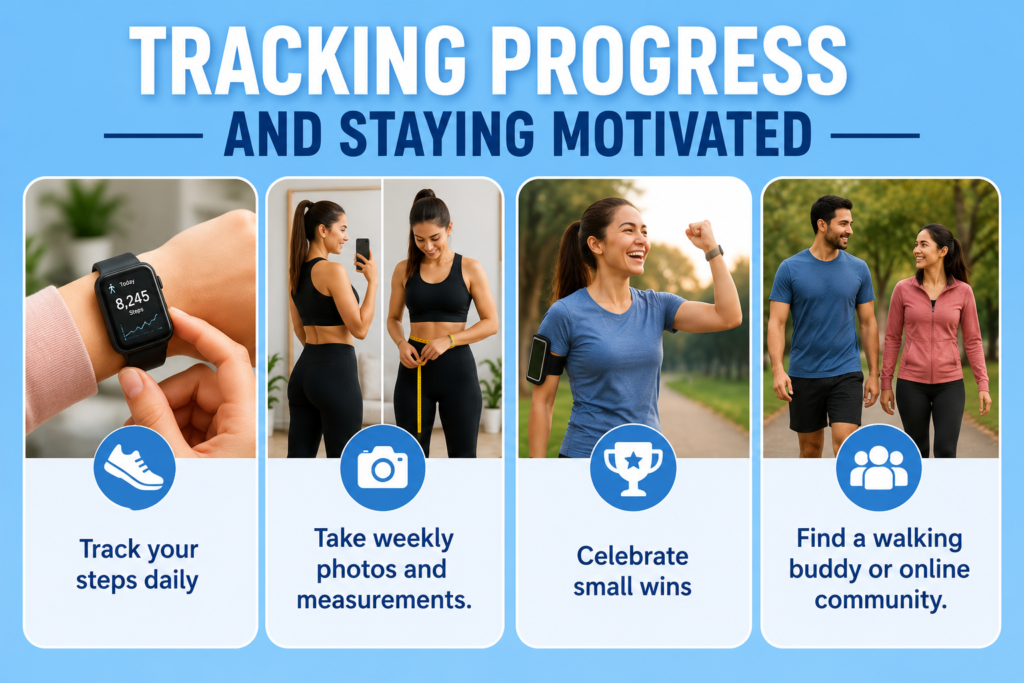
One of the biggest challenges for beginners is staying motivated after the initial excitement fades. Here are reliable strategies that work for long-term consistency.
Track your steps daily. Aim for 7,000–10,000 steps per day as a general goal. Seeing your numbers increase over time is genuinely motivating and gives you measurable proof of your effort.
Take weekly photos and measurements. The scale does not always reflect real progress because you may be building muscle while losing fat. Photos and body measurements tell the true story of your transformation.
Celebrate small wins. Completing every walk in week one is a victory. Walking for 30 consecutive days is a major achievement. Acknowledge your progress frequently and recognize how far you have come.
Find a walking buddy or online community. Accountability dramatically increases consistency. Share your daily walks on social media, join a fitness group, or simply tell a friend about your goal. When others know your commitment, you are far more likely to follow through.
Lazy Girl Weight Loss Routine at Home for Beginners (2026)
Common Beginner Mistakes to Avoid
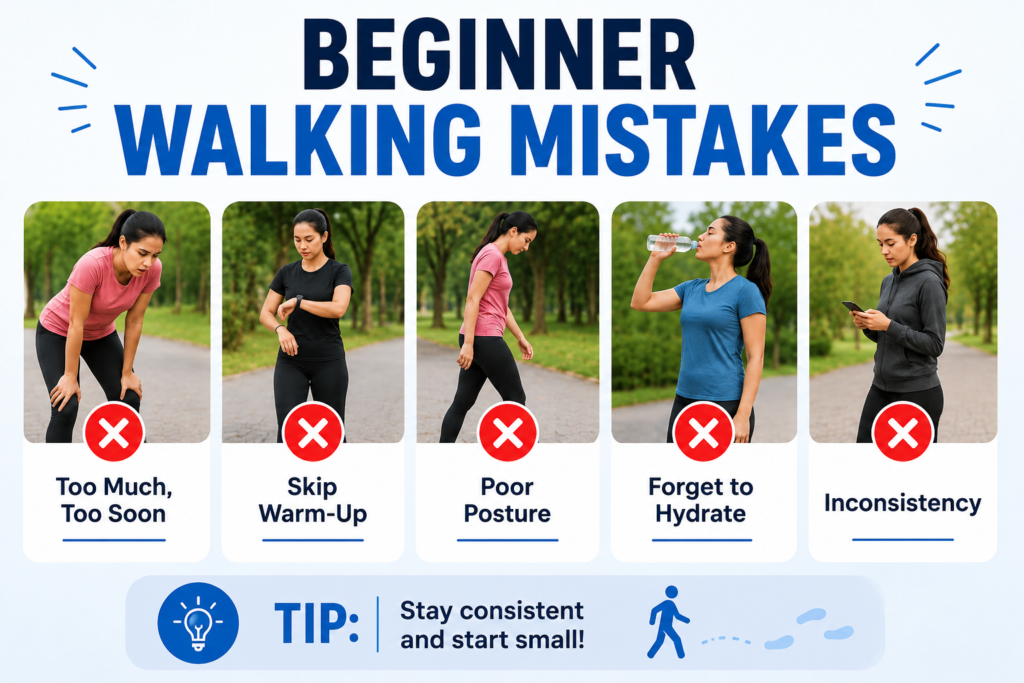
Knowing what not to do is just as important as knowing what to do. These are the most common mistakes that prevent beginners from seeing results with home walking workouts.
Doing the same pace and duration every single day without progression is a common trap. Your body adapts quickly to exercise, and if you never increase the challenge, your calorie burn plateaus. Always look for small ways to make each week slightly harder than the last.
Skipping warm-up and cool-down is another frequent mistake. Jumping into a power walk without warming up increases your risk of injury. Always spend the first 3–5 minutes walking slowly to prepare your joints and muscles.
Expecting rapid, dramatic results in the first week leads to disappointment. Walking is a long-term weight loss strategy. Most beginners notice meaningful changes in body composition after 4–8 weeks of consistent effort. Trust the process.
Best Fitness Tips Without Gym for a Healthy Lifestyle in 2026
Final Thoughts — Start Your Journey Today
Walking for weight loss at home is not a shortcut or a fad. It is a scientifically supported, proven method for losing weight and improving your health without complicated equipment or expensive gym memberships. Thousands of people have transformed their bodies and their lives simply by committing to a daily walk — and there is absolutely no reason why you cannot do the same.
The plan outlined above gives every beginner a clear, progressive path from 15-minute starter walks to full 40-minute fat-burning sessions in just four weeks. Each week builds on the last, and every single step you take brings you closer to the healthier, lighter version of yourself that you are working toward. The key is to start today, stay consistent, and trust that small daily actions produce big results over time.
Remember, the hardest part of any fitness journey is not the exercise itself — it is taking that very first step. Once you begin and start seeing even small changes in your energy, your mood, and your body, motivation comes naturally. You will stop thinking of your daily walk as a task and start looking forward to it as the best part of your day.