

If you have ever felt overwhelmed by conflicting advice on the internet about training, dieting, and supplements, you are not alone. Every year, millions of men search for a reliable fitness guide for men that actually works in the real world, not just in theory. In 2026, with so many fad diets, AI-generated workout plans, and miracle supplements flooding social media, it has become harder than ever to separate fact from fiction.
This guide cuts through the noise. It is written as a practical, science-backed fitness guide for men who want sustainable results — more muscle, less body fat, better energy, and a stronger mindset — without resorting to extreme measures or unsustainable crash diets. Whether you are a complete beginner stepping into a gym for the first time or someone restarting their fitness journey after years away, this guide will give you a clear roadmap to follow.
Why Every Man Needs a Solid Fitness Guide in 2026
Modern life has made fitness harder, not easier. Desk jobs, constant screen time, processed food everywhere, and chronic stress have created a generation of men dealing with low energy, poor sleep, and stubborn body fat. At the same time, fitness misinformation has exploded thanks to short-form video content that prioritizes entertainment over evidence.
A proper fitness guide for men in 2026 needs to account for this reality. It is not just about lifting weights or counting calories anymore — it is about building a lifestyle that supports muscle growth, fat loss, hormonal health, and mental resilience all at once. The good news is that the fundamentals of building a strong, lean body have not changed much in decades. What has changed is how much noise surrounds those fundamentals.
This is why the approach in this fitness guide for men focuses on long-term, repeatable habits rather than short-term hacks. Quick fixes might show results for a few weeks, but they almost always fail within a year. Sustainable transformation comes from consistent training, smart nutrition, adequate recovery, and a mindset built around progress rather than perfection.
How to Build Muscle with a Busy Schedule: 30-Minute Routine for Beginners (2026)
Setting Realistic Fitness Goals Before You Start

Before diving into workouts or meal plans, it is worth pausing to define what “transformation” actually means for you. Some men want to build serious muscle mass and look bigger. Others want to lose stubborn belly fat and feel leaner. Many want both — commonly called a body recomposition, where you build muscle and lose fat simultaneously.
Whatever your goal, it should be specific and time-bound rather than vague. Instead of saying “I want to get fit,” a better goal might be “I want to lose eight kilograms of fat and increase my squat strength by twenty percent over the next four months.” Specific goals make it far easier to design a training and nutrition plan around them, and they give you a clear way to measure progress beyond just the number on the scale.
It also helps to track more than just weight. Photos, body measurements, strength numbers in the gym, and even how your clothes fit are all valuable indicators of progress that a scale alone cannot capture, especially since muscle gain and fat loss often happen at the same time and can mask each other on a weighing scale.
Best Breakfast for Weight Loss and Fat Loss: 15 Healthy Indian Options (2026)
Nutrition Fundamentals: Fueling Muscle Growth and Fat Loss
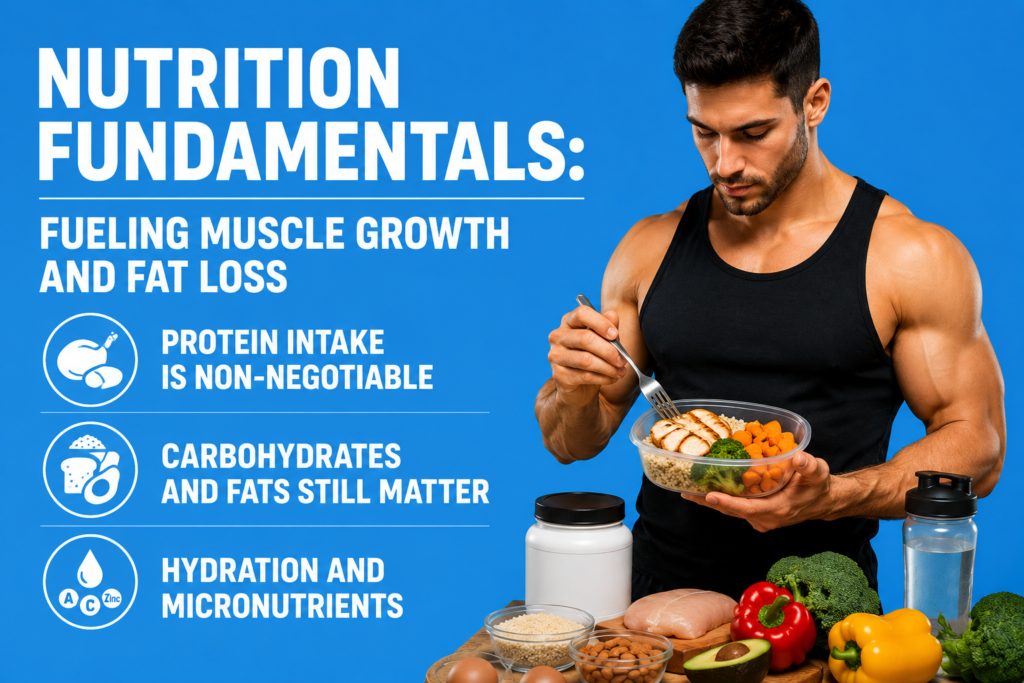
Nutrition is where most men either win or lose their fitness battle. You can have the best training program in the world, but without proper nutrition, your results will be capped. The core principle behind any effective fitness guide for men is this: calories determine whether you gain or lose weight, while the makeup of those calories determines whether that weight is muscle or fat.
Protein Intake Is Non-Negotiable
Protein is the single most important macronutrient for men trying to build muscle or preserve it while losing fat. Most active men should aim for roughly 1.6 to 2.2 grams of protein per kilogram of body weight daily. This range supports muscle protein synthesis, helps control hunger, and protects lean tissue during a calorie deficit. Good sources include chicken, eggs, fish, lean beef, Greek yogurt, paneer, lentils, and whey protein for convenience.
Carbohydrates and Fats Still Matter
Carbohydrates are not the enemy many social media trends make them out to be. They fuel intense training sessions and help replenish muscle glycogen, which directly impacts performance and recovery. Whole grains, rice, oats, fruits, and vegetables should make up the bulk of your carbohydrate intake.
Dietary fats, particularly from sources like nuts, olive oil, avocados, and fatty fish, play a crucial role in hormone production, including testosterone, which is especially important for men. Cutting fats too aggressively can backfire by lowering energy levels and hormonal output over time.
Hydration and Micronutrients
Water intake is often overlooked in fitness discussions, yet even mild dehydration can reduce strength and endurance during workouts. Aiming for at least three to four liters of water daily, more on training days, supports performance and recovery. Pairing this with a diet rich in vegetables and fruits ensures adequate micronutrient intake, which supports everything from immune function to energy metabolism.
15 Fitness and Diet Tips for Fast Weight Loss at Home (Beginner’s Guide)”
The Best Workout Strategy for Building Muscle

Training is the second pillar of any effective fitness guide for men, and it does not need to be complicated to be effective. The most reliable approach for building muscle and strength is resistance training centered around compound movements that work multiple muscle groups simultaneously.
Strength Training Basics
Exercises like squats, deadlifts, bench presses, overhead presses, and rows should form the backbone of your program. These movements recruit the most muscle fibers per exercise, allowing you to build strength and size efficiently. Progressive overload, gradually increasing weight, reps, or training volume over time, is the single most important training principle for continued muscle growth. Without it, your body has no reason to adapt and grow stronger.
Training each major muscle group at least twice per week tends to produce better results than training it only once, according to most modern strength training research. This is why many successful programs in 2026 use upper-lower splits or push-pull-legs routines rather than old-school bodybuilder splits that hit each muscle only once weekly.
A Sample Weekly Training Split
A practical four-day split for most men balancing a busy schedule could look like training upper body push movements one day, lower body the next, upper body pull movements after a rest day, and lower body again to close the week. This structure allows adequate recovery between sessions while still hitting each muscle group with enough frequency to drive growth. Cardio, whether through brisk walking, cycling, or short conditioning sessions, can be layered in two to three times weekly to support fat loss and cardiovascular health without interfering with strength gains.
Home Workout for Overweight Female Beginners 2026 – Easy Weight Loss Plan at Home
Fat Loss Strategies That Actually Work

Losing fat ultimately comes down to maintaining a consistent calorie deficit, but how you create that deficit matters enormously for long-term success. Extreme deficits might produce faster results on paper, but they often lead to muscle loss, hormonal disruption, and eventually a rebound where lost weight returns, sometimes with extra fat gained on top.
A moderate deficit of around 300 to 500 calories below your maintenance level tends to produce steady, sustainable fat loss while preserving muscle mass, especially when combined with adequate protein intake and continued strength training. This approach allows your body to adapt without triggering the extreme hunger and fatigue that often derail aggressive diets.
Strength training during a fat loss phase is essential because it signals to your body that muscle tissue is still needed, encouraging it to burn fat for energy instead of breaking down muscle. Cardio supports this process by increasing daily calorie expenditure, but it should complement strength training rather than replace it entirely.
Patience matters here more than almost anywhere else in fitness. Losing roughly half a kilogram to one kilogram per week is a realistic and sustainable rate for most men, and pushing much faster than that usually comes at the cost of muscle and energy.
Muscle Gain Diet Plan for Skinny Guys (2026) – Complete Beginner Guide
Recovery and Sleep: The Overlooked Pillar

No fitness guide for men would be complete without addressing recovery, because this is where the actual muscle-building and fat-burning adaptations happen. Training breaks muscle tissue down; recovery is what rebuilds it stronger.
Sleep is the most powerful, and most underrated, recovery tool available. Men who sleep less than six hours nightly tend to have lower testosterone levels, reduced training performance, and a harder time losing fat compared to those getting seven to nine hours. Prioritizing a consistent sleep schedule, limiting screen exposure before bed, and keeping your bedroom cool and dark can dramatically improve sleep quality.
Rest days are equally important. Training every single day without breaks increases injury risk and can lead to overtraining, where performance actually declines despite, or because of, excessive training volume. Scheduling at least one to two full rest days weekly allows your nervous system and muscles to fully recover.
Supplements Worth Considering in 2026
Supplements are not magic, but a few have strong scientific backing and can genuinely support the goals outlined in this fitness guide for men. Whey or plant-based protein powder makes hitting daily protein targets far more convenient, especially for men with busy schedules. Creatine monohydrate remains one of the most researched and effective supplements for increasing strength and muscle mass, with an excellent safety profile even with long-term use.
Vitamin D and omega-3 fatty acids are worth considering for men with limited sun exposure or low fish intake, as both support hormonal health and recovery. Beyond these basics, most other supplements marketed aggressively on social media offer marginal benefits at best, and money is often better spent on quality food.
Healthy Foods for Weight Loss (2026) – Top 25 Foods That Help Burn Fat Naturally
Mental Health and Motivation Matter Just as Much

Physical transformation rarely happens without mental consistency. Many men start strong but lose motivation within weeks because they expected faster results or tied their entire self-worth to the number on the scale. Building a sustainable mindset means focusing on the process, showing up to train even on low-motivation days, and treating setbacks as data rather than failure.
Stress management deserves particular attention, since chronically elevated cortisol can interfere with fat loss and muscle building regardless of how well you train and eat. Simple practices like daily walks, breathing exercises, journaling, or just stepping away from screens for part of the day can meaningfully reduce stress and support better training and recovery outcomes.
Common Mistakes Men Make on Their Fitness Journey

One of the most frequent mistakes is jumping between programs every few weeks before giving any single approach enough time to produce results. Muscle growth and fat loss both take months of consistent effort, not days. Another common error is neglecting nutrition while focusing entirely on workouts, despite nutrition being responsible for the majority of body composition changes.
Comparing your progress to heavily edited social media transformations is another trap that derails motivation unnecessarily. Most visible transformations online took years, involved favorable lighting and angles, and sometimes performance-enhancing substances that are never disclosed. Measuring yourself against your own starting point, rather than someone else’s highlight reel, leads to far healthier long-term progress.
15 Best Fitness Tips for Beginners in 2026 – Complete Guide
A Sample Daily Routine for Busy Men
A realistic day built around this fitness guide for men might start with a protein-rich breakfast, a focused forty-five to sixty minute strength training session either in the morning or evening depending on your schedule, balanced meals spaced throughout the day with adequate protein at each one, a short walk after dinner to support digestion and daily activity levels, and a consistent wind-down routine before bed to protect sleep quality. None of this requires hours of free time daily, which is exactly why it works for men juggling careers, families, and other responsibilities.
Frequently Asked Questions
How long does it take to see visible results?
Most men notice strength improvements within two to three weeks of consistent training, while visible body composition changes typically take six to eight weeks to become noticeable to others.
Can I build muscle and lose fat at the same time?
Yes, this is possible, particularly for beginners or men returning to training after a break, through a slight calorie deficit combined with adequate protein and consistent strength training.
Do I need a gym membership to follow this guide?
No. While gym access makes progressive overload easier, bodyweight training, resistance bands, and home equipment can also build meaningful strength and muscle with the right programming.
Is cardio necessary for fat loss?
Cardio is not strictly necessary if your nutrition creates a calorie deficit, but it does make fat loss easier and improves cardiovascular health alongside your physique goals.
Full Body Workout at Home for Beginners (2026) – Complete No Equipment Guide
Final Thoughts
Transforming your body naturally in 2026 does not require extreme diets, expensive supplements, or hours in the gym daily. What it requires is a clear, evidence-based fitness guide for men that you can actually follow consistently over months and years. Prioritize protein and a sensible calorie balance, train with progressive overload two to four times weekly, protect your sleep, manage stress, and give the process enough time to work.
Real transformation is built one consistent week at a time, not one dramatic week. Follow these principles, stay patient, and your body will reflect the effort you put in.



Pingback: Best Time to Drink Orange Juice Before or After Workout (2026)