
If you are a skinny guy who has tried everything — eating more, going to the gym, following random advice online — but still cannot seem to gain muscle, this guide is for you. The truth is, building muscle is not just about lifting weights. What you eat every single day is the foundation that determines whether you grow or stay the same. A proper muscle gain diet plan for skinny guys is the missing piece for most beginners.
In this complete beginner guide, we will walk you through exactly what to eat, how much to eat, when to eat, and which foods will help you build muscle as fast as naturally possible in 2026.
Why Skinny Guys Struggle to Gain Muscle

Before diving into the diet plan, it helps to understand why skinny guys specifically face challenges when trying to build muscle.
Most skinny guys have a fast metabolism. This means their body burns through calories at a higher rate than average. Even if they feel like they are eating a lot, the calories often are not enough to fuel muscle growth. Muscle requires a calorie surplus — you must eat more than your body burns just to maintain its current weight.
Another common issue is low appetite. Skinny guys often do not feel hungry, which makes it mentally and physically difficult to eat enough. This is not laziness or weakness; it is simply how their body is wired. The solution is not to force yourself to eat uncomfortable amounts in one sitting, but to structure your meals strategically throughout the day.
Finally, many beginners follow the wrong type of diet. They eat lots of processed food, skip protein, or load up on sugar and refined carbs. These foods cause energy spikes and crashes without providing the nutrients muscles actually need to grow.
Understanding these challenges is the first step to solving them.
Healthy Foods for Weight Loss (2026) – Top 25 Foods That Help Burn Fat Naturally
The Core Principle: Calorie Surplus

The most important rule in any muscle gain diet plan for skinny guys is this: you must eat in a calorie surplus.
A calorie surplus simply means consuming more calories than your body uses in a day. When you pair a calorie surplus with consistent strength training, your body uses those extra calories to build new muscle tissue.
For most skinny guys, a surplus of 300 to 500 calories above your maintenance level is the sweet spot. This is enough to drive muscle growth without adding excessive fat. If you are not sure what your maintenance calories are, a general starting point is to multiply your body weight in pounds by 16 to 18. For example, a 140-pound guy might need around 2,240 to 2,520 calories just to maintain weight. Add 300 to 500 on top of that to enter a muscle-building surplus.
Start tracking your food intake for at least two weeks. This one habit alone will reveal why most skinny guys are not gaining muscle — they are simply not eating enough.
15 Best Fitness Tips for Beginners in 2026 – Complete Guide
Macronutrients: Your Building Blocks
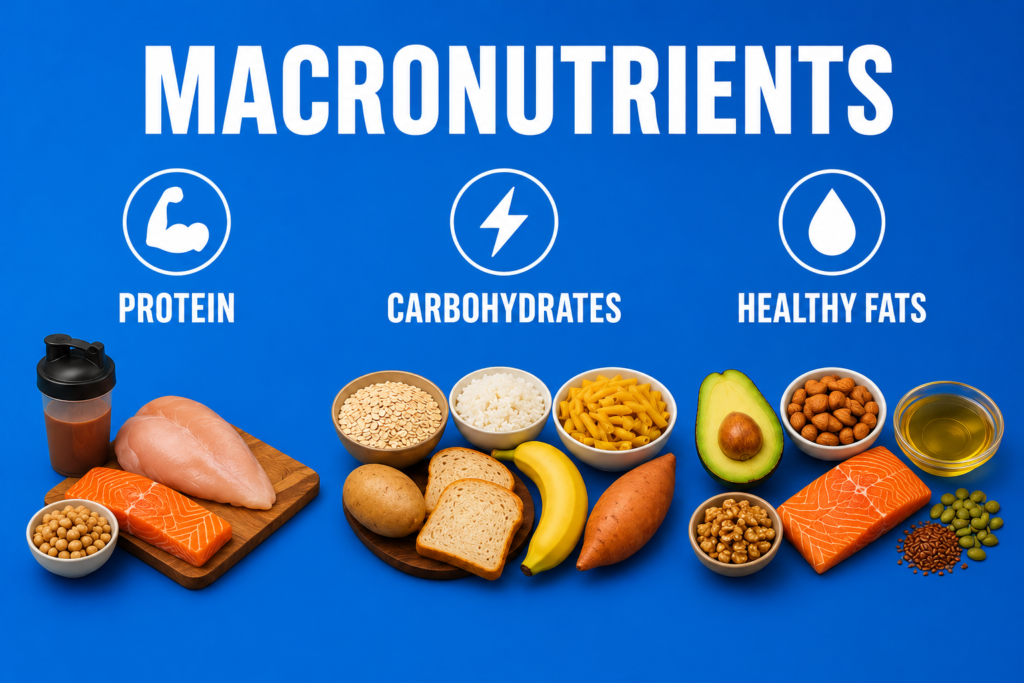
A solid muscle gain diet plan is built on three macronutrients: protein, carbohydrates, and fat. Each plays a different but critical role in muscle building.
Protein – The Most Important Macronutrient for Muscle Growth
Protein is the raw material your muscles are made from. Every time you train, you create tiny tears in your muscle fibers. Protein is what repairs and rebuilds those fibers, and in doing so, makes them bigger and stronger.
For muscle gain, skinny guys should aim to consume between 0.8 and 1 gram of protein per pound of body weight daily. A 140-pound beginner should therefore eat 112 to 140 grams of protein every day. This might sound like a lot, but when you spread it across 4 to 5 meals, it becomes very manageable.
The best protein sources for muscle building include chicken breast, eggs, lean beef, fish like salmon and tuna, Greek yogurt, cottage cheese, lentils, and protein shakes when needed. Whole food sources are always preferred, but protein supplements can help you hit your daily targets without stuffing yourself at every meal.
Carbohydrates – Your Primary Energy Source
Carbohydrates are fuel. When you lift weights, your body primarily burns glycogen — the stored form of carbohydrates — for energy. If you are not eating enough carbs, your workouts will suffer, you will feel weak and tired, and your body may even break down muscle tissue for energy instead.
Skinny guys should not fear carbohydrates. For building muscle, complex carbs are your best friends. These include oats, brown rice, sweet potatoes, whole grain bread, bananas, and quinoa. These foods digest slowly, provide steady energy, and are packed with vitamins and minerals that support overall health and performance.
Aim to get around 45 to 55 percent of your total daily calories from carbohydrates. Prioritize carbs around your workouts — before training for energy, and after training to replenish glycogen and support recovery.
Healthy Fats – Essential but Often Underrated
Fat is not the enemy. Healthy dietary fats are essential for hormone production, including testosterone, which is the key anabolic hormone responsible for muscle growth. Low fat intake can suppress testosterone levels, which directly limits your ability to build muscle.
Good sources of healthy fat include eggs, olive oil, avocado, nuts and nut butters, fatty fish, and seeds. Aim to get around 20 to 30 percent of your daily calories from healthy fats.
Full Body Workout at Home for Beginners (2026) – Complete No Equipment Guide
Sample Muscle Gain Diet Plan for Skinny Guys (Daily Meal Plan)
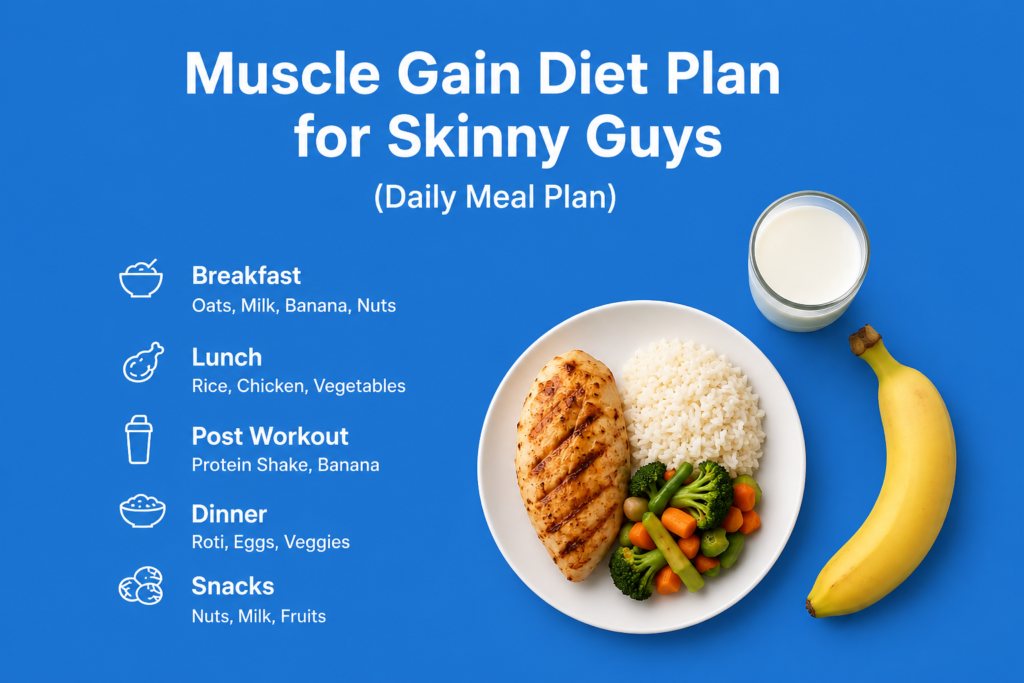
Here is a practical, easy-to-follow daily meal plan designed specifically for skinny beginner guys aiming to build muscle. This example targets approximately 3,000 to 3,200 calories, which is suitable for a 140 to 160 pound skinny guy.
Meal 1 – Breakfast (7:00 AM)
Start your day with a high-protein, high-carb breakfast to kickstart muscle protein synthesis and replenish energy stores after overnight fasting.
Eat 4 whole eggs scrambled with one cup of oats cooked in whole milk, topped with a banana and a tablespoon of peanut butter. This meal alone delivers roughly 700 to 800 calories with a strong protein and carb base. If you train in the morning, eat this 45 to 60 minutes before your workout.
Meal 2 – Mid-Morning Snack (10:00 AM)
A mid-morning snack keeps your metabolism running and prevents your body from going into a catabolic (muscle-breaking) state between meals.
Try a cup of Greek yogurt with a handful of mixed nuts and a drizzle of honey. This gives you a quick protein hit alongside healthy fats and a moderate amount of carbs. Alternatively, a protein shake with a cup of whole milk and a tablespoon of almond butter is an easy and portable option.
Meal 3 – Lunch (1:00 PM)
Lunch should be your biggest meal if you train in the afternoon, or a well-balanced meal if you are midway through your day.
A solid lunch option is 200 grams of grilled chicken breast served with one and a half cups of brown rice, a large portion of roasted vegetables like broccoli, carrots, and bell peppers, and a drizzle of olive oil. This meal hits all three macros and gives your body a sustained supply of energy and amino acids throughout the afternoon.
Meal 4 – Pre-Workout Meal (4:00 PM)
If you train in the late afternoon or evening, this meal should be eaten 60 to 90 minutes before you hit the gym.
Eat two to three slices of whole grain toast with two tablespoons of peanut butter and a banana. Simple, effective, and easy to digest. This combination gives you fast and slow-digesting carbs alongside healthy fats and moderate protein to power a strong workout.
Meal 5 – Post-Workout Meal (6:30 PM)
The post-workout window is critical. After training, your muscles are broken down and starving for nutrients. This is the time to prioritize fast-digesting protein and carbohydrates to start the recovery and growth process immediately.
An ideal post-workout meal is 200 grams of salmon or lean beef with one large sweet potato and a green salad with olive oil dressing. If you prefer speed and convenience, a protein shake with fast-digesting carbs like white rice or a banana works equally well.
Meal 6 – Dinner / Before Bed Snack (9:00 PM)
Eating before bed is not something to avoid when you are trying to gain muscle. Your body does most of its muscle repair and growth during sleep, so giving it nutrients before bed supports overnight recovery.
A great before-bed option is cottage cheese with a handful of walnuts. Cottage cheese is rich in casein protein, a slow-digesting protein that releases amino acids steadily over several hours while you sleep. This keeps your body in a muscle-building state all night.
Best Morning Routine for Muscle Gain (2026) – Build Muscle Faster Every Day
Key Supplements Worth Considering
Supplements are not magic, and they are not required. But for skinny guys struggling to meet calorie and protein targets through whole food alone, a small number of supplements can be genuinely helpful.
Whey protein is the most practical and well-researched supplement for muscle gain. It is a fast-digesting complete protein that is perfect after workouts. One to two shakes per day can help you hit your daily protein goal without adding enormous amounts of food.
Creatine monohydrate is the most scientifically supported performance supplement available. It increases strength, improves workout performance, and enhances muscle volumization over time. A dose of 3 to 5 grams daily is all you need, and no loading phase is required. It is inexpensive, safe, and effective.
Mass gainer shakes are a useful option for skinny guys who truly struggle to eat enough. These are calorie-dense shakes that can add 500 to 1,000 calories in a single serving. Use them to fill calorie gaps, not as a replacement for whole food meals.
Common Mistakes Skinny Guys Make With Their Diet

Many skinny guys spend months in the gym with almost no results because of diet mistakes that are easy to fix once you know about them.
The most common mistake is simply not eating enough. This sounds obvious, but most people dramatically underestimate how many calories they are consuming. Start tracking your food for at least two weeks using an app. You will likely be surprised at how short you are falling.
Skipping breakfast is another major error. After 7 to 8 hours of sleep, your body is in a fasted state. The longer you go without eating in the morning, the more time your body spends in a catabolic state where it may be breaking down muscle for fuel.
Relying too heavily on junk food for extra calories is tempting but counterproductive. Yes, you need more calories, but calories from processed food, refined sugar, and deep-fried items do not provide the protein, vitamins, and minerals your muscles need. They also spike insulin and increase fat storage rather than muscle growth.
Neglecting vegetables and micronutrients is also common. Skinny guys focused on macros often forget that vitamins, minerals, and fiber from vegetables and fruits play a vital role in hormonal health, immune function, and recovery. Include a variety of colorful vegetables in every main meal.
Walking for Weight Loss at Home (2026) – Simple Daily Plan for Beginners
Hydration and Its Role in Muscle Building
Water is often completely overlooked in muscle building conversations, yet it plays a direct role in performance and recovery. Muscle tissue itself is about 75 percent water. Dehydration impairs strength, reduces workout performance, slows recovery, and impairs nutrient transport to muscles.
Skinny guys building muscle should aim to drink at least 3 to 4 liters of water per day, with additional intake around training sessions. A simple rule is to drink half your body weight in ounces each day — a 140-pound person should drink at least 70 ounces or around 2 liters daily as a minimum, and more on training days.
Avoid replacing water with sugary drinks, sodas, or excessive caffeine. Coffee in moderate amounts before training is perfectly fine and can even improve workout performance, but it should not be used as a substitute for plain water.
How Long Will It Take to See Results?
This is the question every beginner wants answered. The honest answer is: it depends on consistency, but results do come.
With a proper muscle gain diet plan for skinny guys combined with a well-structured beginner strength training program, most guys can expect to gain 1 to 2 pounds of muscle per month in the first year. This means 10 to 20 pounds of lean muscle in your first year of consistent training and eating — a transformation that will be very visible and significant.
The first 4 to 8 weeks are often the most mentally challenging because visible results take time. However, strength gains in the gym come much faster — many beginners see significant strength improvements within the first 3 to 4 weeks, which is a strong sign that the program is working even before the mirror shows visible changes.
Patience and consistency are the only tools that separate guys who transform their physique from those who give up too early.
How to Stay Fit at Home Without Equipment: 15 Easy Tips for Beginners
Final Thoughts
Building muscle as a skinny guy is absolutely possible. It is not about genetics, and it is not about taking shortcuts. It comes down to one thing: consistently eating the right foods in the right amounts, combined with progressive strength training over time.
This muscle gain diet plan for skinny guys gives you everything you need to start. Eat in a calorie surplus. Hit your protein targets every day. Fuel your workouts with carbs. Support your hormones with healthy fats. Sleep well, drink plenty of water, and be patient.
The body you want is built plate by plate, rep by rep, day by day. Start today, stay consistent, and the results will come.