

Starting your fitness journey can feel overwhelming. With so much information available online, it is hard to know where to begin. Whether your goal is to lose weight, build muscle, improve your energy levels, or simply live a healthier life, having the right guidance makes all the difference.
This complete guide covers the 15 best fitness tips for beginners that actually work in 2026. These tips are backed by science, easy to follow, and designed to help you build a sustainable, long-term fitness routine. No complicated jargon. No unrealistic expectations. Just practical, proven advice to get you started on the right track.
Why Fitness Tips for Beginners Matter in 2026
The fitness industry has changed significantly over the past few years. In 2026, we have access to smarter workout tools, better nutritional science, and a deeper understanding of how the human body responds to exercise. However, with more information comes more confusion — especially for beginners.
Most beginners quit within the first 30 days because they start too hard, set unrealistic goals, or follow advice that is not suited for their fitness level. That is exactly why following the right fitness tips for beginners is so important. It saves you time, prevents injuries, and keeps you motivated long enough to see real results.
Full Body Workout at Home for Beginners (2026) – Complete No Equipment Guide
15 Best Fitness Tips for Beginners in 2026
1. Set Clear and Realistic Goals
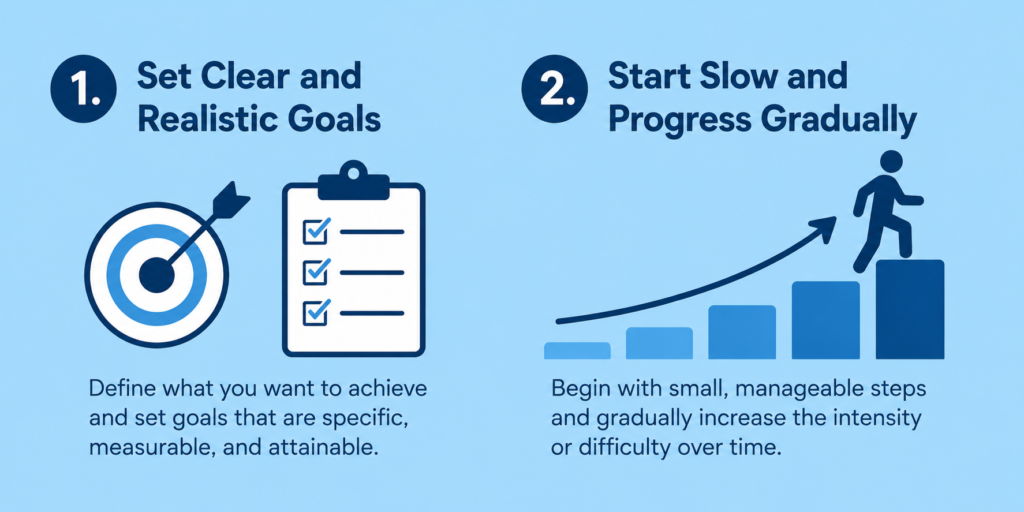
The first step in any successful fitness journey is knowing exactly what you want to achieve. Setting vague goals like “I want to get fit” rarely leads anywhere. Instead, set specific, measurable, achievable, relevant, and time-bound (SMART) goals.
For example, rather than saying you want to lose weight, say “I want to lose 5 kilograms in 8 weeks by exercising 4 days a week and eating balanced meals.” This gives you a clear direction and a way to track your progress. When you have a defined target, you stay focused and motivated even when the journey gets tough.
Write your goals down and revisit them every week. Adjust them as needed based on your progress. Starting with small, realistic milestones builds confidence and momentum that keeps you going.
2. Start Slow and Progress Gradually
One of the most common mistakes beginners make is doing too much too soon. Going from zero activity to intense daily workouts puts enormous stress on your body and leads to burnout, soreness, and injury.
Start with two to three workout sessions per week. Keep your sessions short — 20 to 30 minutes is more than enough in the beginning. Focus on learning proper form and building a consistent routine rather than pushing yourself to the limit every single session.
As your body adapts over the weeks, gradually increase the duration, intensity, or frequency of your workouts. This principle, known as progressive overload, is one of the most powerful tools in fitness and it applies to beginners just as much as it does to advanced athletes.
Best Morning Routine for Muscle Gain (2026) – Build Muscle Faster Every Day
3. Choose Exercises You Actually Enjoy
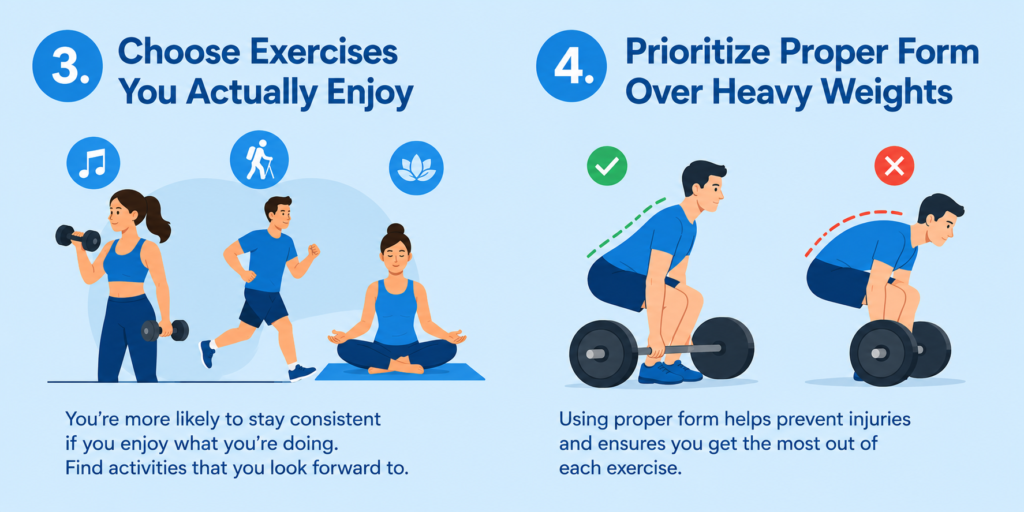
Consistency is the foundation of fitness success, and consistency is nearly impossible if you hate your workouts. One of the most overlooked fitness tips for beginners is simply choosing activities that you enjoy.
If you hate running on a treadmill, try cycling, swimming, dancing, hiking, or a group fitness class. If the gym feels intimidating, start with home workouts using bodyweight exercises. There is no single “best” workout — the best workout is the one you will actually do regularly.
In 2026, there are more fitness options than ever before, including virtual reality workouts, online fitness communities, outdoor boot camps, and hybrid gym memberships. Explore your options and find what excites you.
4. Prioritize Proper Form Over Heavy Weights
When you are new to strength training, your ego can be your biggest enemy. Many beginners load up the barbell or grab heavy dumbbells before they have mastered the basic movement patterns. This is a fast track to injury.
Focus on learning the correct form for fundamental exercises like squats, deadlifts, push-ups, rows, and lunges. Proper form activates the right muscles, prevents injuries, and builds a strong foundation for future progress.
Start with lighter weights or just your bodyweight. Record yourself exercising to check your form, or work with a certified personal trainer for even a few sessions to get the basics right. The time you invest in learning proper technique now will pay off enormously later.
Walking for Weight Loss at Home (2026) – Simple Daily Plan for Beginners
5. Warm Up Before Every Workout
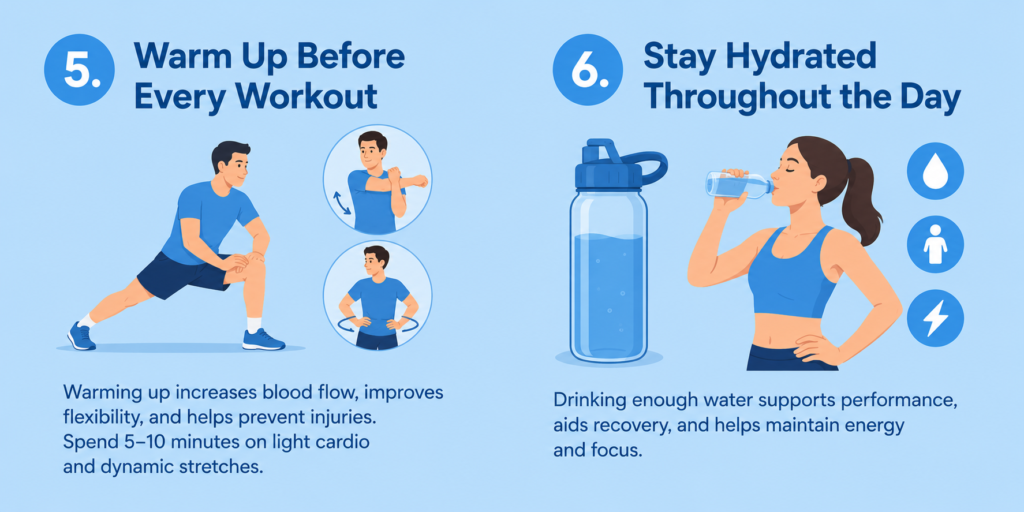
Skipping your warm-up is one of the fastest ways to get injured as a beginner. A proper warm-up increases blood flow to your muscles, raises your core body temperature, improves joint mobility, and mentally prepares you for exercise.
Spend 5 to 10 minutes before each workout doing dynamic movements like leg swings, arm circles, hip rotations, jumping jacks, and light cardio. Avoid static stretching before exercise, as it can temporarily reduce muscle strength. Save static stretches for your cool-down instead.
A good warm-up dramatically reduces your risk of muscle strains, joint pain, and other common exercise-related injuries — making it one of the most important fitness tips for beginners to follow consistently.
6. Stay Hydrated Throughout the Day
Proper hydration is one of the most underestimated aspects of fitness, especially for beginners. Water plays a critical role in nearly every bodily function including muscle contraction, nutrient transport, temperature regulation, and recovery.
Aim to drink at least 2 to 3 liters of water per day, and more on days when you exercise intensely or sweat heavily. Start your morning with a large glass of water before you do anything else. Carry a reusable water bottle with you throughout the day as a constant reminder to stay hydrated.
Dehydration leads to fatigue, reduced performance, muscle cramps, and slower recovery. Making hydration a daily habit is a simple but powerful step that directly improves your fitness results.
How to Stay Fit at Home Without Equipment: 15 Easy Tips for Beginners
7. Focus on Nutrition, Not Just Exercise
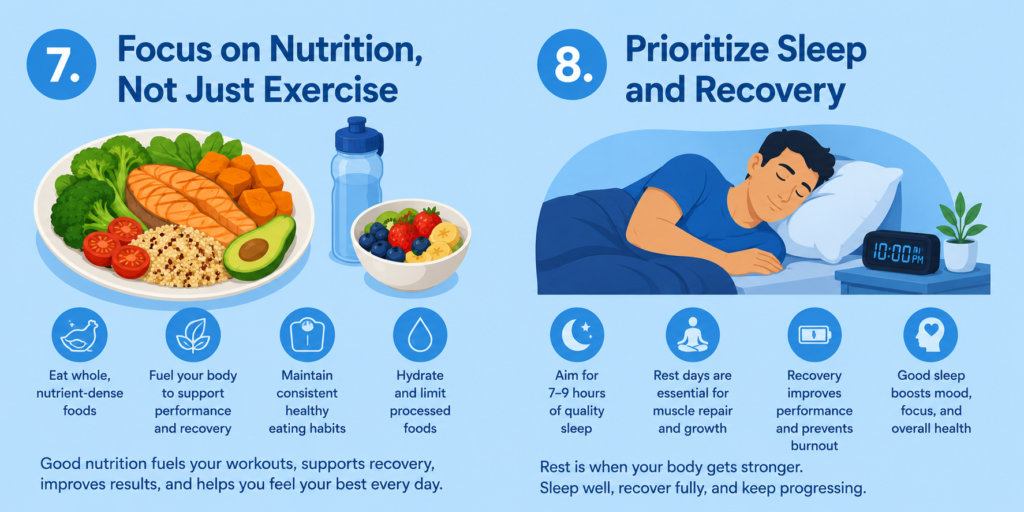
You cannot out-train a bad diet. This is one of the most important truths in fitness, and it is especially relevant for beginners who sometimes believe that working out gives them a free pass to eat whatever they want.
Nutrition fuels your workouts, repairs your muscles, and determines how your body looks and feels. As a beginner, you do not need to follow a complex meal plan or count every calorie. Start with the basics: eat whole, unprocessed foods most of the time, include plenty of protein in each meal, eat enough fruits and vegetables, and limit ultra-processed snacks and sugary drinks.
Protein is especially important for beginners because it supports muscle repair and growth after exercise. Good protein sources include chicken, fish, eggs, lentils, Greek yogurt, and tofu. Aim for at least 1.2 to 1.6 grams of protein per kilogram of body weight per day.
8. Prioritize Sleep and Recovery
Many beginners focus entirely on training and nutrition while completely ignoring recovery. This is a serious mistake. Your body does not get stronger during your workout — it gets stronger during rest.
Sleep is when your muscles repair, your hormones reset, and your nervous system recovers. Aim for 7 to 9 hours of quality sleep every night. Poor sleep increases cortisol (the stress hormone), reduces muscle-building hormones, impairs your coordination and decision-making, and makes it much harder to stick to healthy habits.
On your rest days, focus on active recovery activities like walking, yoga, light stretching, or foam rolling. These low-intensity activities promote blood flow without taxing your body, helping you recover faster and perform better in your next workout.
30 Day Home Workout Challenge for Weight Loss – Complete Beginner Plan (2026)
9. Track Your Progress Consistently
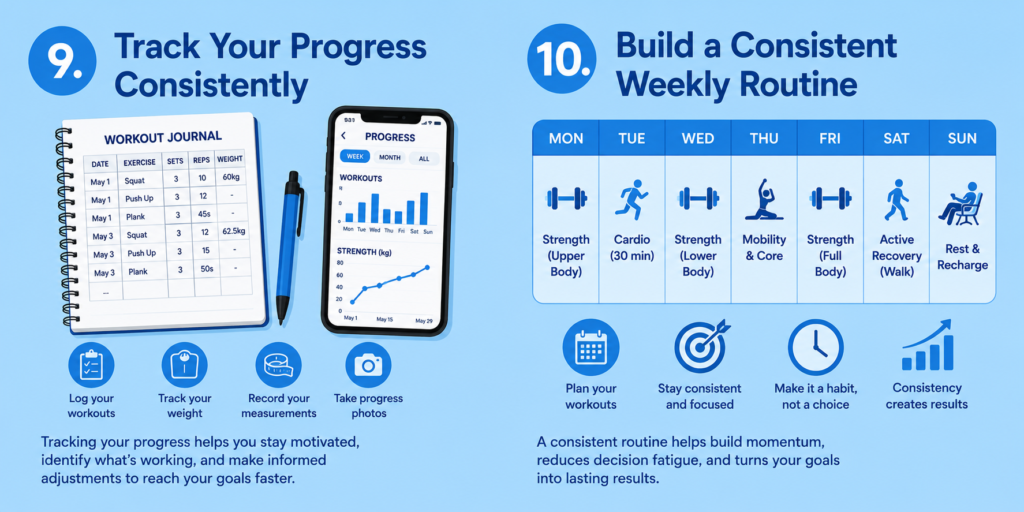
Tracking your progress is a powerful motivational tool and a key component of long-term fitness success. When you can see how far you have come, you are far more likely to keep going.
Track metrics that matter to your goals. If you are trying to build strength, log the weights you lift each session. If you are working on cardio fitness, track your speed, distance, or heart rate over time. If weight loss is your goal, take weekly measurements and progress photos rather than relying solely on the scale, which can fluctuate daily.
Use a fitness journal, a smartphone app, or a smartwatch to keep records of your workouts. Review your data regularly to identify what is working and where you need to make adjustments. Progress, no matter how small, is worth celebrating.
10. Build a Consistent Weekly Routine
Motivation comes and goes, but discipline and routine are what build lasting fitness habits. One of the best fitness tips for beginners is to schedule your workouts like appointments that cannot be cancelled.
Pick specific days and times each week for your exercise sessions and protect that time. Whether it is Monday, Wednesday, and Friday mornings or Tuesday and Thursday evenings, consistency with your schedule trains your mind and body to expect and prepare for exercise at those times.
Over time, showing up becomes automatic rather than a daily battle against laziness. Even short, imperfect workouts done consistently produce far better results than occasional intense sessions followed by long periods of inactivity.
Best Foods for Muscle Gain and Faster Recovery in 2026: Complete Nutrition Guide
11. Find an Accountability Partner or Community
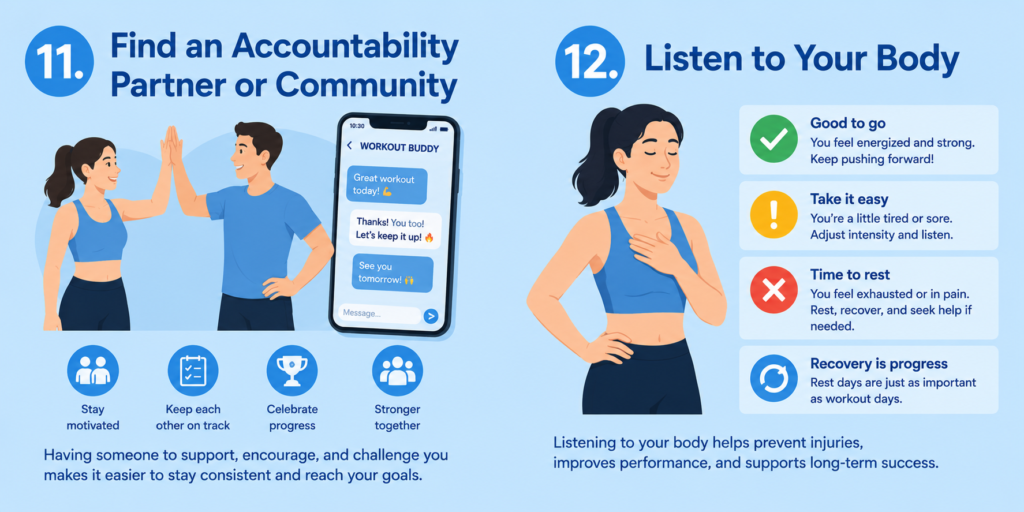
Working out with a friend, joining a fitness class, or becoming part of an online fitness community dramatically improves adherence for beginners. Social accountability is one of the most powerful psychological tools available for staying consistent.
When someone else is expecting you to show up, you are far less likely to skip a session. A workout partner also makes exercise more enjoyable, provides healthy competition, and offers encouragement on your difficult days.
In 2026, online fitness communities on platforms like Reddit, Discord, and dedicated fitness apps make it easier than ever to connect with people who share your goals. You do not need to go on this journey alone.
12. Listen to Your Body
Learning to distinguish between productive discomfort — the kind that comes from challenging your muscles — and pain that signals injury is a crucial skill for every beginner.
Some muscle soreness 24 to 48 hours after a workout is completely normal and is known as delayed onset muscle soreness (DOMS). However, sharp pain during exercise, joint pain, or discomfort that worsens over time are warning signs that should never be ignored.
Rest when your body is telling you it needs rest. Modify exercises that cause pain. Consult a doctor or physiotherapist if something does not feel right. Pushing through genuine pain is never worth the risk of a serious injury that could set you back weeks or months.
Lazy Girl Weight Loss Routine at Home for Beginners (2026)
13. Limit Sedentary Time Throughout the Day
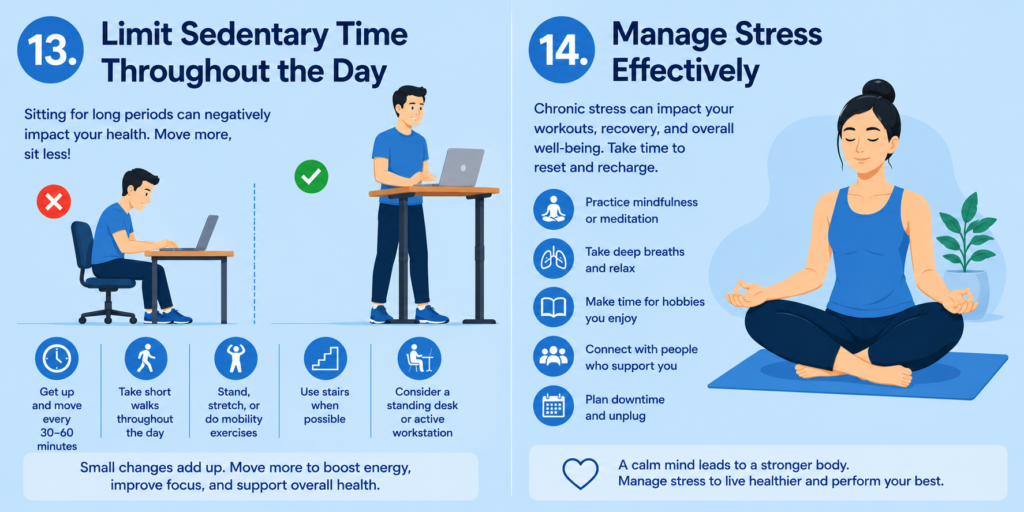
Exercise for 30 to 60 minutes a day is excellent, but if you spend the remaining 16 hours sitting still, you are significantly undermining your health and fitness outcomes. Research in 2026 continues to confirm that prolonged sitting is harmful regardless of how much you exercise.
Look for opportunities to move more throughout your day. Take the stairs instead of the elevator. Walk or cycle for short errands instead of driving. Take a 5-minute walk break every hour if you work at a desk. Stand while taking phone calls.
These small non-exercise activities add up to hundreds of extra calories burned per day and contribute to better cardiovascular health, improved posture, and higher energy levels — all of which support your fitness goals.
14. Manage Stress Effectively
Chronic stress is one of the most underappreciated obstacles to fitness progress, particularly for beginners. High levels of the stress hormone cortisol promote fat storage (especially around the abdomen), break down muscle tissue, disrupt sleep, and increase cravings for unhealthy foods.
Incorporate stress management practices into your lifestyle alongside your fitness routine. Meditation, deep breathing exercises, journaling, spending time in nature, and maintaining strong social connections all help regulate your stress response.
Exercise itself is one of the best stress-relief tools available, but it works best when it is part of a balanced lifestyle rather than the only coping mechanism. Taking care of your mental health is inseparable from taking care of your physical health.
Best Fitness Tips Without Gym for a Healthy Lifestyle in 2026
15. Be Patient and Trust the Process
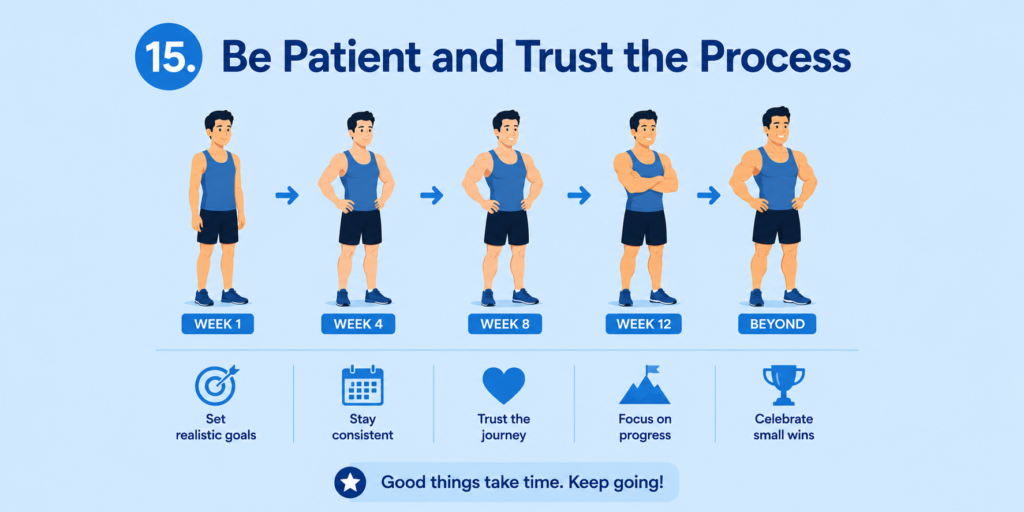
Perhaps the most important of all fitness tips for beginners is this: be patient. Real, sustainable fitness results take time, and there are no shortcuts.
In a world of instant gratification and 30-day transformation promises, it is easy to feel discouraged when you do not see dramatic changes after a few weeks. The truth is that meaningful changes in your body composition, strength, and endurance typically take 8 to 12 weeks of consistent effort to become clearly visible — and much longer to fully develop.
Trust the process. Show up consistently, follow the principles in this guide, and understand that every workout — even the ones that feel ordinary — is contributing to your long-term transformation. The people who succeed in fitness are not the most talented or most genetically gifted. They are the ones who simply do not quit.
Which Dry Fruit is Best For Weight Loss? (Complete 2026 Guide for India)
Final Thoughts
Starting a fitness journey as a beginner in 2026 is one of the best decisions you can make for your long-term health, energy, and quality of life. The path is not always easy, but with the right approach, it is absolutely achievable for anyone.
Follow these 15 fitness tips for beginners, stay consistent, be patient with yourself, and remember that every small step forward is progress worth celebrating. Your future self will thank you for starting today.


Pingback: Beetroot Juice Before Workout: Benefits & Best Time (2026)