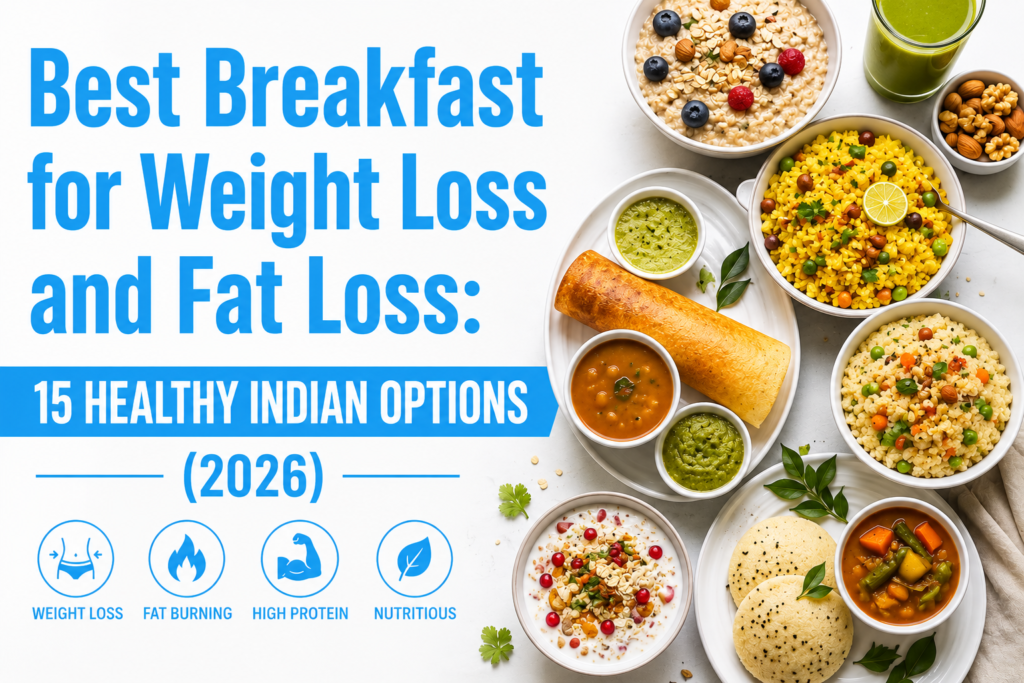

If you are serious about losing weight, your morning meal is the single most powerful lever you can pull. The right best breakfast for weight loss and fat loss does three things at once: it controls your hunger hormones, stabilizes blood sugar so you burn fat instead of storing it, and fuels your metabolism for the entire day. The wrong breakfast — even a seemingly “healthy” one — can spike insulin, trigger cravings by 11 AM, and quietly sabotage every goal you set.
The good news is that Indian cuisine is one of the richest food traditions in the world for weight-loss-friendly breakfasts. Lentils, vegetables, spices like turmeric and cumin, fermented foods, and high-protein dairy are woven into everyday cooking across every region. You do not need imported superfoods or expensive supplements. The options already sitting in your kitchen are among the most effective fat-burning foods science knows about.
This guide covers 15 specific, practical breakfast options — what they contain, why they work, how to prepare them, and the small mistakes that turn a healthy dish into a weight-gain trap.
Why Breakfast Matters More Than You Think for Fat Loss
Your body spends the night in a fasted state. Cortisol peaks in the early morning, mobilizing stored energy and setting your metabolic tone for the day. What you eat first breaks that fast and directly influences whether your body prioritizes fat burning or fat storage for the next six to eight hours.
Research consistently shows that people who eat a protein-rich, fiber-dense morning meal consume significantly fewer calories across the full day — not because they are trying, but because ghrelin (the hunger hormone) is suppressed and GLP-1 (a satiety signal) is elevated. A high-carbohydrate, low-protein breakfast does the opposite: it spikes blood sugar, triggers insulin, and sets off a hunger cycle before noon.
The best breakfast for weight loss and fat loss shares a few common features regardless of which cuisine it comes from. It is high in protein (at least 20–30 grams), moderate in complex carbohydrates or fiber, low in added sugar, and rich enough in healthy fat or volume to keep you genuinely satisfied for three to four hours.
Walking for Weight Loss at Home (2026) – Simple Daily Plan for Beginners
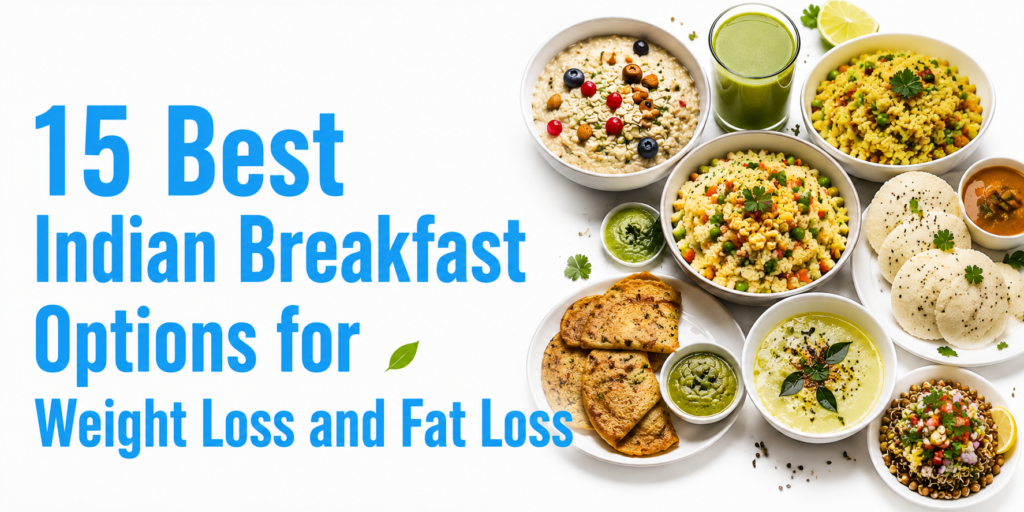
15 Best Indian Breakfast Options for Weight Loss and Fat Loss
1. Moong Dal Chilla (Lentil Pancakes)
Moong dal chilla is arguably the single best weight-loss breakfast in the Indian repertoire. A batter made from soaked split green moong dal is high in plant protein (roughly 12–14 grams per two medium chillas), rich in soluble fiber that slows glucose absorption, and virtually free of refined carbohydrates. The preparation is quick — soak for four hours, blend with ginger, green chilli, and cumin, cook on a dry or lightly oiled tawa. Add finely chopped spinach or grated carrot to the batter for micronutrients without adding meaningful calories.
The fat-loss mechanism here is straightforward: the high protein-to-calorie ratio keeps muscle tissue protected during a caloric deficit, and the fiber content keeps you full well past mid-morning. Pair with a small bowl of low-fat hung curd for an additional protein boost.
Common mistake: Adding too much oil during cooking, or serving with a sugary chutney. Use a non-stick pan with a light spray and keep chutney portions small.
2. Vegetable Oats Upma
Regular semolina upma is a staple in millions of Indian homes, but it is largely refined carbohydrate with limited protein and fiber. Swapping semolina for rolled oats transforms the dish entirely. Oats are one of the most studied foods for weight management — beta-glucan, the soluble fiber in oats, has been shown in multiple clinical trials to reduce LDL cholesterol, slow gastric emptying, and suppress post-meal hunger significantly better than most other grains.
Prepare it exactly as you would semolina upma: temper mustard seeds, curry leaves, and green chilli in a minimal amount of oil, add chopped onion, tomato, and your choice of vegetables (carrot, peas, beans), then stir in quick-rolled oats with water and salt. The total caloric cost is low, the fiber content is high, and the warm, savory preparation is satisfying in a way that a cold oat bowl often is not.
3. Eggs — Boiled, Scrambled, or as a Bhurji
Eggs are the most bioavailable complete protein source available at Indian breakfast tables, and the science behind their role in fat loss is exceptionally strong. A two-egg breakfast has been shown in controlled studies to reduce calorie intake at the following meal by up to 400 calories compared to a calorie-matched bagel breakfast — purely through hormonal satiety effects.
The Indian preparation — egg bhurji cooked with onion, tomato, turmeric, and coriander — is nutritionally superior to plain scrambled eggs because the vegetables add fiber and the spices provide anti-inflammatory compounds. Use one whole egg and one or two egg whites if you want to keep fat lower. Serve with a single slice of whole grain bread or alone.
Important note: Egg yolks contain cholesterol, but dietary cholesterol has minimal impact on blood cholesterol for most people. The fat in egg yolks is also associated with satiety. Do not reflexively discard yolks unless directed by a doctor.
15 Fitness and Diet Tips for Fast Weight Loss at Home (Beginner’s Guide)”
4. Greek Yogurt or Hung Curd with Seeds and Berries
Plain Greek yogurt and hung curd (chakka) are nutritionally similar: thick, strained, high in protein (15–20 grams per 200g serving), and rich in probiotics that support gut health. A healthy gut microbiome is increasingly linked to metabolic efficiency and body weight regulation. This is not fringe science — it is now a mainstream area of obesity research.
A bowl of hung curd with a tablespoon of mixed seeds (flaxseed, pumpkin seed, sunflower seed) and a small portion of any low-GI fruit — pomegranate, guava, or Indian gooseberry (amla) — is nutritionally complete, requires zero cooking, and is genuinely filling. The seeds add omega-3 fatty acids, zinc, and a significant amount of fiber that the yogurt base alone does not provide.
Avoid flavored yogurt entirely. The sugar content in flavored commercial yogurt can be as high as 20–25 grams per serving, which neutralizes every fat-loss benefit of the protein.
5. Idli with Sambar (Portion-Controlled)
Idli is a fermented rice-and-lentil steamed cake, and fermentation is the key word. The fermentation process partially breaks down the starches in the batter, lowers the glycemic index of the final product compared to non-fermented rice dishes, and increases the availability of B vitamins. Idli is also steamed, not fried, making it genuinely low in fat.
The real nutritional power of this meal is in the sambar. A well-made sambar — with toor dal, drumstick, tomato, and tamarind — provides plant protein, iron, and a broad range of vegetables in a single, flavourful bowl. The combination of idli and sambar together creates a balanced macronutrient profile that refined snack foods cannot match.
The caution here is portion. Two to three standard idlis with a generous bowl of sambar is a solid weight-loss breakfast. Six idlis with coconut chutney and butter is not. The dish itself is healthy; the portion is the variable.
6. Poha with Vegetables and Peanuts
Poha (flattened rice) is often dismissed as “just carbs,” but its actual nutritional profile is more nuanced. Poha is a low-calorie, low-fat grain that is enriched with iron and, when prepared with a proper vegetable load and peanuts, becomes a surprisingly balanced meal.
The addition of roasted peanuts is non-negotiable from a weight-loss perspective. Peanuts add protein and monounsaturated fat that slows digestion and provides satiety. Vegetables — peas, carrot, onion — add fiber and volume. The total caloric density of a well-made vegetable poha is low, meaning you can eat a satisfying portion without overconsumption.
Use a minimal amount of oil, temper with mustard seeds and curry leaves, and squeeze fresh lemon over the finished dish. The vitamin C from lemon dramatically increases iron absorption from the poha, which matters particularly for women with iron-deficiency tendencies.
Home Workout for Overweight Female Beginners 2026 – Easy Weight Loss Plan at Home
7. Dalia (Broken Wheat Porridge)
Dalia is one of the most underrated grain breakfasts for weight loss. Made from coarsely broken whole wheat, it retains the bran and germ that white flour loses, making it significantly higher in fiber, protein, and micronutrients than any refined wheat product. The glycemic index of dalia is considerably lower than white rice or refined flour, meaning it produces a slower, more controlled blood sugar response.
Prepare it savory — tempered with cumin, turmeric, and vegetables — rather than sweet. The savory version provides more sustained energy and avoids the sugar crash that a sweet porridge can trigger. A 200g serving of cooked dalia with mixed vegetables contains approximately 8–10 grams of protein, 6 grams of fiber, and around 200 calories — an excellent caloric efficiency for a filling meal.
8. Sprouted Moong Salad
Sprouted moong is one of the few truly exceptional fat-loss foods that requires no cooking and minimal preparation. Sprouting dramatically increases the protein and vitamin content of whole moong beans while reducing the antinutrients that can interfere with mineral absorption. The enzyme activity in fresh sprouts also begins the digestive process before the food even reaches your stomach, making it easier on digestion.
A bowl of sprouted moong with chopped tomato, cucumber, green chilli, lemon juice, and rock salt is filling, high in plant protein, very low in calories, and takes about three minutes to prepare once the sprouts are ready. You can sprout moong in any container at room temperature in 24–36 hours. Building this habit once a week creates a ready supply for several days.
9. Ragi Dosa or Ragi Porridge
Ragi (finger millet) deserves far more attention in weight-loss conversations than it typically receives. It is one of the richest plant sources of calcium available in Indian cuisine, it is gluten-free, and its high amino acid content — particularly tryptophan — is associated with appetite regulation. Tryptophan is a precursor to serotonin, and low serotonin is strongly linked to carbohydrate cravings.
Ragi dosa made from a ragi-rice-urad dal batter is a high-fiber, moderate-protein breakfast that digests slowly and keeps blood sugar stable. Ragi porridge cooked with water or low-fat milk and flavored lightly with jaggery (in very small amounts) is an even simpler preparation. Both options are excellent for people who find themselves hungry quickly after eating standard white-rice-based breakfasts.
Muscle Gain Diet Plan for Skinny Guys (2026) – Complete Beginner Guide
10. Paneer Bhurji (Low-Oil)
Paneer is one of the highest-protein foods available to vegetarians in India, containing approximately 18 grams of protein per 100 grams. It is also a complete protein, containing all essential amino acids — a rarity among plant-derived foods (technically paneer is dairy-derived, not plant-derived, but it is vegetarian). For fat loss, protein is the most important macronutrient because it has the highest thermic effect — your body burns more calories digesting protein than it does digesting fat or carbohydrate.
A paneer bhurji made with minimal oil, onion, tomato, turmeric, and coriander is a genuinely high-protein breakfast. Use low-fat paneer (available commercially or make it from toned milk) to keep the caloric load manageable while retaining the protein content. Pair with one whole wheat chapati or eat alone.
11. Besan Cheela (Chickpea Flour Pancake)
Besan (chickpea flour) is made from ground Bengal gram, making it naturally gluten-free, high in protein (about 20 grams per 100g of raw besan), and rich in folate, iron, and magnesium. A besan cheela is one of the fastest high-protein breakfasts you can make — mix besan with water, ajwain, turmeric, red chilli, and chopped onion to a batter consistency, cook on a tawa with minimal oil.
The protein and fiber combination in besan produces strong satiety. The glycemic index of besan-based preparations is significantly lower than wheat-based equivalents, making it particularly beneficial for people managing insulin resistance or pre-diabetes alongside their weight loss goals.
12. Vegetable Daliya Khichdi
A khichdi made from broken wheat (daliya) and moong dal with mixed vegetables combines the fiber of whole grain wheat with the complete protein of a legume. This combination creates what nutritionists call a complementary protein pair — the amino acid profiles of grain and legume complement each other to provide all essential amino acids, which is important for muscle preservation during weight loss.
Add vegetables generously — spinach, beans, carrot, tomato — and season with cumin, turmeric, and ginger. This is an incredibly nutrient-dense breakfast that is also easy to digest, warm and comforting, and inexpensive to prepare. It is also genuinely filling for three to four hours, which is the practical test of any weight-loss breakfast.
Healthy Foods for Weight Loss (2026) – Top 25 Foods That Help Burn Fat Naturally
13. Smoothie with Protein — Banana, Spinach, and Curd
Liquid breakfasts are often criticized for being less filling than solid meals — and for good reason, in many cases. However, a properly constructed smoothie that includes protein, fiber, and fat can be highly effective for people who are not hungry in the morning, are pressed for time, or train early and need something digestible before exercise.
Blend one medium banana, a large handful of fresh spinach, 150g of plain curd or Greek yogurt, a tablespoon of flaxseed or chia seed, and water or unsweetened almond milk. The banana provides potassium and natural sweetness without added sugar, the spinach is almost calorie-free but rich in iron and folate, and the curd provides protein and probiotics. The seeds add omega-3s and fiber. Total caloric cost is around 300–350 calories with 15–18 grams of protein.
14. Sattu Drink or Sattu Paratha
Sattu — roasted gram flour — is a staple of Bihar and Uttar Pradesh that is beginning to gain broader recognition as a functional food. Its nutritional profile is exceptional: very high in plant protein, rich in fiber, cooling in its thermal properties according to Ayurvedic tradition, and incredibly affordable. It dissolves in water in 30 seconds.
A sattu drink made with water, lemon, black salt, and roasted cumin is a high-protein, low-calorie breakfast that can be consumed quickly and keeps hunger at bay for hours. Sattu paratha stuffed with a spiced sattu-onion filling is a more substantial meal with complex carbohydrates from whole wheat and the protein and fiber of sattu together.
15. Masala Omelette (Two Eggs) with Vegetables
The masala omelette is the quintessentially Indian egg preparation — two eggs beaten with finely chopped onion, tomato, green chilli, coriander, and spices, cooked on a tawa. It is fast, flexible, protein-dense, and deeply satisfying. Adding a handful of spinach or a few mushrooms to the filling increases the volume and fiber without adding meaningful calories.
Two eggs provide approximately 12–14 grams of complete protein and 10 grams of fat, which is an ideal macronutrient profile for a weight-loss breakfast: enough fat to slow digestion and carry fat-soluble vitamins, enough protein to protect lean muscle, and minimal carbohydrates. This is also one of the most adaptable breakfasts — the vegetable additions can rotate daily to prevent monotony.
15 Best Fitness Tips for Beginners in 2026 – Complete Guide
Foods to Avoid at Breakfast When Trying to Lose Weight
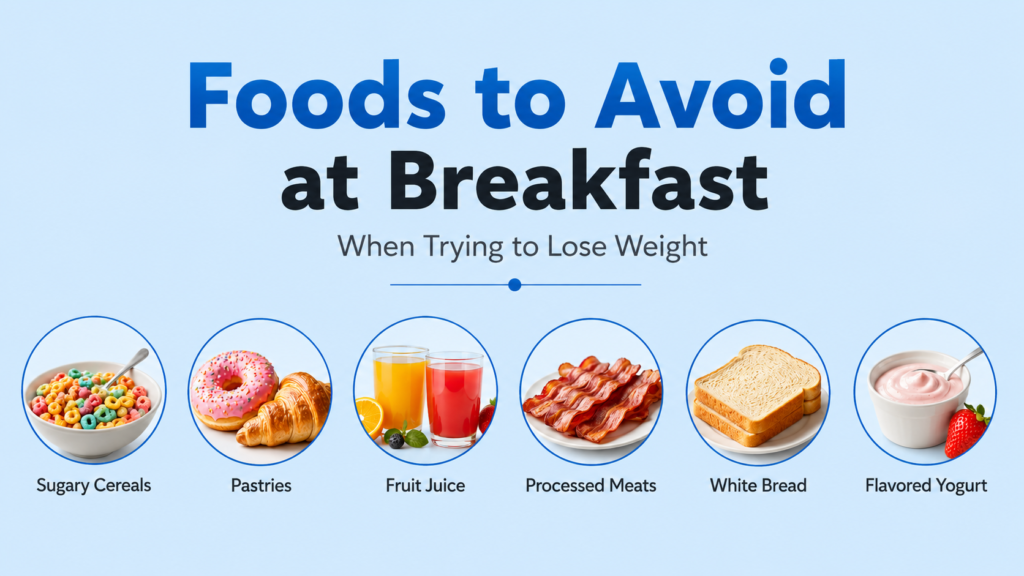
Understanding what the best breakfast for weight loss and fat loss is requires equally understanding what it is not. Several very common Indian breakfast choices actively work against fat loss despite appearing harmless or even healthy.
Puri and bhatura are deep-fried refined flour preparations with no fiber and very high fat — they spike blood sugar, deliver excess calories quickly, and leave you hungry again fast. White bread toast with jam or butter combines refined flour, sugar, and saturated fat in a way that promotes fat storage rather than fat burning. Packaged cereals marketed as “healthy” or “multigrain” are typically high in sugar and low in protein — always read the nutrition label.
Paratha made with excess ghee is not inherently a bad food, but the caloric load can be substantial. One ghee-laden paratha can contain 400–500 calories with limited protein, which is a very poor investment for a weight-loss meal. A dry or lightly oiled whole wheat paratha with curd is a very different nutritional proposition.
Chai with multiple spoons of sugar, consumed multiple times in the morning before eating, raises insulin and promotes fat storage before breakfast has even begun. If you drink chai, limit sugar to half a teaspoon or use a natural low-calorie alternative.
Best Morning Routine for Muscle Gain (2026) – Build Muscle Faster Every Day
The Structure of an Ideal Weight-Loss Breakfast
Whatever option you choose from this list, the ideal weight-loss breakfast follows a consistent structure. It contains a minimum of 20 grams of protein. It includes fiber from vegetables, legumes, or whole grains. It is low in added sugar and refined carbohydrates. It is consumed within the first hour of waking, before caffeine where possible.
Building this habit consistently — not perfectly, but consistently — is the practical foundation of every successful fat-loss journey. The 15 options in this guide give you enough variety to rotate daily for two weeks without repetition. Start with the two or three that match your current cooking routine most closely and build from there.
The best breakfast for weight loss and fat loss is ultimately the one you will actually eat, consistently, over months. Pick the options that you enjoy, that fit your schedule, and that make you feel genuinely energized rather than sluggish by mid-morning. That feedback from your own body is the most reliable guide you have.