

Bananas are one of the most popular fruits on the planet — cheap, portable, and packed with nutrition. But if you’re trying to shed extra kilos, timing matters just as much as what you eat. So, what is the Best Time to Eat Banana for Weight Loss? Is it first thing in the morning, right before your workout, or after you’ve finished sweating it out?
In this 2026 guide, we break down the science, the myths, and the practical strategy so you can fit bananas into your fitness routine without derailing your goals.
Why Bananas Matter for Weight Loss
Before diving into timing, it helps to understand why bananas are relevant to a fat-loss diet in the first place.
- Bananas are rich in fiber, which slows digestion and keeps you feeling full longer
- They contain natural sugars combined with fiber, so energy is released steadily instead of spiking blood sugar
- A medium banana has roughly 105 calories, making it a low-calorie snack compared to processed alternatives
- They’re loaded with potassium, which supports muscle function and helps reduce water retention and bloating
- Resistant starch in slightly green bananas can improve gut health and metabolism
Because of these properties, bananas can absolutely support a calorie-controlled diet — but the real question of the Best Time to Eat Banana for Weight Loss comes down to how your body uses that energy at different points in the day.
High Protein Indian Breakfast for Weight Loss (2026): 25 Healthy Recipes & 7-Day Meal Plan
Morning: Eating Banana on an Empty Stomach
Many people ask whether eating a banana first thing in the morning is the Best Time to Eat Banana for Weight Loss. Here’s what happens when you do:
A banana in the morning provides a quick source of natural energy after your overnight fast. The fiber content helps regulate digestion early in the day, and the potassium can help reduce morning bloating. For people who struggle with sugar cravings, starting the day with a banana instead of processed cereal or pastries can reduce overall calorie intake later.
However, eating a banana completely alone on an empty stomach may cause a faster rise and fall in blood sugar for some individuals, leading to hunger returning sooner. Pairing it with a source of protein — like a boiled egg, yogurt, or a handful of nuts — slows digestion and keeps you fuller for longer, which is more effective for weight loss than eating it in isolation.
Best Time to Eat Apple for Weight Loss (2026 Guide): Morning, Before or After Workout?
Before a Workout: Fuel for Fat Burning
For those who exercise regularly, the Best Time to Eat Banana for Weight Loss may actually be shortly before a workout session.
- Bananas provide fast-digesting carbohydrates that fuel your muscles for high-intensity training
- The natural sugars help prevent energy crashes mid-workout, allowing you to train harder and burn more calories
- Potassium supports muscle contractions and can help prevent cramping during longer sessions
- Eating a banana 30–45 minutes before exercise gives your body enough time to convert it into usable energy
This makes pre-workout timing especially useful for people doing cardio, HIIT, or strength training aimed at fat loss, since more energy during the session generally translates to a higher calorie burn.
Peanut Butter Benefits for Fitness: Weight Loss, Muscle Gain & Nutrition Guide (2026)
After a Workout: Recovery and Muscle Support
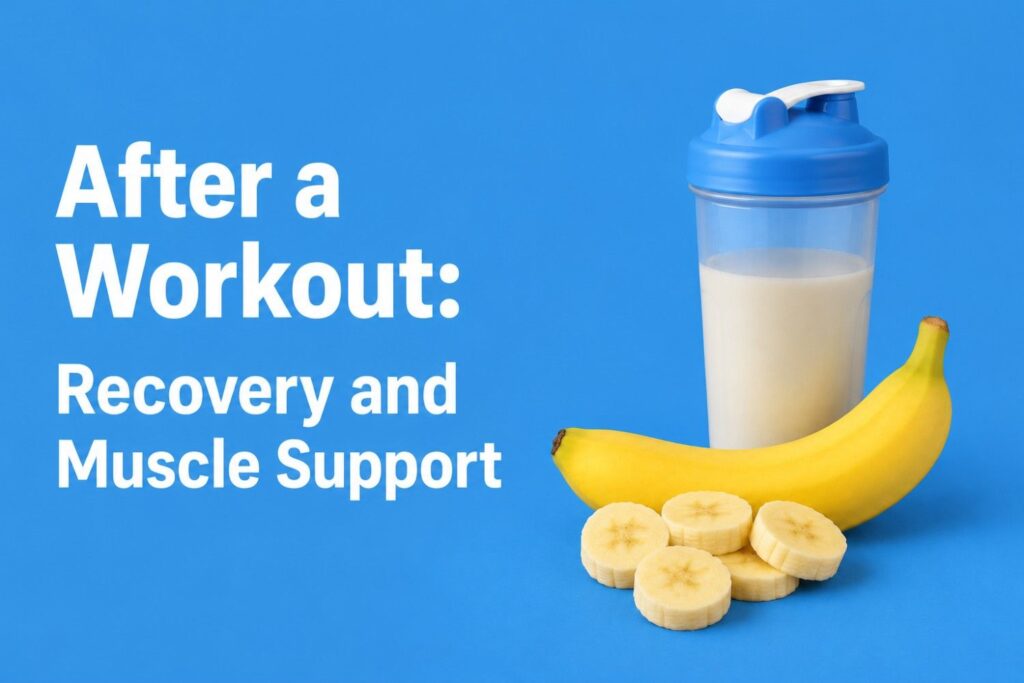
Post-workout is another strong contender when discussing the Best Time to Eat Banana for Weight Loss. After exercise, your muscles are depleted of glycogen (stored carbohydrate energy), and eating a banana helps replenish it quickly.
- The natural sugars restore glycogen levels, supporting faster recovery
- Potassium helps replace electrolytes lost through sweat
- Pairing a banana with a protein source post-workout (like a protein shake or Greek yogurt) supports muscle repair while keeping you satisfied, which reduces the chance of overeating later
For people focused on preserving lean muscle while losing fat, post-workout banana consumption combined with adequate protein is often considered one of the most practical approaches.
So, What Is the Actual Best Time?
Here’s the honest answer: there isn’t one single universally “best” time — it depends on your goals and daily routine.
- If you want steady energy and reduced bloating throughout the day, morning (with protein) works well
- If your priority is workout performance and calorie burn, eating a banana before exercise is ideal
- If your priority is recovery and muscle preservation, eating a banana after exercise is the smarter choice
The Best Time to Eat Banana for Weight Loss ultimately depends on when your body needs that quick, natural energy most — and pairing it with protein or fiber in every scenario amplifies the fat-loss benefit.
Best Breakfast for Weight Loss and Fat Loss: 15 Healthy Indian Options (2026)
Tips to Maximize Banana Benefits for Weight Loss
- Choose slightly green bananas for more resistant starch and a lower glycemic impact
- Avoid pairing bananas with high-sugar toppings like chocolate syrup or condensed milk
- Stick to one banana per serving (roughly 100–120 grams) to keep calories in check
- Combine with protein or healthy fats to slow digestion and improve satiety
- Avoid eating bananas late at night in large quantities if you’re sensitive to blood sugar spikes
- Home Workout for Overweight Female Beginners 2026 – Easy Weight Loss Plan at Home
Common Mistakes People Make with Bananas While Trying to Lose Weight

Even a healthy food like banana can slow down your progress if eaten the wrong way. Here are a few common mistakes to avoid:
- Eating multiple bananas in one sitting, thinking “more fruit means more health” — this simply adds unnecessary calories
- Blending bananas into high-calorie smoothies loaded with peanut butter, honey, and full-fat milk without tracking portions
- Skipping protein alongside the banana, which leads to quicker hunger and overeating later in the day
- Eating overripe bananas in excess, since they contain more sugar and less resistant starch than slightly green ones
- Using banana as a replacement for a full meal too often, which can leave you under-fueled and cause fatigue during workouts
Avoiding these mistakes ensures that whichever time you choose, your banana works with your weight-loss plan instead of against it.
Full Body Workout at Home for Beginners (2026) – Complete No Equipment Guide
Frequently Asked Questions
Can I eat a banana every day while trying to lose weight?
Yes, one banana a day fits comfortably into most calorie-controlled diets, especially when paired with protein or fiber-rich foods.
Is banana good before bed for weight loss?
In small portions, it’s generally fine, but eating it very late alongside heavy meals may not be ideal for people who are sensitive to nighttime blood sugar changes.
Does banana burn belly fat?
No single food burns fat directly. Bananas support weight loss indirectly by improving satiety, digestion, and energy levels, which helps you stay consistent with your overall calorie deficit.
How many calories are in one banana?
A medium-sized banana has approximately 105 calories, depending on its size and ripeness.
Can banana replace a meal for weight loss?
It’s not recommended as a regular practice. A single banana lacks sufficient protein and fat to be a complete meal, and relying on it too often can leave you under-fueled and more likely to overeat later.
Is it better to eat banana raw or in a smoothie for weight loss?
Eating it raw preserves more fiber and takes longer to chew and digest, which can improve satiety. Smoothies are fine too, but it’s easy to add extra calories through other ingredients, so portion control matters more.
Which Dry Fruit is Best For Weight Loss? (Complete 2026 Guide for India)
Final Thoughts
Bananas can be a genuinely helpful part of a weight-loss diet when eaten mindfully. Whether you choose morning, pre-workout, or post-workout, the key is portion control, pairing with protein, and consistency. There’s no single fixed rule for the Best Time to Eat Banana for Weight Loss — instead, match the timing to your personal fitness goals and daily schedule for the best results in 2026 and beyond.



Pingback: Coconut Water vs Fruit Juice: Best for Fitness?