
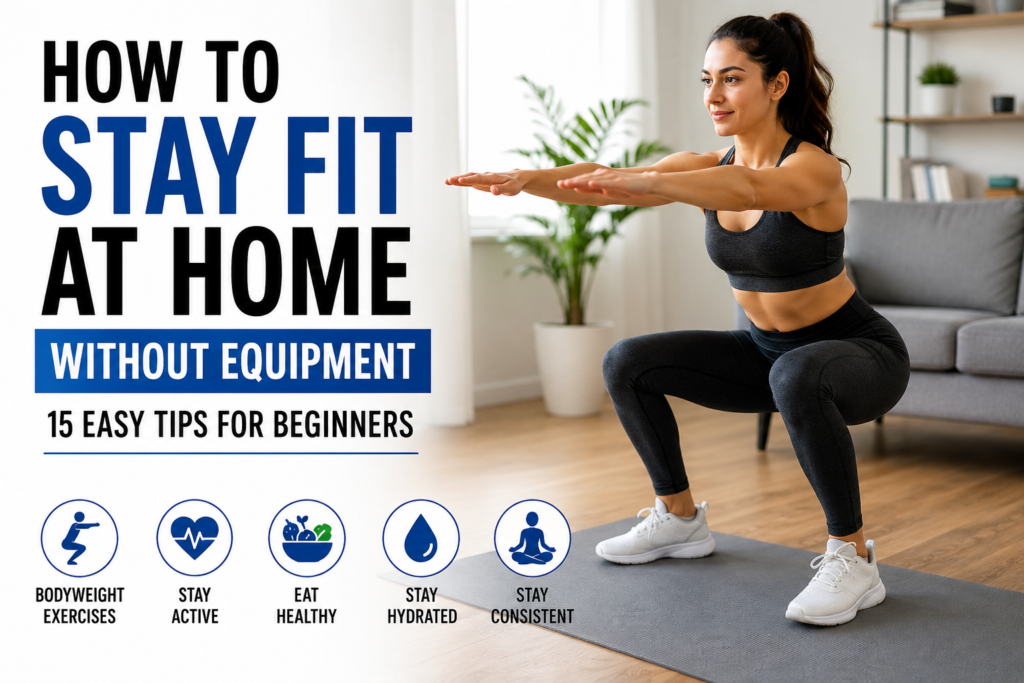

Staying fit does not always require a gym membership, expensive equipment, or hours of free time. Millions of people around the world are discovering that a consistent home fitness routine can be just as effective — sometimes even more effective — than working out at a commercial gym. Whether you are a complete beginner or someone returning to fitness after a long break, this guide will walk you through 15 proven, practical tips to help you stay fit at home without any equipment.
If you have been searching for ways to build strength, lose weight, improve flexibility, or simply feel more energetic every single day, you are in the right place. No dumbbells, no treadmill, no gym required.
How to stay fit at home without equipment
How to stay fit at home without equipment is something millions of people search for every single day — and the good news is, it is completely possible. You do not need a gym membership, expensive machines, or hours of free time. Whether you are a complete beginner or someone returning to fitness after a long break, this guide covers 15 proven and practical tips to help you build strength, lose weight, and feel more energetic — all from the comfort of your home.
The truth is, your body is the most powerful piece of fitness equipment you will ever own. Bodyweight training has been used for centuries by athletes, soldiers, and ordinary people to build impressive strength and endurance. When you learn to use your own body correctly, you unlock a world of fitness that costs absolutely nothing.
Why Working Out at Home Is a Smart Choice
Before we dive into the tips, it is worth understanding why home workouts have become one of the most popular fitness trends in recent years. The biggest advantage is convenience. You do not need to commute, wait for machines, or follow a gym schedule. You work out on your own time, in your own space, at your own pace.
Home workouts also remove a lot of the psychological barriers that stop beginners from getting started. There is no judgment, no comparison, and no pressure. You can make mistakes, move slowly, and build confidence gradually — all in the comfort of your own home.
Most importantly, your body is the best piece of equipment you will ever own. Bodyweight exercises have been used for centuries to build impressive strength, endurance, and flexibility. When you learn how to use your own body correctly, you unlock a world of fitness possibilities that require nothing more than a small floor space and the will to move.
30 Day Home Workout Challenge for Weight Loss – Complete Beginner Plan (2026)
Tip 1: Start With a Clear and Realistic Goal
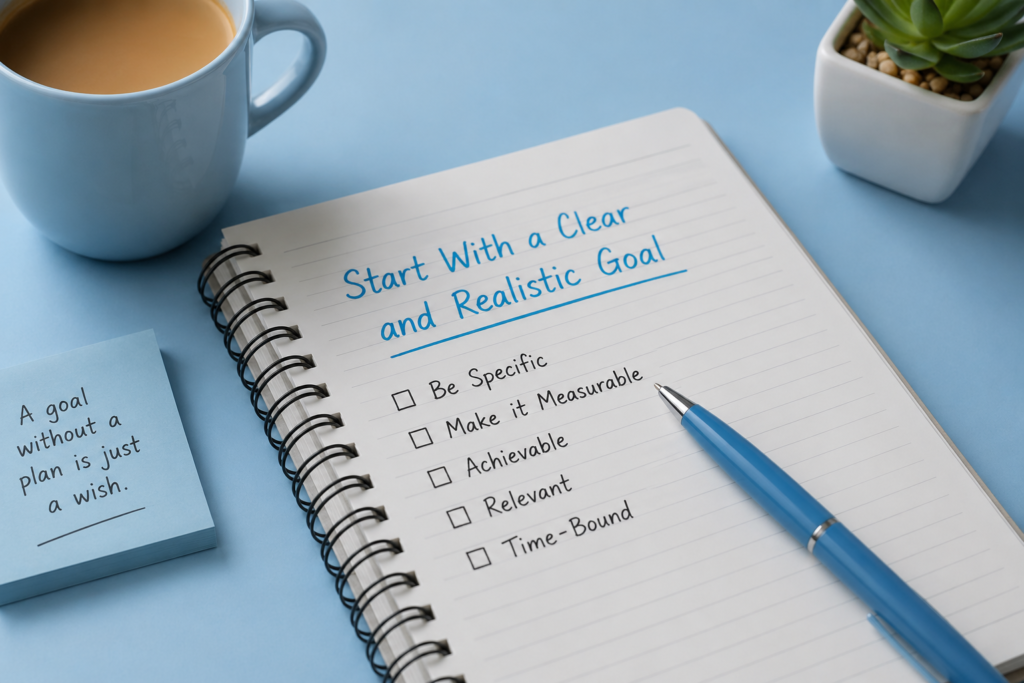
The number one reason beginners give up on home fitness routines is that they set goals that are too big, too vague, or too far away. Before you do a single squat or push-up, take five minutes to write down exactly what you want to achieve.
Do you want to lose 10 pounds in three months? Do you want to be able to do 20 push-ups without stopping? Do you want to reduce back pain and improve your posture? Whatever your goal is, write it down and make it specific. A clear goal gives your workouts a purpose and keeps you motivated on the days when you feel lazy or tired.
Setting small weekly milestones within your bigger goal also helps you feel a sense of progress regularly, which is one of the most powerful motivators in fitness.
Tip 2: Create a Dedicated Workout Space
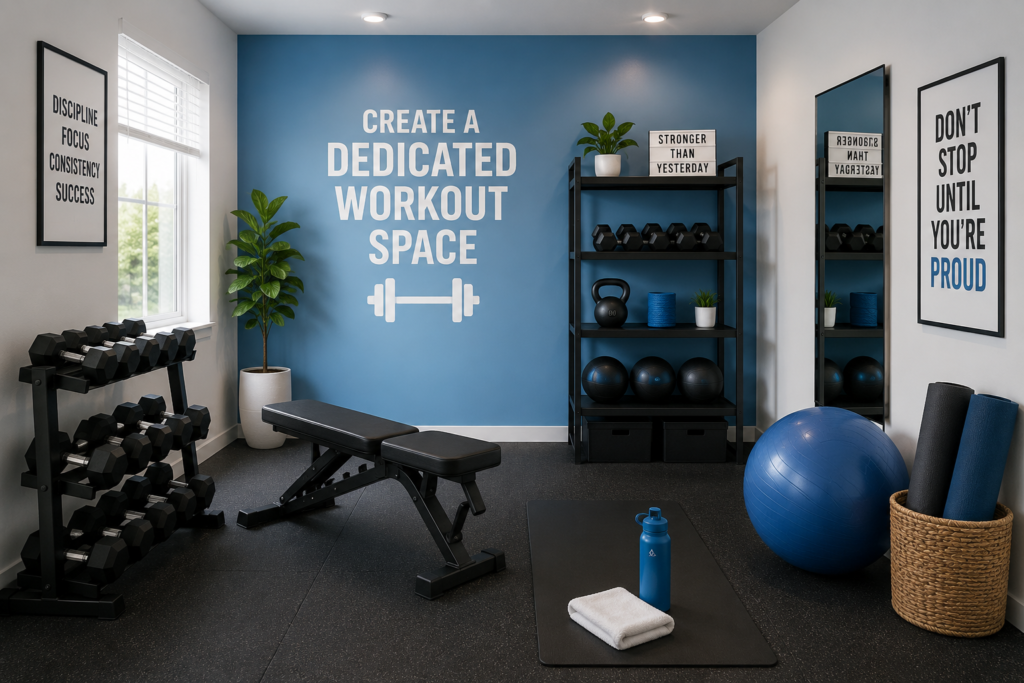
You do not need a home gym or even a spare room. All you need is a small, clutter-free area where you can move freely. A yoga mat on your bedroom floor, a corner of your living room, or even a spot in your backyard all work perfectly well.
Having a dedicated space matters more than most beginners realize. When you walk into that space, your brain receives a signal that it is time to focus and move. Over time, this mental association becomes a powerful trigger that makes it easier to start your workout even on days when motivation is low.
Keep your space clean, ventilated, and if possible, away from your TV or phone notifications. A simple, distraction-free environment can dramatically improve the quality of your workouts.
Best Foods for Muscle Gain and Faster Recovery in 2026: Complete Nutrition Guide
Tip 3: Follow a Structured Weekly Workout Plan
Random workouts without a plan rarely produce lasting results. One of the best things you can do as a beginner is to follow a structured weekly schedule that tells you exactly what to do on which day.
A simple and effective beginner plan might look like this: three days of bodyweight strength training, two days of cardio or flexibility work, and two full rest days. This kind of structure ensures that your body gets enough stimulus to change and adapt, while also getting enough recovery time to prevent injury and burnout.
There are many free beginner workout plans available online, but even a simple self-created plan is better than no plan at all. Write your weekly schedule down, stick it somewhere visible, and treat each workout like an important appointment you cannot miss.
Tip 4: Master the Foundational Bodyweight Exercises
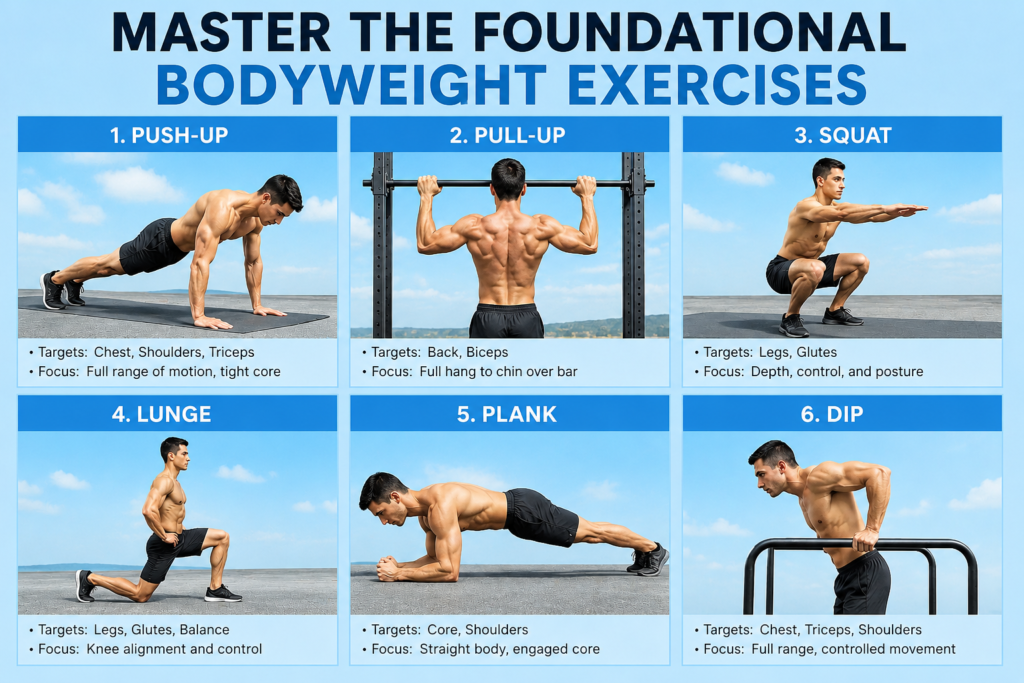
When it comes to staying fit at home without equipment, a handful of foundational exercises will give you the majority of your results. These movements train almost every major muscle group in your body and can be modified to be easier or harder depending on your current fitness level.
The most important bodyweight exercises for beginners include push-ups for the chest, shoulders, and triceps; squats for the legs and glutes; lunges for balance and lower body strength; planks for core stability; and glute bridges for the hips and lower back. Once you can perform these movements with good form, you can explore hundreds of variations that will keep your workouts challenging and interesting for years to come.
Prioritize proper form over speed or repetitions. A slow, controlled push-up with perfect form will always produce better results than ten sloppy ones done quickly.
Tip 5: Use Progressive Overload to Keep Improving
Progressive overload is the principle that your body needs a gradually increasing challenge in order to keep getting stronger and fitter. This concept is not just for weightlifters — it applies equally to bodyweight training at home.
As a beginner, you can apply progressive overload in several creative ways. You can increase the number of repetitions you do each week. You can slow down the movement to make it harder — a three-second lowering phase on a push-up is significantly more challenging than a fast one. You can reduce rest time between sets. You can progress to harder variations, moving from a standard squat to a single-leg squat over time.
The key is to ensure that each week or two, your workout feels slightly more challenging than the previous one. This consistent progression is what separates people who see real fitness results from those who plateau and get bored.
Lazy Girl Weight Loss Routine at Home for Beginners (2026)
Tip 6: Prioritize Warm-Up and Cool-Down
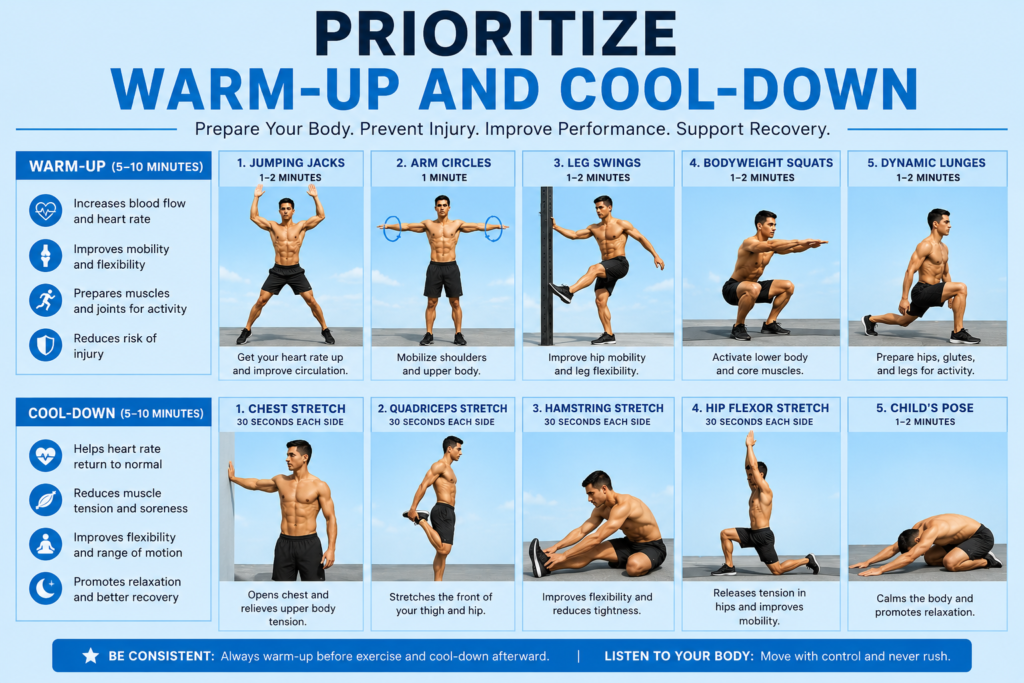
Many beginners skip the warm-up because they are eager to get to the main workout, and they skip the cool-down because they are tired when it is over. Both are big mistakes that significantly increase the risk of injury and reduce your overall results.
A good warm-up of five to ten minutes increases blood flow to your muscles, raises your core body temperature, and prepares your joints for movement. Simple movements like arm circles, leg swings, hip rotations, and light marching in place are all you need. Your body will perform better and feel better throughout the workout.
A cool-down of five to ten minutes after your workout helps your heart rate return to normal gradually and begins the recovery process. Gentle stretching during the cool-down also improves your flexibility over time, which makes all your future workouts easier and more effective.
Tip 7: Incorporate High-Intensity Interval Training (HIIT)
High-Intensity Interval Training, commonly known as HIIT, is one of the most time-efficient and effective ways to improve cardiovascular fitness and burn fat at home without any equipment. A typical HIIT session alternates between short bursts of intense effort and brief periods of rest or low-intensity movement.
A beginner-friendly HIIT workout might involve 30 seconds of jumping jacks followed by 30 seconds of rest, repeated for 15 to 20 minutes. As your fitness improves, you can increase the intensity, reduce the rest periods, or add more challenging movements like burpees or high knees.
HIIT workouts produce a metabolic effect that causes your body to continue burning calories for hours after the workout is finished, making them particularly effective for people with limited time who want maximum results.
Tip 8: Stay Hydrated Throughout the Day
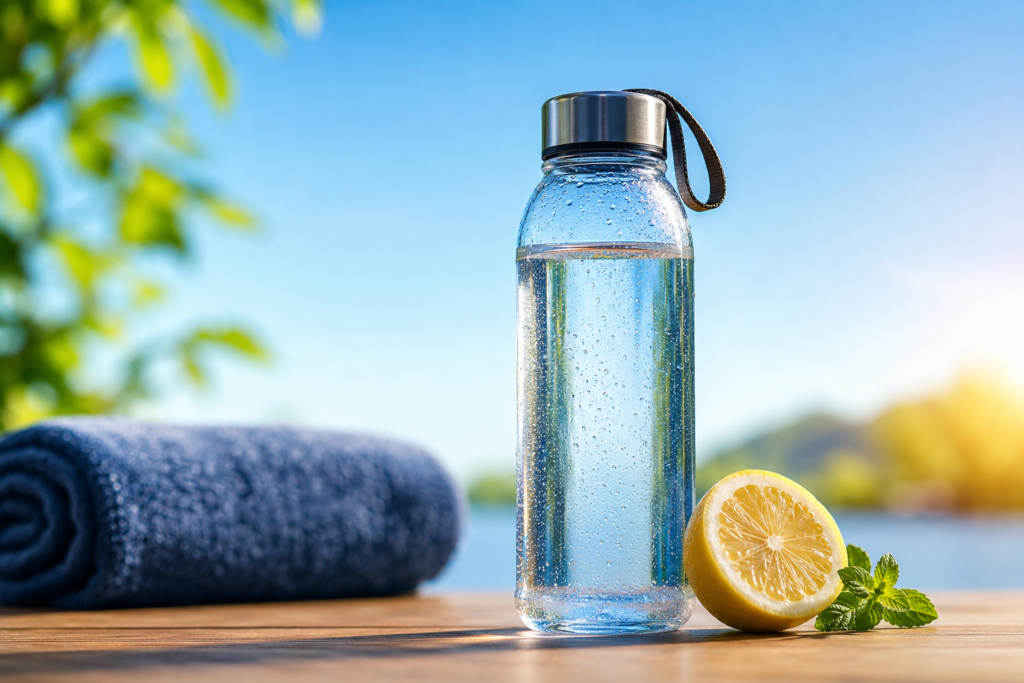
Hydration is one of the most overlooked aspects of home fitness for beginners. Your body is composed of roughly 60 percent water, and even mild dehydration can reduce your physical performance, increase your perception of effort, and slow down your recovery after exercise.
The general recommendation is to drink at least eight glasses of water per day, but active individuals who sweat during workouts need more. A simple habit that works well is to drink one full glass of water immediately upon waking, one before your workout, one during or after, and then continue drinking throughout the day.
If you find plain water boring, adding slices of lemon, cucumber, or mint can make it much more enjoyable. Staying well hydrated will improve your energy levels, mental clarity, and physical performance noticeably within just a few days.
Best Fitness Tips Without Gym for a Healthy Lifestyle in 2026
Tip 9: Get Enough Quality Sleep

No fitness tip on this list will work to its full potential if you are consistently sleeping less than seven to eight hours per night. Sleep is when your body does the majority of its recovery and adaptation work. Muscles repair and grow during sleep. Hormones that regulate metabolism, hunger, and energy are produced and balanced during sleep.
Poor sleep increases cortisol levels, which promotes fat storage and muscle breakdown — exactly the opposite of what you are trying to achieve with your home workout routine. It also reduces motivation, impairs decision-making, and makes unhealthy food choices much more tempting.
Creating a consistent sleep schedule, keeping your bedroom cool and dark, and avoiding screens for an hour before bed are all simple habits that can dramatically improve your sleep quality and, as a result, your fitness progress.
Tip 10: Pay Attention to Your Nutrition
You cannot out-exercise a poor diet. This is one of the most repeated phrases in the fitness world because it is completely true. No matter how consistent your home workout routine is, your results will be limited if your nutrition does not support your goals.
For beginners, the most important nutritional principle is to focus on whole, minimally processed foods as the foundation of your diet. Lean proteins like chicken, fish, eggs, and legumes support muscle repair and growth. Complex carbohydrates like oats, brown rice, and sweet potatoes provide sustained energy for workouts. Healthy fats from sources like avocados, nuts, and olive oil support hormonal health and reduce inflammation.
You do not need to follow a complicated or restrictive diet to see results. Simply reducing your intake of ultra-processed foods, sugary drinks, and excessive snacking while increasing your protein and vegetable intake will produce noticeable changes in how you look and feel.
Tip 11: Use Online Resources and Free Workout Videos
One of the greatest advantages of living in the digital age is the incredible amount of free fitness content available online. YouTube alone has thousands of high-quality, professionally guided home workout videos for complete beginners, covering everything from yoga and pilates to bodyweight strength training and dance cardio.
Following along with a video adds a social element to your home workout, which can make it feel more engaging and less isolating. A skilled instructor will also cue you on proper form, keep you motivated, and structure the workout in a way that maximizes your results.
Explore different styles of training to find what you genuinely enjoy. The best home workout for any beginner is the one they will actually do consistently, and enjoyment plays a huge role in that.
Tip 12: Track Your Progress Consistently
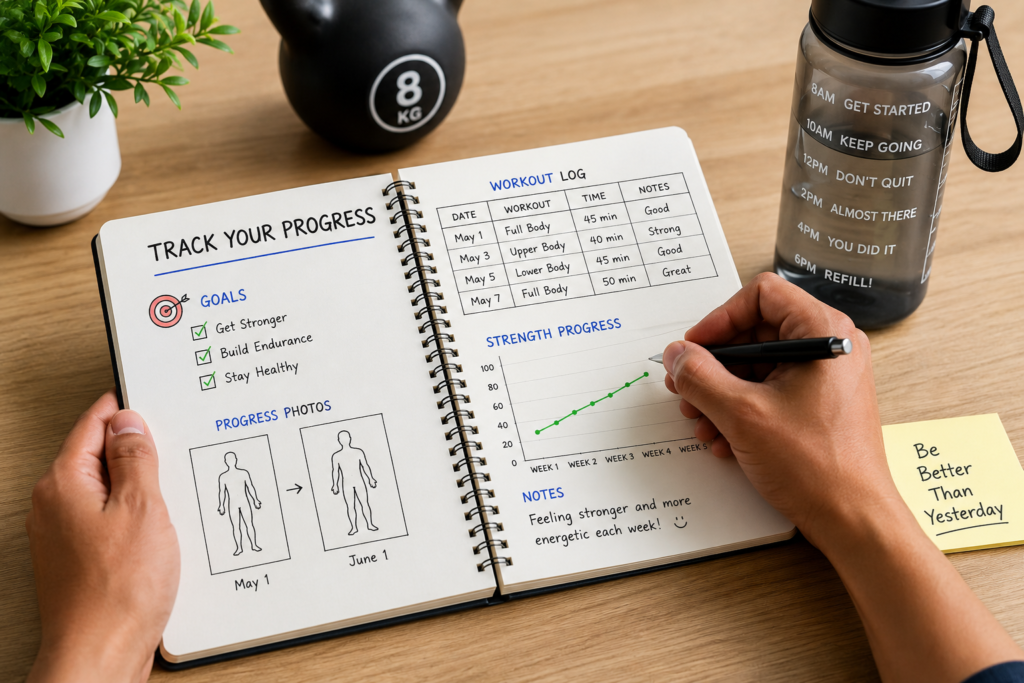
Tracking your progress is one of the most powerful tools available to anyone pursuing a fitness goal, yet it is one that most beginners completely ignore. When you have a record of where you started and how far you have come, staying motivated during the inevitable difficult periods becomes much easier.
There are many simple ways to track your fitness progress at home. You can keep a workout journal where you record the exercises, sets, and repetitions from each session. You can take progress photos every two weeks in the same lighting and clothing. You can measure your body at regular intervals, or simply note how you feel during workouts that previously felt very challenging.
Over weeks and months, your tracking record will tell a story of consistent improvement that is deeply motivating and gives you concrete evidence that your hard work is paying off.
Best Home Workout for Weight Loss at Home Without Equipment (2026)
Tip 13: Build a Consistent Daily Movement Habit
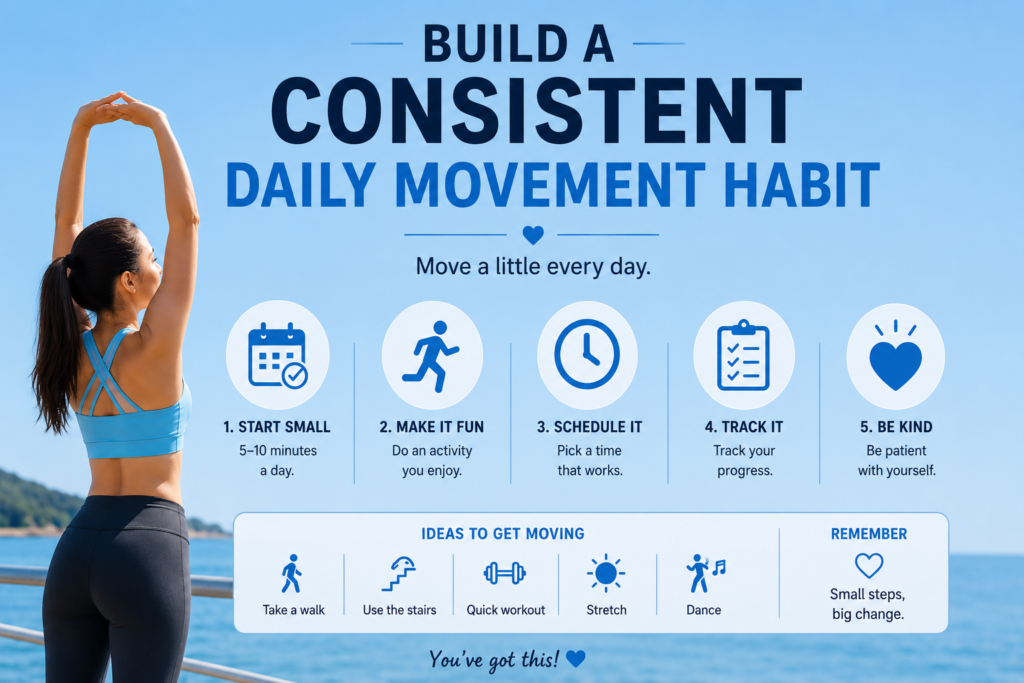
Formal workouts are important, but they represent only a small fraction of your total daily movement. Research consistently shows that people who move more throughout their day — not just during dedicated exercise sessions — have significantly better health outcomes, lower body fat levels, and more energy.
Look for simple opportunities to add movement to your daily routine outside of your workouts. Take a 10-minute walk after meals. Do a set of squats while waiting for your coffee to brew. Stretch for five minutes before bed. Stand up and move around for a few minutes every hour if you work at a desk.
These small habits compound over time and contribute meaningfully to your overall fitness level, calorie expenditure, and physical wellbeing.
Tip 14: Manage Stress and Mental Wellbeing
Physical fitness and mental health are inseparably linked. Chronic stress elevates cortisol levels, disrupts sleep, drives emotional eating, and makes it genuinely harder to maintain the motivation and energy needed for regular exercise.
Incorporating stress management practices into your daily routine is therefore not a luxury — it is a core component of a successful home fitness plan. Practices like meditation, deep breathing exercises, journaling, spending time in nature, and maintaining social connections all help regulate your stress response and support your fitness goals.
Even five to ten minutes of mindful breathing or meditation daily can make a measurable difference in your cortisol levels, sleep quality, and overall sense of wellbeing over time.
Muscle Gain Workout at Home Without Gym: Complete Beginner Guide 2026
Tip 15: Be Patient and Trust the Process
Perhaps the most important tip of all is this: be patient. Real, lasting fitness results take time, and the timeline is almost always longer than beginners expect or hope for. Most people overestimate what they can achieve in two weeks and dramatically underestimate what they can achieve in six months of consistent effort.
The fitness journey is not a straight line. There will be weeks when progress feels slow or invisible. There will be days when you feel tired, unmotivated, or frustrated. This is completely normal and is part of every fitness journey, regardless of experience level.
The people who ultimately succeed are not those with the most talent or the perfect plan — they are the ones who show up consistently, even imperfectly, day after day. Trust the process, celebrate small wins, learn from setbacks, and keep moving forward.
Brown Bread Healthy For Weight Loss? Benefits, Calories & Best Brands
Final Thoughts
Staying fit at home without equipment is not only possible — for many people, it is the most sustainable and enjoyable path to long-term health and fitness. The 15 tips covered in this guide give you a complete framework to get started, stay consistent, and continue making progress for as long as you commit to the journey.
You do not need anything expensive, complicated, or special to build a body and a level of fitness you are proud of. You need a clear goal, a solid plan, consistent effort, and the patience to let the process work. Everything you need is already within you.

Pingback: Muscle Gain Diet Plan for Skinny Guys (2026) – Beginner Guide