
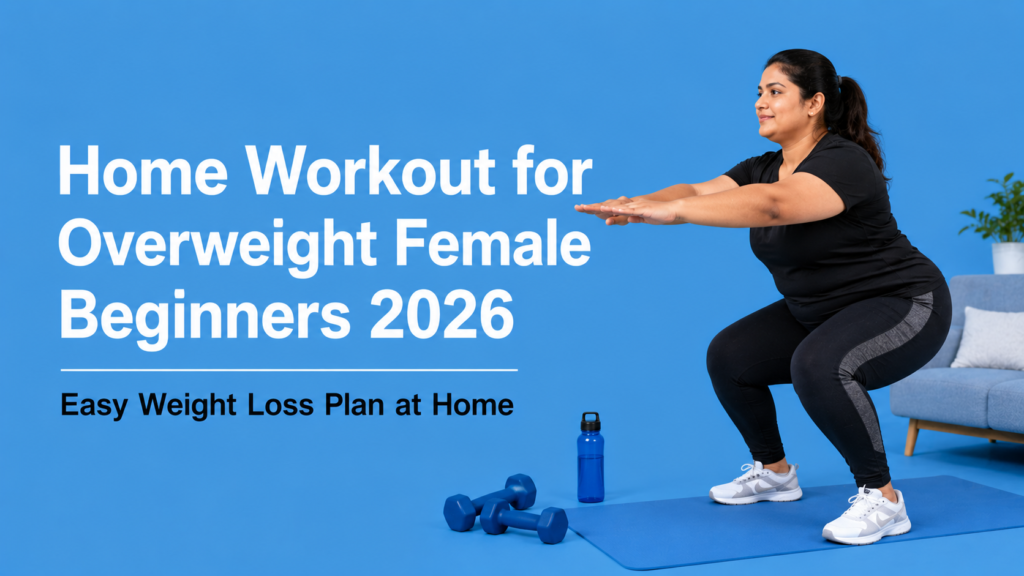

Starting a fitness journey can feel overwhelming — especially when you don’t know where to begin. If you’re an overweight woman looking for a simple, effective, and safe way to lose weight without a gym membership, you’ve come to the right place. This guide is designed specifically as a home workout for overweight female beginners, giving you a realistic, step-by-step plan that actually works in 2026.
No expensive equipment. No complicated routines. Just honest advice and beginner-friendly exercises you can start today — right in your living room.
Why Home Workouts Work Better for Beginners
Many women feel intimidated walking into a gym for the first time. The crowded machines, the mirrors, the feeling of being watched — it can stop you before you even begin. Home workouts remove all of that pressure.
When you exercise at home, you control the environment. You can move at your own pace, wear whatever you want, and pause whenever you need to. For overweight female beginners, this comfort is not a luxury — it is a necessity. Feeling safe and relaxed during exercise helps your body respond better, keeps stress hormones low, and makes it far easier to stay consistent.
Consistency, not intensity, is what produces lasting weight loss. A moderate 30-minute home workout done five days a week will always outperform an aggressive gym routine that you quit after two weeks.
Which Dry Fruit is Best For Weight Loss? (Complete 2026 Guide for India)
Understanding Weight Loss the Right Way
Before jumping into exercises, it helps to understand how weight loss actually works. Many beginners fall into the trap of extreme diets or exhausting workouts that are impossible to sustain.
Weight loss happens when your body uses more calories than it takes in. Exercise increases calorie burn and builds muscle, which in turn raises your resting metabolism. However, for overweight female beginners, the goal should not be to burn maximum calories on day one. The goal is to build a habit, reduce inflammation, improve circulation, and slowly increase strength — all of which support long-term fat loss.
Your body also responds to how it feels. High-impact, painful workouts can spike cortisol (the stress hormone), which actually encourages fat storage — especially around the belly. Low-to-moderate intensity workouts, particularly in the beginning, keep cortisol controlled and set the stage for steady, sustainable progress.
How to Start: Setting Up Your Home Workout Space
You do not need a dedicated room or expensive gear to begin your fitness journey. Here is what you genuinely need:
A clear floor space of about 6 feet by 4 feet is sufficient for most beginner exercises. A yoga mat or a folded blanket adds cushioning for your joints. Comfortable, supportive footwear matters — even indoors — especially if you are overweight, as joint support helps prevent injury. A glass of water nearby keeps you hydrated. That’s it. You’re ready.
Optional additions that can help as you progress include resistance bands (very affordable and lightweight), a sturdy chair for balance support, and light dumbbells (1–3 kg to start).
Muscle Gain Diet Plan for Skinny Guys (2026) – Complete Beginner Guide
The Beginner’s Home Workout Plan for Overweight Women (Week 1–4)
This plan is structured around four weeks, gradually increasing duration and intensity. Each session is 25–35 minutes and includes a warm-up, main workout, and cool-down. Aim for 4–5 days per week with at least one full rest day between sessions.
Warm-Up (5 Minutes) — Do This Every Session
Warming up is non-negotiable. It prepares your joints, raises your heart rate gently, and reduces injury risk.
March in Place — Stand tall and lift your knees alternately while swinging your arms. Do this for 60 seconds.
Shoulder Rolls — Roll your shoulders forward 10 times, then backward 10 times.
Hip Circles — Place hands on hips, feet shoulder-width apart, and rotate your hips in large slow circles, 10 each direction.
Ankle Rotations — Lift one foot slightly and rotate the ankle 10 times each direction, then switch.
Neck Side Stretches — Gently tilt your head toward your right shoulder, hold 5 seconds, then left. Repeat 3 times each side.
Week 1–2: Building the Foundation
The first two weeks focus entirely on movement patterns, breathing, and joint mobility. Do not push for speed or endurance yet. Focus on form.
Modified Wall Push-Ups — Stand facing a wall, place palms flat on it at chest height, and slowly bend your elbows to bring your chest toward the wall, then push back. This builds upper body strength without straining the wrists or shoulders. Perform 3 sets of 10 repetitions, resting 60 seconds between sets.
Seated Leg Raises — Sit upright on a sturdy chair. Slowly extend one leg until it is straight, hold for 2 seconds, lower it, and repeat with the other leg. This activates your core and thigh muscles with zero joint impact. Perform 3 sets of 12 per leg.
Standing Calf Raises — Hold the back of a chair for balance. Rise up onto your toes slowly, hold for 2 seconds, then lower. This improves ankle stability and circulation in the lower legs — particularly important for overweight beginners. Perform 3 sets of 15.
Glute Bridges — Lie on your back with knees bent and feet flat on the floor. Press through your heels and lift your hips toward the ceiling, squeezing your glutes at the top. Lower slowly. This is one of the most effective exercises for the lower body and core with minimal strain. Perform 3 sets of 12.
Standing Side Leg Lifts — Hold a chair or wall for support. Keeping your torso straight, lift one leg out to the side as high as comfortable, then lower. This targets the outer thighs and hips. Perform 3 sets of 10 per side.
Week 3–4: Introducing Light Cardio
By week three, your body is adapting. You can now add short cardio intervals to increase calorie burn and improve heart health.
Step Touch — Step your right foot to the right, bring your left foot to meet it, then step left and bring your right foot in. Keep a light rhythm and add arm swings. This is a gentle cardio move that raises your heart rate without impact. Perform for 2 minutes, rest 30 seconds, and repeat 3 times.
Modified Squats — Stand with feet slightly wider than shoulder-width, toes turned slightly out. Lower yourself as if sitting into a chair — only go as low as feels comfortable. Hold for 1 second, then rise. If balance is a concern, hold a chair lightly in front of you. Perform 3 sets of 10.
Seated Punches — Sit on the edge of a chair, feet flat. Alternate punching forward with each arm while twisting slightly through your torso. This engages the core and arms while keeping you seated. Perform for 45 seconds, rest 20 seconds, and repeat 3 times.
Standing March with High Knees — Identical to the warm-up march but with deliberate effort to lift knees higher. This increases core engagement. Perform for 60 seconds, rest 30 seconds, and repeat 4 times.
Bird Dog — On hands and knees (use a mat), extend your right arm forward and your left leg back simultaneously. Hold 3 seconds, return to center, and switch sides. This builds deep core stability which supports the spine during all other exercises. Perform 3 sets of 8 per side.
Cool-Down (5 Minutes) — Do This Every Session
Cooling down helps your heart rate return to normal and reduces next-day soreness.
Slow Walking in Place — 60 seconds of slow, gentle marching.
Standing Quad Stretch — Hold a wall or chair, bend one knee to bring your heel toward your glute, hold 20 seconds, then switch. Stretches the front of the thigh.
Seated Hamstring Stretch — Sit on the edge of a chair, extend one leg straight with heel on floor, and lean forward gently from the hips. Hold 20 seconds per leg.
Child’s Pose — On your mat, sit back onto your heels, extend your arms forward on the floor and let your forehead rest down. Hold for 30–60 seconds. This gently decompresses the spine and calms the nervous system.
Deep Breathing — Sit comfortably, breathe in slowly for 4 counts, hold for 2, exhale for 6. Repeat 5 times. This activates the parasympathetic nervous system and reduces post-workout cortisol.
Healthy Foods for Weight Loss (2026) – Top 25 Foods That Help Burn Fat Naturally
Nutrition Tips to Support Your Home Workout Plan
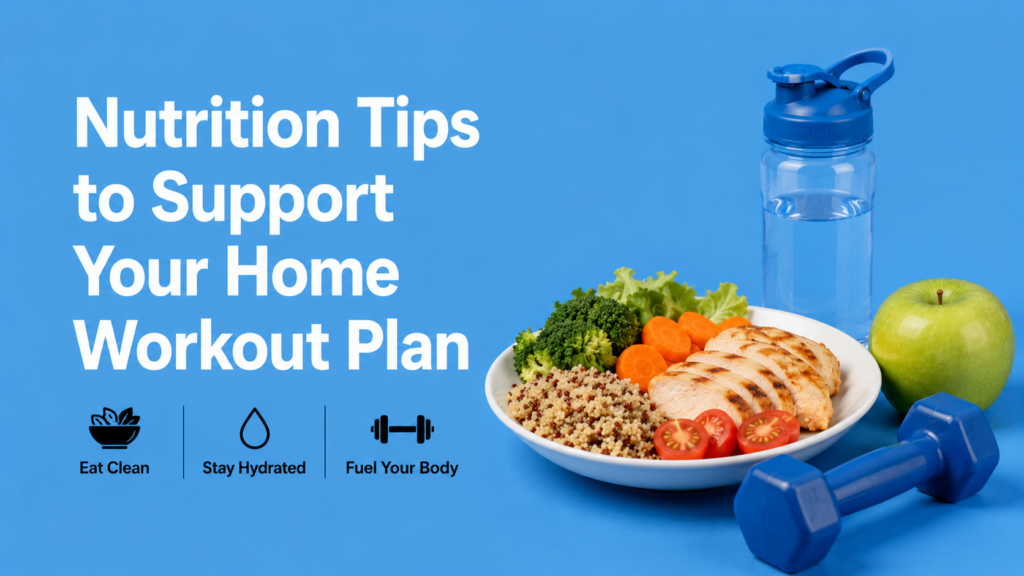
Exercise alone does not create the calorie deficit needed for meaningful weight loss. What you eat matters enormously — but this does not mean starving yourself or following an extreme diet.
Start by focusing on three simple changes. First, increase your water intake to at least 8–10 glasses per day. Water supports metabolism, reduces water retention, and often curbs false hunger signals. Many women find that simply drinking more water reduces snacking significantly.
Second, reduce ultra-processed foods gradually rather than all at once. Packaged snacks, sugary drinks, fried foods, and refined carbohydrates cause blood sugar spikes that trigger fat storage. You do not need to eliminate them overnight, but reducing them steadily makes a real difference.
Third, prioritize protein at every meal. Protein keeps you full longer, protects lean muscle mass during weight loss, and requires more energy to digest. Eggs, lentils, yogurt, chicken, paneer, fish, and legumes are all excellent sources. Aim for at least 20–25 grams of protein per meal.
You do not need to count calories obsessively. Building awareness of what you eat and making small, consistent improvements is far more sustainable for beginners than aggressive calorie restriction.
Sleep and Recovery: The Overlooked Keys to Weight Loss
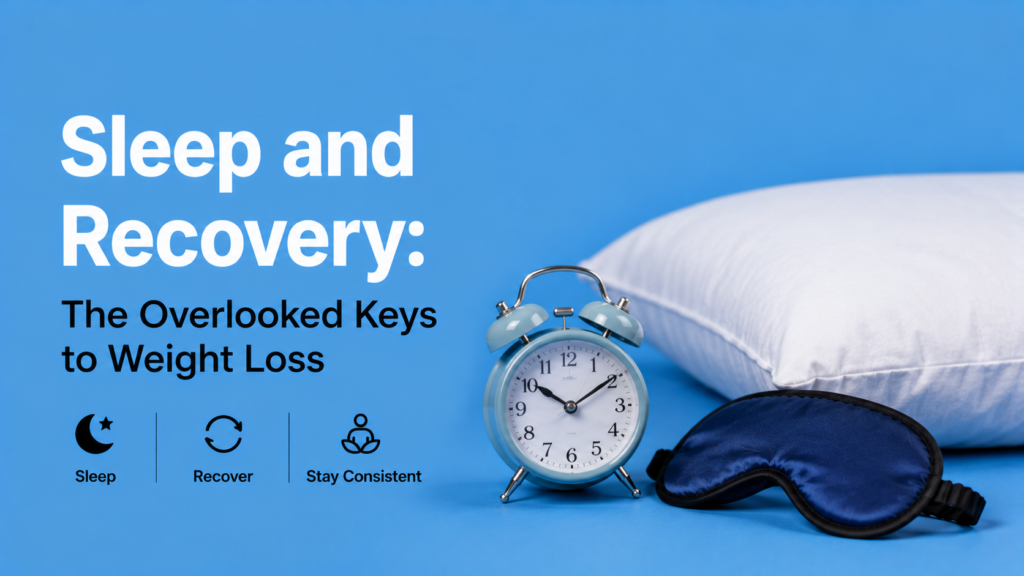
Many overweight beginners put all their focus on workouts and diet, completely ignoring sleep. This is a significant mistake. Poor sleep is directly linked to increased hunger hormones (ghrelin rises, leptin drops), stronger cravings for high-calorie foods, slower metabolism, and reduced muscle recovery.
Aim for 7–9 hours of quality sleep per night. Establish a consistent sleep schedule — even on weekends. Avoid screens for 30–60 minutes before bed and keep your room cool and dark.
Recovery days are also essential. On rest days, your muscles repair and grow stronger. Light walking, gentle stretching, or a calm yoga session are excellent on rest days — they promote circulation without adding stress to muscles.
15 Best Fitness Tips for Beginners in 2026 – Complete Guide
Staying Motivated: The Real Challenge
The hardest part of any fitness journey is not the first workout — it is staying consistent through week three, week six, and beyond. Here are strategies that genuinely work for overweight female beginners.
Track your progress in ways that go beyond the scale. Notice how your energy improves, how your sleep gets deeper, how climbing stairs feels easier. These non-scale victories are powerful motivators and reflect real health improvements.
Set process goals rather than outcome goals. Instead of “I want to lose 10 kg,” set “I will work out four days this week.” This keeps your focus on what you can control every single day.
Find an accountability partner — a friend, family member, or online community of women on similar journeys. Sharing your progress (and your struggles) with someone who understands makes a profound difference.
Celebrate every small win. Completing week one of your home workout for overweight female beginners plan is genuinely an achievement. Acknowledge it.
Common Mistakes to Avoid
Skipping the warm-up is one of the most common errors beginners make. It takes only five minutes but significantly reduces injury risk — especially for overweight women whose joints carry more load.
Doing too much too soon is another pitfall. Your enthusiasm is wonderful, but jumping into intense daily workouts in week one leads to burnout and injury. Follow the progressive plan outlined above.
Comparing yourself to others — online or in real life — is counterproductive. Your journey is entirely your own. A woman who has been training for two years is not a benchmark for someone starting today.
Expecting overnight results creates frustration. Sustainable fat loss is typically 0.5–1 kg per week when combining moderate exercise with a modest calorie deficit. Trust the process.
Best Morning Routine for Muscle Gain (2026) – Build Muscle Faster Every Day
Your 2026 Home Workout Journey Starts Now
The perfect time to begin is not Monday. It is not next month. It is today. Every expert-level athlete started exactly where you are — at the beginning, unsure, perhaps a little nervous.
This home workout for overweight female beginners plan is your roadmap. It is designed to respect your body’s current capacity while building steadily toward a stronger, healthier you. You do not need to be perfect. You need to be consistent.
Start with the warm-up today. Do five minutes of marching in place. That is enough for day one. And then do it again tomorrow.
Your body is ready. Your journey starts now.


Pingback: Best Time to Drink Orange Juice Before or After Workout (2026)