
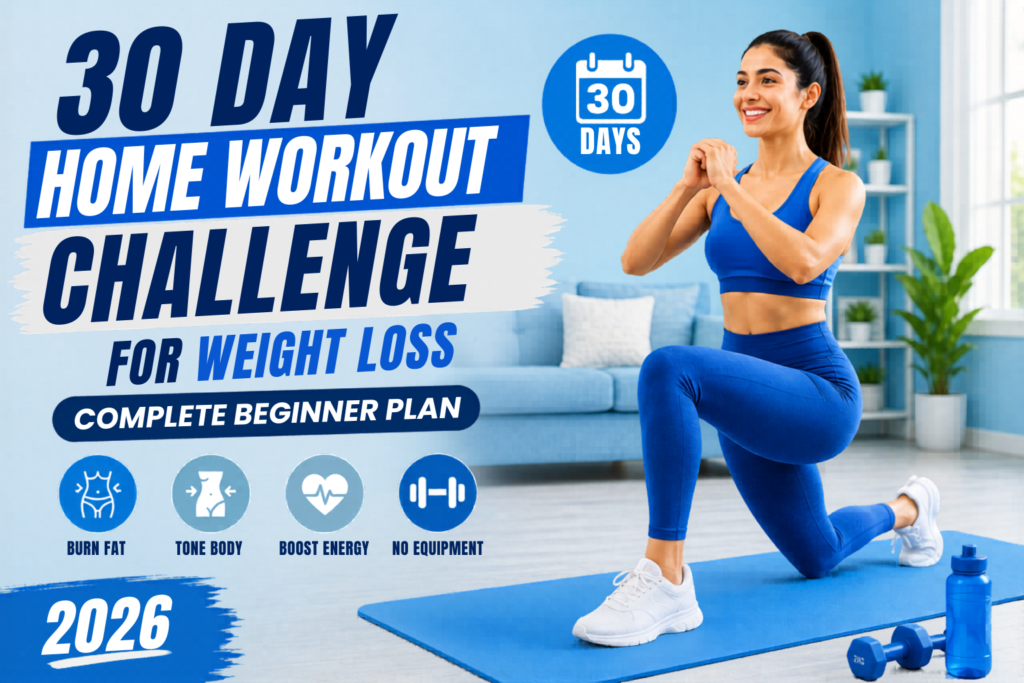

30 Day Home Workout Challenge for Weight Loss
A lot of people try crash diets or extreme fitness routines, only to burn out within a week. The reason this 30 Day Home Workout Challenge for Weight Loss is different is because it is built on a principle of progressive overload — meaning the workouts start simple and gradually increase in intensity as your body adapts.
This approach does three powerful things for your body. First, it keeps your metabolism elevated throughout the entire month because you are constantly challenging your muscles in new ways. Second, it prevents the plateau effect that kills most fitness journeys. Third, it gives beginners the time to build proper form before the difficulty increases — reducing the risk of injury significantly.
Studies consistently show that 30-day challenges create lasting habit loops. When you commit to something for a full month, you rewire your brain to see exercise as a daily routine rather than a chore. That psychological shift is arguably the most important transformation this challenge delivers.
Best Foods for Muscle Gain and Faster Recovery in 2026: Complete Nutrition Guide
What to Expect in 30 Days
Before you start, it helps to have realistic expectations. Weight loss is never a one-size-fits-all journey. The results you see in 30 days depend on several personal factors — your current body weight, your daily diet, how well you sleep each night, your stress levels, your age, and most importantly, how consistent you are with the plan. Someone who is 30 pounds overweight and eating in a calorie deficit will see faster scale results than someone who is already close to their goal weight. That does not mean one person is working harder than the other — it simply means bodies respond differently based on where they are starting from.
That said, most beginners who genuinely commit to this 30 Day Home Workout Challenge for Weight Loss — showing up 5 days a week, following the progression, and supporting their workouts with decent nutrition — report a very similar range of positive changes by the end of the month.
In terms of fat loss, you can realistically expect to lose between 4 to 8 pounds of body fat over the 30 days. This number may feel modest compared to what crash diet advertisements promise, but fat lost through exercise and sustainable eating is the kind that actually stays off. Rapid weight loss from extreme restriction almost always comes back — often with extra pounds attached. Slow, consistent fat loss is the real win.
Beyond the scale, your body composition will visibly shift. Muscle tone improves noticeably — especially in the core, legs, glutes, and arms — because these are the muscle groups most heavily targeted in the plan. You may not have six-pack abs after 30 days, but you will feel your midsection getting tighter and your legs feeling stronger with every passing week.
Lazy Girl Weight Loss Routine at Home for Beginners (2026)
The Complete 30-Day Workout Plan
The plan is divided into four weeks, each one building on the last. You will work out 5 days a week with 2 rest days. Each session should take between 25 to 45 minutes depending on the week.
Week 1 – Foundation Phase (Days 1–7)
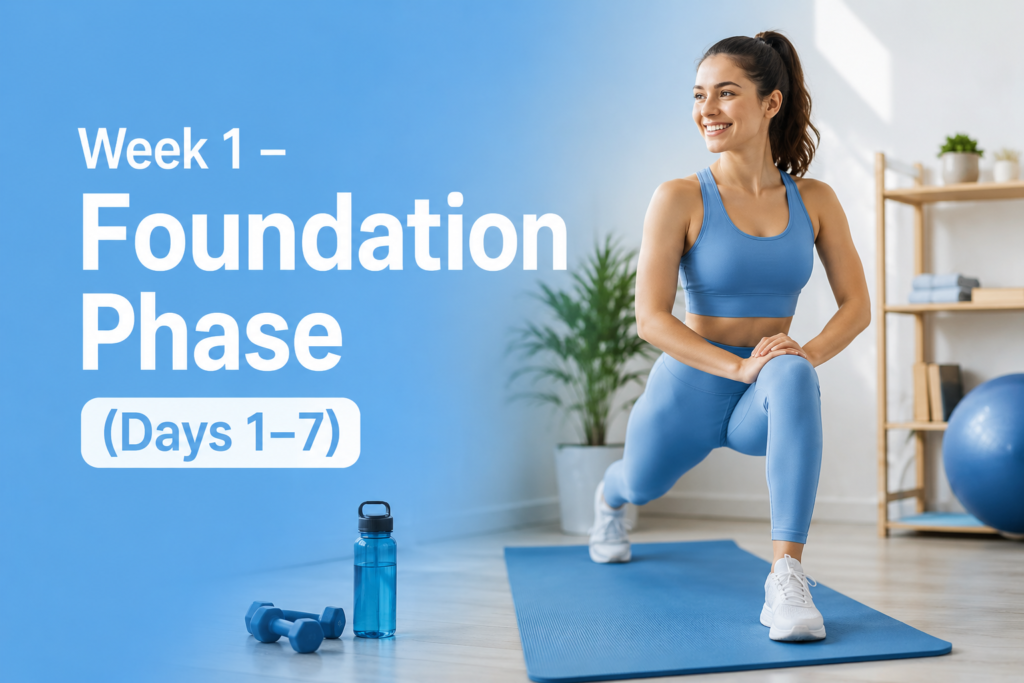
The first week is all about learning the movements and activating muscles that may have been dormant for a long time. Do not underestimate this phase. Proper form now will prevent injury later.
Day 1 – Full Body Activation Start with 5 minutes of light walking in place to warm up. Then move into 3 rounds of: 10 bodyweight squats, 8 modified push-ups (on your knees if needed), 15 crunches, 20 seconds of plank hold, and 10 glute bridges. Rest for 60 seconds between rounds. Cool down with 5 minutes of gentle stretching.
Day 2 – Rest or Light Walk Take a 20–30 minute walk at a comfortable pace. This is called active recovery and it keeps your metabolism moving without straining recovering muscles.
Day 3 – Lower Body Focus Warm up with leg swings and hip circles for 5 minutes. Then do 3 rounds of: 15 squats, 10 reverse lunges per leg, 20 calf raises, 15 glute bridges, and a 30-second wall sit. Rest 60 seconds between rounds.
Day 4 – Upper Body Focus Begin with shoulder rolls and arm circles. Then complete 3 rounds of: 10 push-ups, 15 tricep dips using a chair, 12 Superman raises (lying on your stomach), 20 shoulder taps in plank, and 10 pike push-ups.
Day 5 – Core and Cardio This session introduces your first burst of cardio. Do 5 minutes of jumping jacks or marching in place, followed by 3 rounds of: 20 mountain climbers, 15 bicycle crunches, 10 leg raises, 30-second plank, and 20 high knees.
Days 6 and 7 – Rest Complete rest. Stretch for 10 minutes if you feel stiff, and focus on getting good sleep and staying hydrated.
Best Fitness Tips Without Gym for a Healthy Lifestyle in 2026
Week 2 – Building Momentum (Days 8–14)
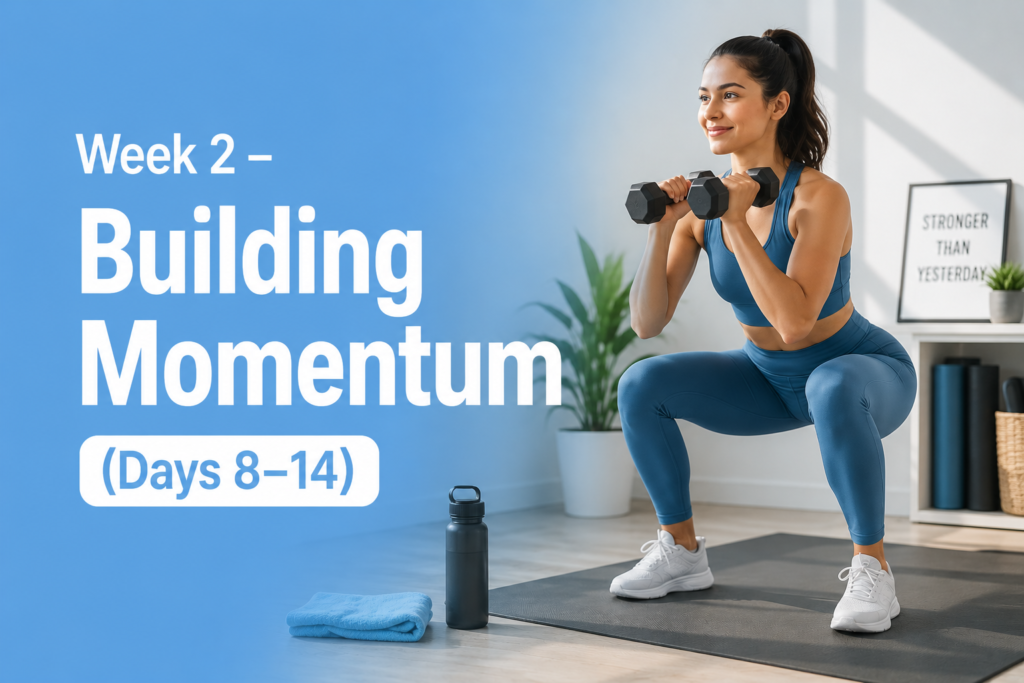
By now your muscles are awake and your body is ready for more. We increase the volume and introduce new movement patterns.
Days 8 and 10 – Full Body Circuit Now doing 4 rounds instead of 3. Add jump squats (or regular squats if joints are sensitive), increase plank hold to 45 seconds, add 10 burpees per round (scale to step-back burpees if needed), and extend the workout duration to 35 minutes total.
Days 9 and 11 – Lower and Upper Body Split Follow the same structure as Week 1 but add one extra set and increase reps by 3–5 on each exercise. This small increase makes a large difference in caloric burn over time.
Day 12 – Cardio Blast This is your first dedicated cardio day. Do 30 minutes of interval training: 1 minute of high intensity (jumping jacks, high knees, or burpees) followed by 1 minute of rest. Repeat 15 times.
Days 13 and 14 – Rest and Recovery Use foam rolling or a tennis ball to massage sore muscles. Prioritize sleep — this is when your body actually burns fat and repairs muscle tissue.
Which Dry Fruit is Best For Weight Loss? (Complete 2026 Guide for India)
Week 3 – Intensity Surge (Days 15–21)
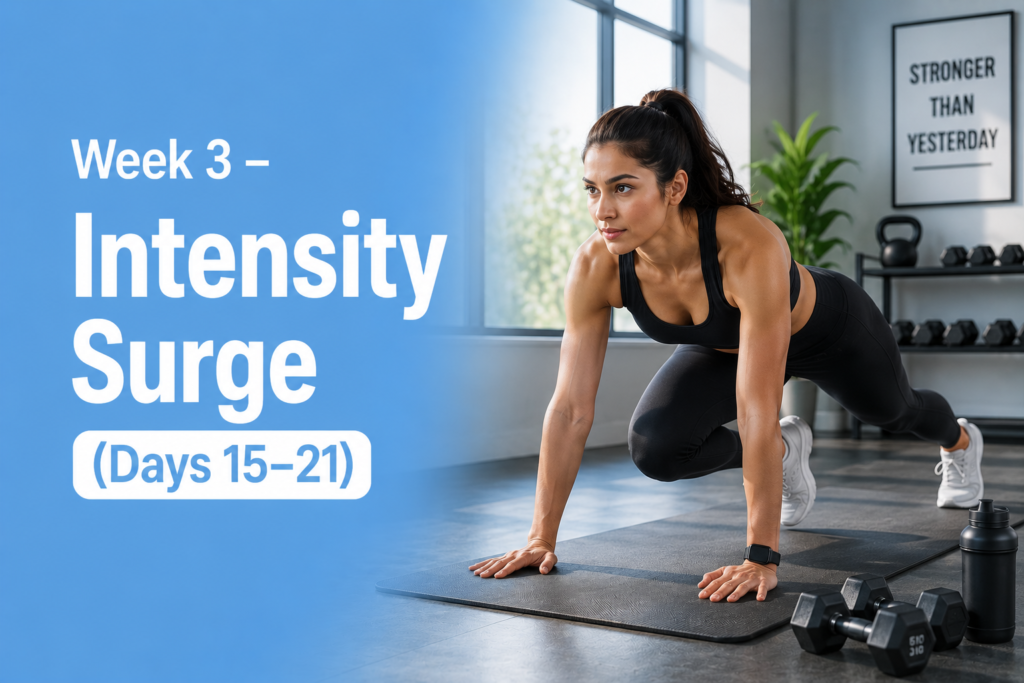
This is where the challenge earns its name. Week 3 is deliberately harder and this is where most people see the biggest physical changes.
Days 15, 17, and 19 – HIIT Full Body Sessions High-Intensity Interval Training (HIIT) is one of the most effective methods for weight loss. Each session follows a 40-seconds-on, 20-seconds-off format. Exercises rotate through jump squats, push-ups, reverse lunges, mountain climbers, plank to push-up, lateral shuffles, glute bridges, and tricep dips. Complete 4 rounds of 8 exercises. Total time: approximately 35–40 minutes.
Days 16 and 18 – Active Recovery and Mobility Do 20 minutes of yoga-inspired stretching or a brisk 30-minute walk. Your joints and tendons need this recovery, even if you feel energetic.
Days 20 and 21 – Rest Same as before — full rest. Eat well, sleep 7–9 hours, and drink at least 2.5 litres of water.
Home Workout for Women: Complete Indian Fitness Guide (2026)
Week 4 – The Final Push (Days 22–30)
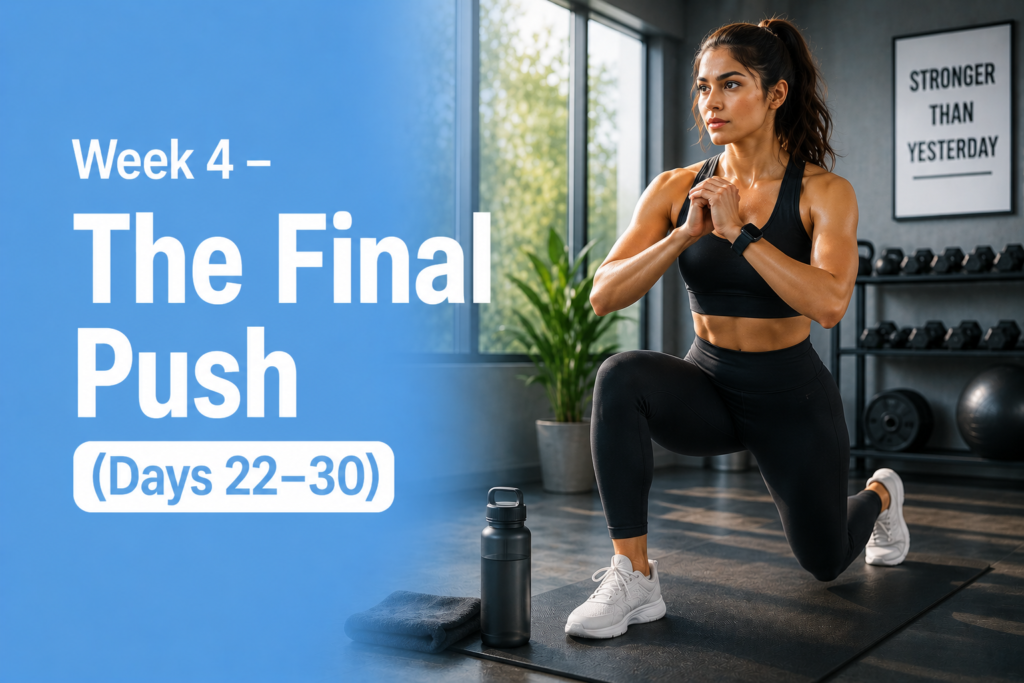
This is your victory lap, but it is also the hardest week. You are now fit enough to handle real intensity. Push yourself — but always listen to your body.
Days 22, 24, and 26 – Advanced HIIT Circuits Increase the work interval to 45 seconds with only 15 seconds of rest. Add new moves like burpee-to-push-up, plank jacks, jump lunges (or walking lunges), and diamond push-ups. Do 5 full rounds. This workout will take 40–45 minutes and you will burn significantly more calories than in Week 1.
Days 23 and 25 – Core and Strength Focus Now that your core is stronger, perform harder variations: full plank holds for 60 seconds, hanging knee raises if you have a bar, single-leg glute bridges, and slow-tempo push-ups (3 seconds down, pause, 1 second up). Slow movements increase muscle activation dramatically.
Day 27 – Long Cardio Session Do 45 minutes of steady-state cardio — a brisk walk, jog, cycling, or dancing. This session trains your aerobic base and is excellent for fat burning.
Days 28 and 29 – Active Recovery Light stretching and walking only. Let your body absorb all the hard work you have done.
Day 30 – Celebration Workout Repeat Day 1’s workout. You will be amazed at how easy it feels compared to when you started. This is your proof of progress.
Nutrition Tips to Maximize Your Results

The 30 Day Home Workout Challenge for Weight Loss will deliver far better results when paired with smart eating habits. You do not need a strict diet — just a few powerful principles.
Eat whole foods as much as possible. Vegetables, lean proteins like chicken, eggs, and legumes, healthy fats from avocado and nuts, and complex carbs from oats, rice, and sweet potatoes should form the core of your diet. Minimize processed foods, sugary drinks, and excessive alcohol during the 30 days.
Protein is particularly important because it preserves muscle mass while you lose fat. Aim for 0.7 to 1 gram of protein per pound of body weight each day. This keeps you full longer and supports muscle repair after workouts.
Hydration is often overlooked but critical. Drinking enough water improves workout performance, reduces cravings, and speeds up fat metabolism. Aim for at least 8–10 glasses of water daily, and more on days when you sweat heavily.
Do not skip breakfast. A protein-rich morning meal — like eggs with vegetables or oats with protein powder — sets your metabolism up for the whole day. Skipping breakfast often leads to overeating later, which sabotages your calorie deficit.
Muscle Gain Workout at Home Without Gym: Complete Beginner Guide 2026
Common Mistakes to Avoid
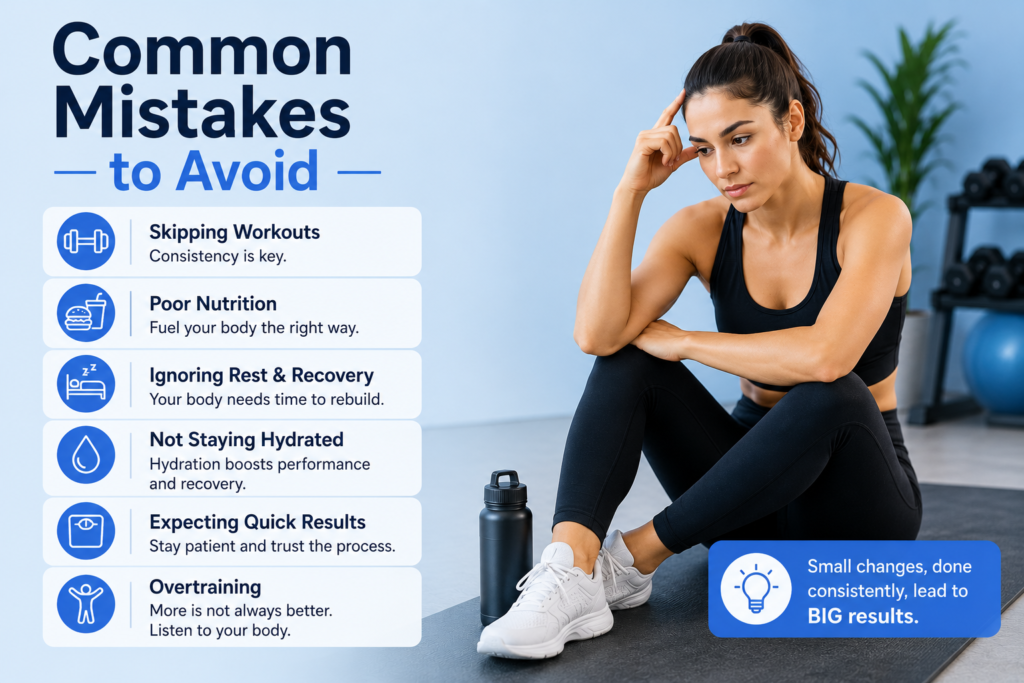
Many beginners struggle not because the plan is too hard, but because they make avoidable errors. The most common mistake is skipping rest days because they feel motivated. Rest is not laziness — it is when your muscles rebuild and your fat-burning hormones reset. Skipping rest days leads to burnout and injury.
Another frequent error is not warming up properly. A 5-minute warm-up increases blood flow to muscles, improves flexibility, and reduces injury risk by up to 50%. Never skip it.
Comparing your progress to others is also counterproductive. Everyone’s body responds to exercise differently based on genetics, diet, sleep, and stress levels. Focus on your own journey and track your personal improvements — not someone else’s transformation photo.
Finally, do not rely on the scale alone to measure progress. Muscle weighs more than fat, so your weight might not drop dramatically even as your body composition improves dramatically. Take progress photos, measure your waist, and notice how your clothes fit.
Brown Bread Healthy For Weight Loss? Benefits, Calories & Best Brands
How to Stay Motivated for 30 Days
Motivation fluctuates — that is completely normal. The key is building systems that keep you going even on days when you do not feel like it. Schedule your workout like a meeting. Put it in your calendar and treat it as non-negotiable.
Find a workout partner or join an online fitness community where people are also doing the challenge. Accountability is one of the strongest predictors of fitness success. Tracking your workouts in a journal or app also helps — seeing a chain of completed days makes you not want to break the streak.
Celebrate small wins. After Week 1, reward yourself with something non-food related — a new workout outfit, a relaxing bath, or a movie night. Positive reinforcement keeps the brain engaged
.Best Daily Fitness Tips for Beginners at Home (2026 Guide)”
Final Thoughts
The 30 Day Home Workout Challenge for Weight Loss is more than just a fitness routine—it is a promise to yourself. Every workout session, every drop of sweat, and every healthy choice you make brings you one step closer to your weight loss goals.
The best part is that you do not need a gym membership, expensive equipment, or hours of free time. With consistency, determination, and this simple 30-day plan, you can transform your fitness level right from the comfort of your home.Remember, progress is not about being perfect every day. It is about showing up, staying committed, and continuing even when motivation feels low. Small daily efforts create big results over time.As you complete this challenge, you may notice increased energy, improved strength, better endurance, and greater confidence in yourself. These changes go far beyond the number on the scale and can positively impact every area of your life.
Start today, stay consistent, and trust the process. Thirty days from now, you will thank yourself for taking the first step toward a healthier and stronger version of you.


Pingback: Best Time to Drink Orange Juice Before or After Workout (2026)