
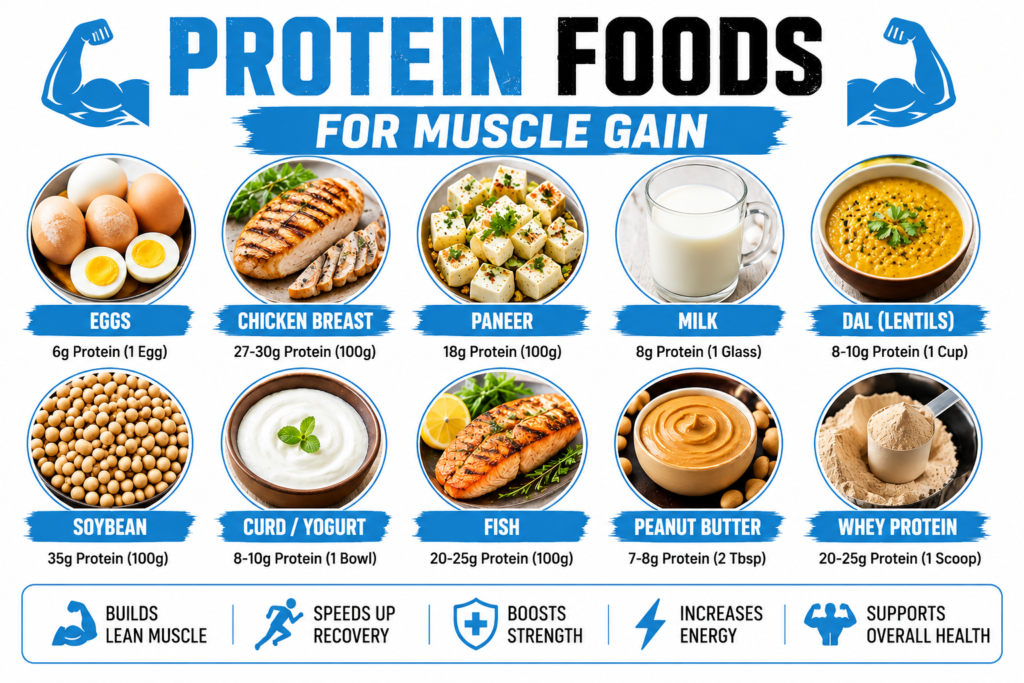

Protein Foods For Muscle Gain in India
Building muscle is not only about lifting heavy weights. Your body also needs the right nutrition, especially protein, to repair and grow muscles. Protein is called the “building block” of muscles because it helps recover muscle fibers after workouts and improves strength over time.
In India, many affordable and healthy protein-rich foods are easily available. Whether you are vegetarian or non-vegetarian, you can build muscle naturally with the right diet plan.
Why Protein Is Non-Negotiable for Muscle Building
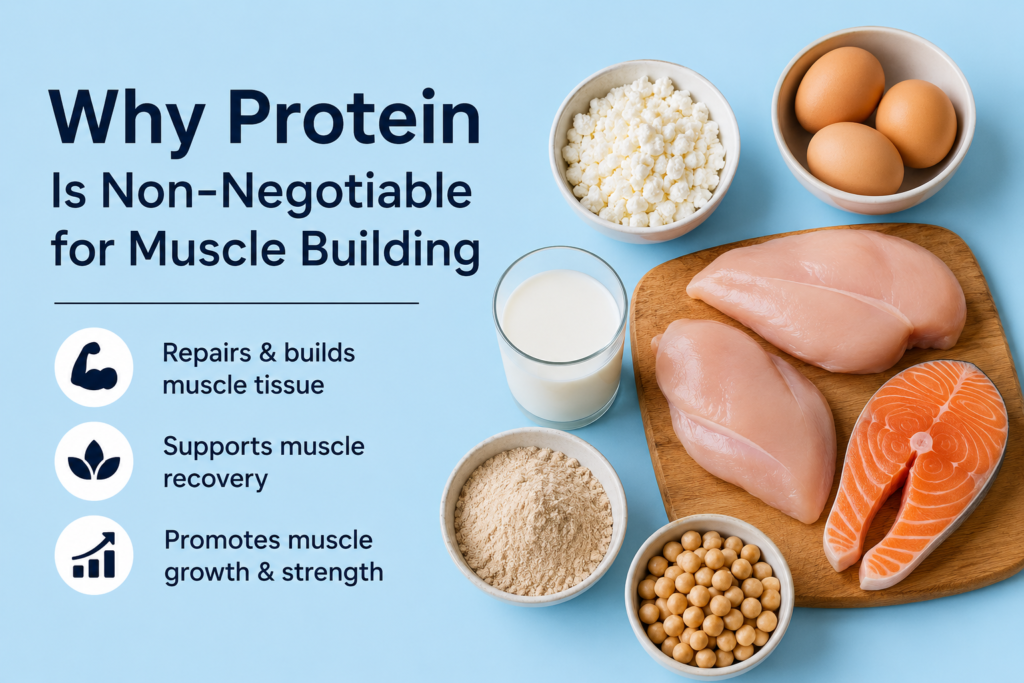
You lift, you sweat, you push harder every session — but if your plate isn’t right, your muscles won’t grow. That’s the hard truth about fitness in India. Whether you train in a gym in Delhi or do home workouts in Chennai, protein foods for muscle gain are the foundation of every effective fitness plan.
Protein does three essential jobs for your body: it repairs the tiny micro-tears in your muscle fibres after exercise, it synthesises new muscle tissue to make you stronger, and it keeps you fuller for longer — reducing the urge to snack on empty calories. Without enough protein, all the hours you spend working out simply go to waste.
Science Says: According to modern sports nutrition research, active adults and athletes require approximately 1.6–2.2 grams of protein per kilogram of body weight daily for optimal muscle growth and recovery. So a 70 kg person needs between 112g and 154g of protein per day.
The good news? India has one of the richest, most diverse food cultures in the world — and many traditional foods are surprisingly protein-dense. The challenge is knowing which ones to prioritise, how to combine them, and when to eat them. This guide covers all of it.
Fitness Tips at Home (India) – Complete Guide for Daily Fitness
How Much Protein Do You Actually Need?
Many Indians under-eat protein without realising it. A typical North Indian thali — rice, roti, sabzi, and a small bowl of dal — delivers roughly 30–40g of protein total. Spread across a whole day, that’s far below the muscle-building threshold for someone who trains.
Here’s a simple formula to remember:
Your Daily Protein Target Body weight (in kg) × 1.8g = Daily protein goal for muscle gain Example: 65 kg person → 65 × 1.8 = ~117g protein per day Spread this across 4–5 meals for best absorption.
The International Society of Sports Nutrition recommends spacing protein feedings approximately every 3 hours throughout the day. Each meal should ideally contain 20–40g of protein to maximally stimulate muscle protein synthesis (MPS). Dumping all your protein into one meal is far less effective than distributing it evenly.
Best Vegetarian Protein Foods for Muscle Gain
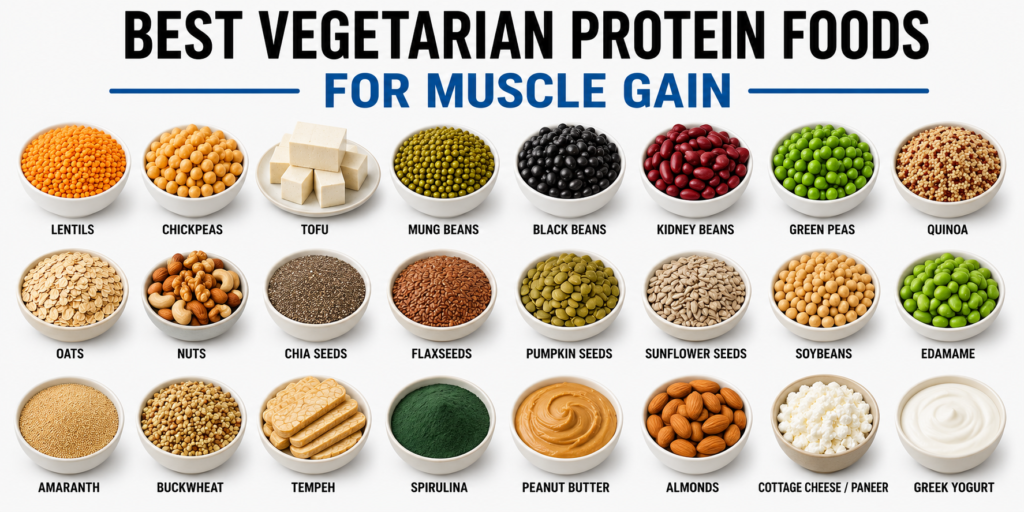
Nearly 30–35% of Indians follow a vegetarian diet. The myth that vegetarians can’t build muscle is completely outdated. Here are the top plant-based and dairy protein sources available across India:
1. Paneer — 18g protein per 100g Rich in casein protein — digests slowly, making it perfect for overnight muscle recovery. Affordable and available everywhere in India.
2. Soya Chunks — 52g protein per 100g (dry) One of India’s most underrated superfoods. Contains all essential amino acids — making it a complete plant protein, comparable to meat.
3. Moong Dal — 24g protein per 100g (dry) Easy to digest, light on the stomach, and packed with leucine — the amino acid most responsible for triggering muscle protein synthesis.
4. Rajma (Kidney Beans) — 24g protein per 100g (dry) A staple in Punjab and North India. High in both protein and complex carbs — a fantastic pre-workout meal base.
5. Chana (Chickpeas) — 19g protein per 100g (dry) Roasted chana is arguably India’s best gym snack. Portable, affordable, and surprisingly protein-rich per rupee spent.
6. Sattu — 20g protein per 100g The forgotten superfood of Bihar and UP. Mix with water and lemon for a quick, cheap post-workout drink. A true desi protein shake.
7. Greek Yogurt / Hung Curd — 10g protein per 100g Supports gut health and muscle recovery. Contains casein and whey proteins together — a natural dual-release protein source.
8. Sprouts (Moong/Chana) — 3–5g protein per 100g (sprouted) Sprouting increases bioavailability of protein. Great as a morning salad or pre-workout snack. Zero cooking required.
Fitness Tips at Home (India) – Complete Guide for Daily Fitness
Best Non-Vegetarian Protein Foods for Muscle Gain
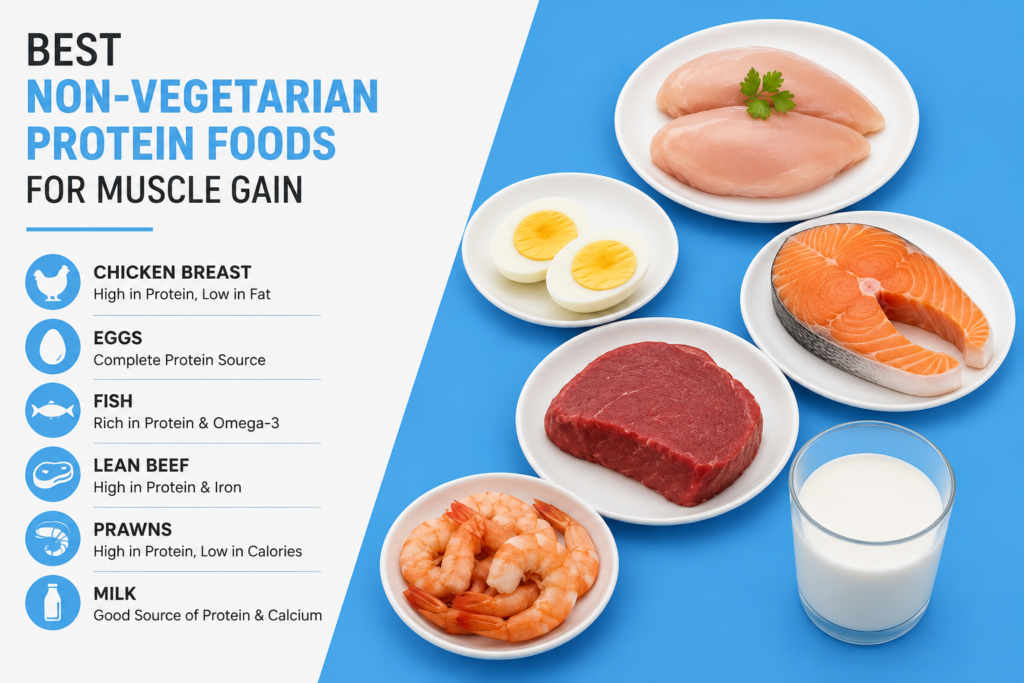
For non-vegetarians, complete animal proteins are easier to hit daily targets with, and they come with complete amino acid profiles right out of the box.
1. Chicken Breast — 27g protein per 100g (cooked) The gold standard of muscle-building food. Just 2–3g of fat per serving. Affordable, versatile, and available at every market across India.
2. Eggs — 6.2g protein per egg The most bioavailable protein source known to science (BV score: 100). 2 whole eggs + 3 egg whites = a powerful 22g breakfast. Eat the yolk — it contains the muscle-building fats and vitamins.
3. Rohu / Katla Fish — 20g protein per 100g Popular in Bengal and Odisha. Loaded with omega-3 fatty acids that reduce muscle inflammation and accelerate recovery after intense training.
4. Tuna (Canned) — 25g protein per 100g A convenient, no-cook high-protein option. Increasingly available in Indian supermarkets and online. Extremely low in fat, high in leucine.
5. Mutton (Lean Cuts) — 26g protein per 100g Higher in iron and zinc compared to chicken, which supports testosterone production and overall performance. Choose lean cuts over fatty parts.
6. Whey Protein — 24g protein per scoop (~30g) The fastest-digesting protein available. Post-workout window demands it. Made from milk — whey is essentially a concentrated, convenient form of what’s already in your curd.
Protein Content at a Glance — Quick Reference Table
| Food Item | Protein per 100g | Type | Best Time to Eat | Approx. Cost |
|---|---|---|---|---|
| Soya Chunks | 52g (dry) | Veg | Lunch / Dinner | Very Low |
| Chicken Breast | 27g | Non-Veg | Post-Workout | Low–Medium |
| Mutton (Lean) | 26g | Non-Veg | Lunch | Medium–High |
| Tuna (Canned) | 25g | Non-Veg | Anytime | Medium |
| Moong Dal | 24g (dry) | Veg | Breakfast / Lunch | Very Low |
| Rajma | 24g (dry) | Veg | Pre-Workout | Very Low |
| Sattu | 20g | Veg | Post-Workout | Very Low |
| Rohu Fish | 20g | Non-Veg | Lunch / Dinner | Low |
| Chana | 19g (dry) | Veg | Snack / Pre-Workout | Very Low |
| Paneer | 18g | Dairy/Veg | Dinner / Night | Low–Medium |
| Greek Yogurt | 10g | Dairy | Night / Snack | Low |
| Eggs (whole) | 13g per 2 eggs | Non-Veg | Breakfast / Post-Workout | Very Low |
Protein Timing — When You Eat Matters As Much As What You Eat
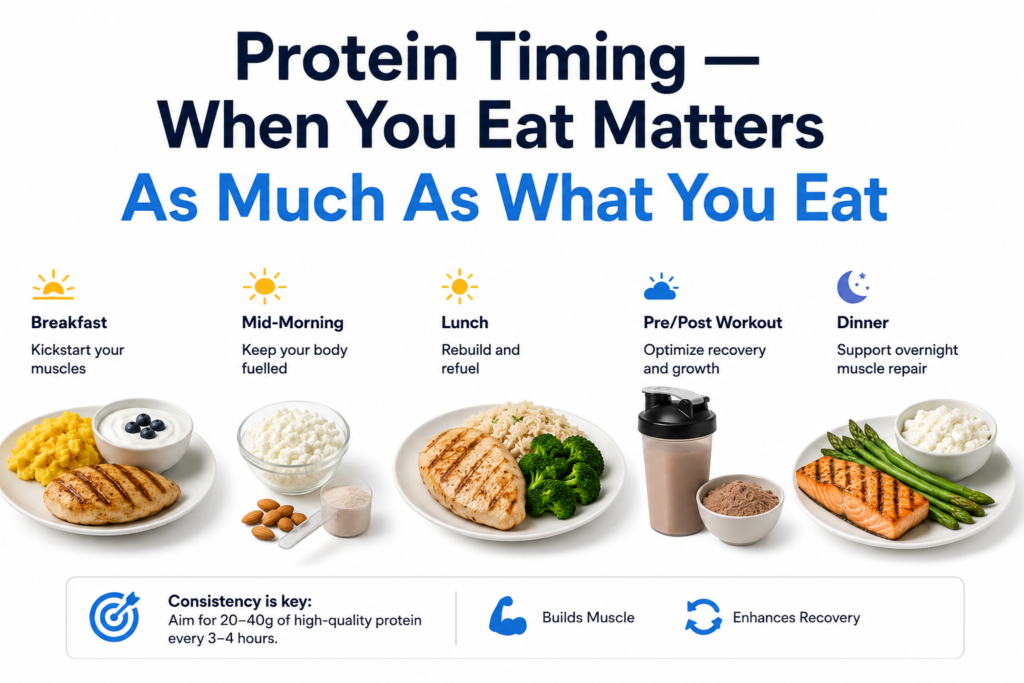
Here’s a truth most Indian fitness guides skip: eating the right foods at the wrong time reduces your gains. Protein timing is the difference between average and great results.
The Post-Workout Window: Research confirms that post-exercise protein intake augments muscle protein synthesis (MPS) and speeds up glycogen recovery. The anabolic response is significantly higher immediately after training due to increased muscle blood flow and greater sensitivity to amino acid uptake. Aim for 25–40g protein within 30–45 minutes of finishing your workout.
For those who train in the morning, a breakfast of 4 eggs + 1 cup moong dal chilla or a sattu shake delivers a powerful protein punch. Evening trainers can follow up with a chicken breast or a paneer bhurji dinner with a glass of milk before bed — the casein in both will continue feeding your muscles through the night.
Remember: consuming 3–4g of leucine per meal has been shown to maximally stimulate protein synthesis. Leucine is found in high concentrations in whey, eggs, chicken, and soya chunks — making them the priority foods in your muscle-gain diet.
5 Practical Protein Tips for Indian Gym-Goers
1. Combine plant proteins. Dal alone is not a complete protein. Pair dal with rice or roti — together they form a complete amino acid profile. This is why the traditional dal-chawal combo has nourished Indians for centuries.
2. Don’t fear paneer. Many calorie-conscious people avoid paneer because of fat content, but its slow-digesting casein makes it ideal for muscle recovery overnight. 100g of paneer has the same protein as two cups of cooked dal.
3. Roasted chana is your best friend. At under ₹50 for 250g, it’s one of the cheapest high-protein snacks available. Keep a small packet in your gym bag for post-workout hunger.
4. Try sattu before supplements. Sattu has been a staple performance food in Bihar and UP for generations — it’s essentially a natural protein powder. Mixed with water, lemon, and black salt, it’s a desi alternative that costs a fraction of imported whey.
5. Space your protein intake. Don’t eat 100g of protein in one meal and nothing the rest of the day. Research shows evenly-spaced protein feedings (roughly every 3 hours) result in significantly better muscle protein synthesis than uneven distribution.
Sample High-Protein Day for Indians
Vegetarian Day (~120g Protein)
- Breakfast (7am): 3 Moong Dal Chillas + 1 cup hung curd = ~35g protein
- Mid-Morning (10am): Handful of roasted chana + 1 glass sattu sharbat = ~20g protein
- Lunch (1pm): 1 cup rajma + 2 roti + small salad = ~22g protein
- Post-Workout (5pm): 200g soya chunk curry + 1 cup rice = ~25g protein
- Dinner (8pm): 150g paneer sabzi + 1 cup dal = ~28g protein
- Total: ~130g protein
Non-Vegetarian Day (~140g Protein)
- Breakfast (7am): 4 whole eggs scrambled + 1 glass milk = ~36g protein
- Mid-Morning (10am): 1 can tuna + cucumber slices = ~25g protein
- Lunch (1pm): 150g grilled chicken breast + dal + roti = ~38g protein
- Post-Workout (5pm): Whey protein shake (1 scoop) + banana = ~25g protein
- Dinner (8pm): 150g Rohu fish curry + 1 cup rice + dal = ~28g protein
- Total: ~152g protein
Vegetarian Diet and Home Workout Plan
Frequently Asked Questions
Q: Which is the best protein food for muscle gain in India?
For vegetarians, soya chunks are the #1 choice with 52g protein per 100g dry weight and all essential amino acids. For non-vegetarians, chicken breast at 27g per 100g is the classic go-to. For budget-conscious Indians, eggs offer the best protein-to-cost ratio available anywhere.
Q: Can vegetarians build muscle without supplements?
Absolutely yes. By strategically combining soya chunks, paneer, rajma, chana, moong dal, and curd, a vegetarian can comfortably hit 120–140g of protein per day through whole foods alone.
Q: How much protein do I need daily for muscle gain?
The research consensus is 1.6–2.2g per kg of body weight per day. A practical starting point is 1.8g/kg. A 70kg person should target approximately 126g of protein daily.
Q: Is dal a good source of protein for muscle building?
Dal is good but not complete on its own. Paired with rice or roti, the combination forms a complete amino acid profile — which is exactly why dal-chawal has sustained generations of Indians.
Q: What is the cheapest high-protein food in India?
Eggs at under ₹7 each, followed by soya chunks, moong dal, and sattu. All deliver excellent protein at a very low cost per gram.
Q: Should I eat protein before or after a workout?
Post-workout has stronger evidence. Aim for 25–40g of fast-digesting protein within 30–45 minutes after training for maximum muscle protein synthesis.
Q: Is paneer good for building muscle?
Yes — especially at night. Its casein protein digests slowly over several hours, keeping muscles in an anabolic state and reducing overnight muscle breakdown.
Final Thoughts — Build Your Plate, Build Your Body
Muscle gain doesn’t require expensive supplements or imported ingredients. India already has everything you need — from the sattu of Bihar to the soya chunks of Maharashtra, from rohu fish in Bengal to paneer in Punjab. The key is knowing your protein targets, choosing the right foods, and eating consistently.
Start simple: add one high-protein food to every meal. Track your intake for just two weeks. You’ll be surprised how transformative the right nutrition can be when it works alongside your training.
Remember — the strongest muscle you can build first is the habit of eating well. Everything else follows.


Pingback: Brown Bread Healthy For Weight Loss