

Home Workout Plan for Weight Loss Female
Losing weight at home is possible with the right combination of workouts, healthy eating, and consistency. A well-planned home workout routine can help women burn calories, reduce body fat, improve stamina, and maintain a healthy lifestyle without the need for expensive gym memberships or heavy equipment. With dedication and the right approach, home workouts can deliver amazing results for both physical and mental health.
One of the biggest advantages of home workouts is convenience. Women can exercise anytime according to their schedule, whether it is early morning, during a work break, or in the evening. Home workouts save travel time, are budget-friendly, and are perfect for beginners who may feel uncomfortable starting at a gym. Even simple bodyweight exercises done regularly can help improve strength, flexibility, posture, and overall fitness.
A proper weight loss plan should include cardio exercises, strength training, stretching, and healthy eating habits. Cardio exercises help burn calories and improve heart health, while strength exercises build lean muscle that increases metabolism naturally. Along with exercise, eating nutritious foods, staying hydrated, and getting enough sleep are also important for healthy and sustainable weight loss.
Which Dry Fruit is Best For Weight Loss? (Complete 2026 Guide for India)
What Is the Best Home Workout Plan for Weight Loss for Indian Women?
The best home workout plan for weight loss for Indian women is a fitness routine that is simple, effective, easy to follow, and suitable for daily Indian lifestyles. Many women struggle to find time for gym workouts because of busy schedules, work pressure, studies, or household responsibilities. That is why home workouts are one of the best and most convenient ways to lose weight naturally while staying healthy and active.
A proper home workout plan combines cardio exercises, strength training, stretching, and healthy eating habits. This combination helps burn calories, reduce body fat, improve metabolism, and tone the body. Home workouts also improve energy levels, mental health, flexibility, and confidence. The biggest advantage is that most exercises can be done without expensive equipment or a gym membership.
For Indian women, workouts that are simple, time-saving, and effective work best. Exercises like squats, lunges, jumping jacks, planks, mountain climbers, and Surya Namaskar are excellent for full-body fat loss. These exercises target multiple muscle groups and help improve overall fitness while supporting healthy weight loss.
Why Indian Women Struggle With Weight Loss at Home (And How to Fix It)
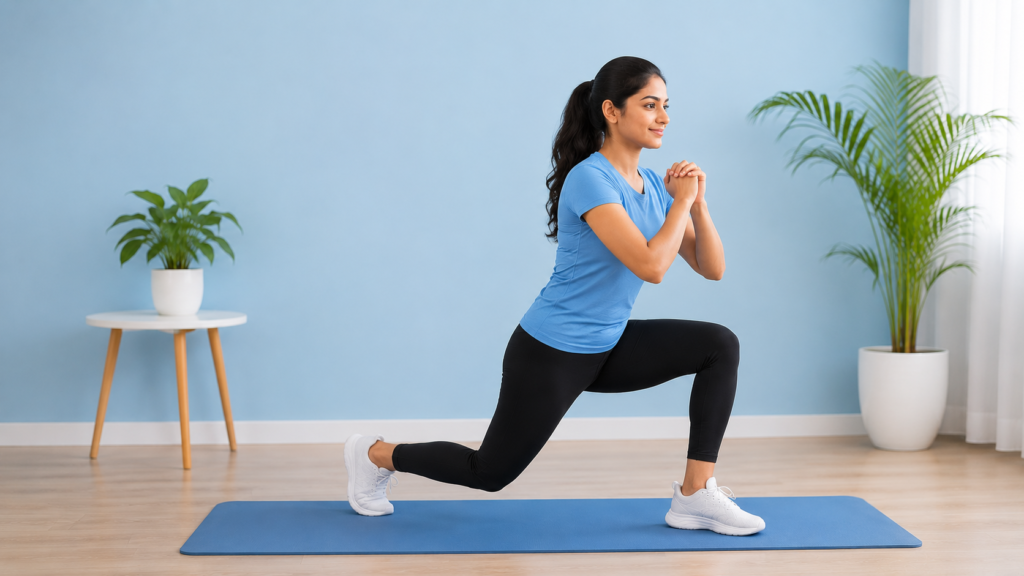
Losing weight at home sounds simple, but for many Indian women, it becomes one of the biggest health challenges. Most women start their fitness journey with excitement and motivation, but after a few days or weeks, they struggle to continue consistently. Busy schedules, unhealthy eating habits, stress, lack of guidance, and unrealistic expectations often make weight loss difficult. However, the good news is that with the right routine and healthy habits, sustainable weight loss is completely possible from home.
Indian women usually manage multiple responsibilities every day. From office work and studies to cooking, household chores, and family care, there is often very little time left for self-care. Fitness and exercise become the last priority, and because of this, physical activity slowly decreases. Sitting for long hours, lack of movement, and irregular routines can lead to weight gain, low energy, and slower metabolism over time.
Another common reason behind weight loss struggles is unhealthy food habits. Indian food is delicious, but many daily meals contain excess oil, sugar, refined flour, and fried items. Snacks like samosas, namkeen, biscuits, sweets, sugary tea, and soft drinks add extra calories without proper nutrition. Late-night eating and emotional cravings also make fat loss more difficult. Many women skip meals thinking it will help them lose weight faster, but this often slows metabolism and increases hunger later in the day.
How to Gain Muscle for Females at Home (Complete Indian Guide 2026)
How Many Days Per Week Should You Work Out for Weight Loss?
One of the most common fitness questions people ask is, “How many days per week should I work out for weight loss?” The answer depends on your fitness level, lifestyle, body type, workout intensity, and weight loss goals. However, for most beginners and intermediate fitness enthusiasts, exercising 4 to 6 days per week is considered ideal for healthy and sustainable weight loss.
Weight loss happens when your body burns more calories than it consumes. Regular exercise helps increase calorie burn, improve metabolism, reduce body fat, and build strength. But working out every single day without proper rest is not always beneficial. The body also needs recovery time to repair muscles, reduce fatigue, and maintain energy levels.
For beginners, starting with 3 to 4 workout days per week is a smart and manageable approach. This allows the body to adjust slowly to physical activity without causing excessive soreness or burnout. Simple workouts like walking, stretching, yoga, bodyweight exercises, or light cardio are enough to begin building healthy fitness habits.
| Day | Workout |
|---|---|
| Monday | Full Body Workout |
| Tuesday | Cardio + Abs |
| Wednesday | Lower Body Strength |
| Thursday | Yoga or Active Recovery |
| Friday | HIIT Fat Burn Workout |
| Saturday | Core + Upper Body |
| Sunday | Rest Day |
The 4-Week Home Workout Plan for Weight Loss (Indian Women)
Weight loss does not always require expensive gym memberships, heavy equipment, or complicated fitness programs. For many Indian women, home workouts are one of the most practical and effective ways to stay fit while managing daily responsibilities like work, studies, cooking, and family care. A proper 4-week home workout plan can help improve fitness, burn calories, reduce body fat, and build confidence naturally from the comfort of home.
This 4-week workout plan is specially designed for Indian women who want a beginner-friendly and realistic fitness routine. The goal is not only to lose weight but also to create healthy habits that can be followed long term. The plan combines cardio exercises, strength training, yoga, stretching, and active recovery to support overall physical and mental wellness.
Week 1–2: Foundation Phase (Build the Habit)
Goal: The Foundation Phase is the most important step in any fitness journey. This phase is all about creating a strong routine, building consistency, and developing healthy habits that you can follow long-term. Instead of focusing only on fast weight loss or intense workouts, the goal is to prepare your body and mind for a healthy lifestyle.
Many people quit fitness programs because they start with very difficult workouts or unrealistic goals. The Foundation Phase helps avoid burnout by starting slowly and making fitness easier to follow. It teaches discipline, improves body movement, and helps you stay motivated.
Day 1 — Full Body Strength (Bodyweight)
| Exercise | Sets x Reps | Rest |
|---|---|---|
| Squats | 3 x 12 | 45 sec |
| Modified Push-ups (knees) | 3 x 10 | 45 sec |
| Glute Bridges | 3 x 15 | 30 sec |
| Standing Side Kicks | 2 x 12 each | 30 sec |
| Plank Hold | 3 x 20 sec | 45 sec |
Day 2 — Low-Impact Cardio (Yoga + Walk)
Low-impact cardio is one of the best ways to lose weight, improve fitness, and stay active without putting too much pressure on your joints. A simple combination of Yoga and walking can help Indian women improve stamina, burn calories, reduce stress, and stay consistent with their fitness journey from home.
Start your workout with 20 minutes of Surya Namaskar (Sun Salutation) and complete around 5–8 rounds based on your fitness level. Surya Namaskar is a full-body yoga sequence that combines stretching, strength, balance, and breathing exercises in one flow. It activates almost every major muscle group including the legs, arms, shoulders, chest, core, and back. Regular practice helps improve flexibility, posture, blood circulation, and metabolism while also increasing energy levels naturally.
One of the biggest benefits of Surya Namaskar is that it improves both physical and mental health. The breathing pattern used during the poses helps calm the mind, reduce stress, and improve focus. It is especially helpful for people who spend long hours sitting or working from home because it removes body stiffness and improves mobility.
After completing your yoga session, go for a 20-minute brisk walk. Walking is a safe and beginner-friendly cardio exercise that helps burn calories, improve heart health, and support fat loss. Brisk walking after yoga keeps the body active, improves digestion, and boosts daily step count without causing excessive fatigue.
Day 3 — Rest or Light Stretching
Rest days are just as important as workout days. Your body needs time to recover, repair muscles, and regain energy. Without proper rest, you may feel tired, sore, or unmotivated. A light stretching day helps improve flexibility, reduce stiffness, and keep your body active without putting too much pressure on your muscles.
On your rest day, avoid intense workouts. Instead, focus on gentle movement and relaxation. This helps improve blood circulation, supports muscle recovery, and keeps your body fresh for the next workout session.
Day 4 — HIIT (High-Intensity Interval Training)
15–20 minutes of HIIT burns as many calories as 40–60 minutes of steady cardio. Research confirms HIIT can burn 400–600 calories in 30 minutes and continues burning calories for hours post-workout through the “afterburn effect” (EPOC).HIIT, or High-Intensity Interval Training, is one of the most effective workout methods for weight loss, fat burning, and improving fitness in a short amount of time. In HIIT workouts, you perform short bursts of intense exercise followed by brief rest periods. This style of training keeps your heart rate high, burns more calories, and improves stamina quickly.
HIIT is popular because it does not require expensive gym equipment and can easily be done at home. Even a 20–30 minute HIIT session can be more effective than long hours of traditional cardio. It is perfect for busy people who want fast and visible fitness results.
Beginner HIIT Circuit (Repeat 3–4 Rounds):
- High Knees — 30 seconds
- Rest — 60 seconds
- Jumping Jacks — 30 seconds
- Rest — 60 seconds
- Squat Jumps (or regular squats) — 30 seconds
- Rest — 60 seconds
Day 5 — Lower Body Focus
A lower body workout focuses on strengthening and toning the muscles of the legs, hips, thighs, glutes, and calves. Training the lower body is important for improving balance, posture, mobility, endurance, and overall body strength. Strong lower-body muscles also help in daily activities like walking, climbing stairs, running, and lifting objects more easily.
- Sumo Squats: 3 x 15
- Reverse Lunges: 3 x 10 each leg
- Donkey Kicks: 3 x 15 each
- Wall Sit: 3 x 30 seconds
- Calf Raises: 3 x 20
Day 6 — Yoga for Fat Burn + Core
The Foundation Phase is the most important step in any fitness journey. This phase is all about creating a strong routine, building consistency, and developing healthy habits that you can follow long-term. Instead of focusing only on fast weight loss or intense workouts, the goal is to prepare your body and mind for a healthy lifestyle.
Many people quit fitness programs because they start with very difficult workouts or unrealistic goals. The Foundation Phase helps avoid burnout by starting slowly and making fitness easier to follow. It teaches discipline, improves body movement, and helps you stay motivated.
Day 7 — Active Rest (Walk, Dance, Household chores)
Active rest is a simple and effective way to keep your body moving while allowing muscles to recover from intense workouts. Unlike complete rest, active rest includes light physical activities that improve blood circulation, reduce stiffness, and help the body stay active without putting too much stress on the muscles.
Week 3–4: Intensity Phase (Burn More Fat)
Increase reps by 2–3 per set. Shorten rest periods from 60 seconds to 45 seconds. Add 1 extra round to HIIT sessions.The Intensity Phase is the next step after building a strong fitness foundation. In this phase, workouts become more challenging to help burn more fat, improve stamina, increase strength, and boost overall fitness performance. The body is now ready for higher-intensity exercises because consistency, movement patterns, and basic endurance have already been developed during the foundation phase.
New addition for Week 3–4: Resistance Bands
Resistance bands are one of the best tools to add during Weeks 3–4 of a fitness program. After building a basic workout routine and improving body movement in the foundation phase, resistance bands help increase workout intensity safely and effectively. They add extra tension to exercises, helping build strength, improve muscle tone, and burn more calories without needing heavy gym equipment.
Top Protein Foods For Muscle Gain in India The Complete Guide
The Most Effective Exercises for Indian Women at Home
1. Squats
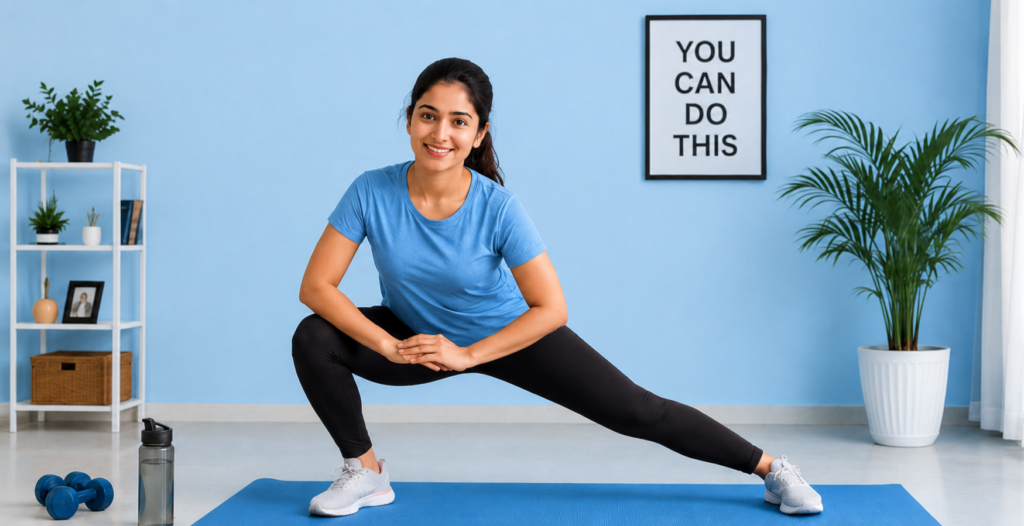
Squats are one of the best full-body exercises for building lower-body strength, improving balance, and increasing overall fitness. They mainly target the thighs, glutes, hips, hamstrings, and core muscles. Squats are simple, effective, and can be done anywhere without any equipment, making them perfect for home workouts and beginners.
Regular squats help improve posture, mobility, stamina, and muscle tone. They are also highly effective for burning calories and supporting weight loss because they work large muscle groups at the same time.
2. Surya Namaskar (Sun Salutation)
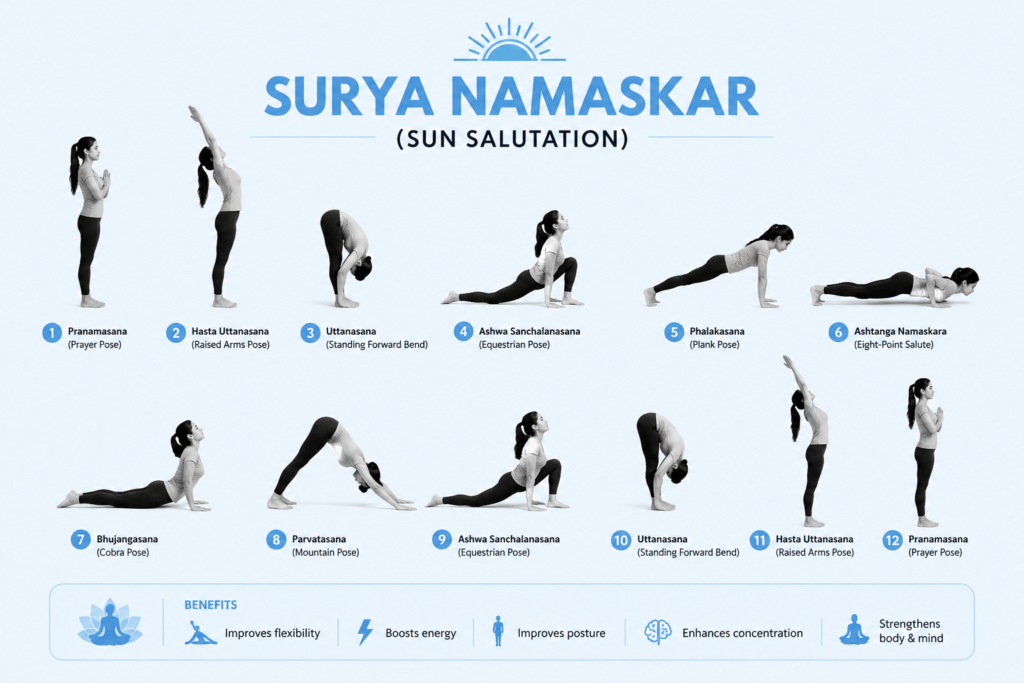
Surya Namaskar, also known as Sun Salutation, is a traditional yoga sequence that combines stretching, strength, breathing, and movement into one complete workout. It is one of the most effective yoga practices for improving overall fitness, increasing flexibility, boosting energy, and supporting weight loss naturally.
This yoga flow includes a series of 12 poses performed in a smooth sequence. Regular practice of Surya Namaskar helps strengthen the entire body while calming the mind. It is suitable for beginners as well as experienced fitness enthusiasts and can easily be practiced at home without any equipment.
3. HIIT Burpees
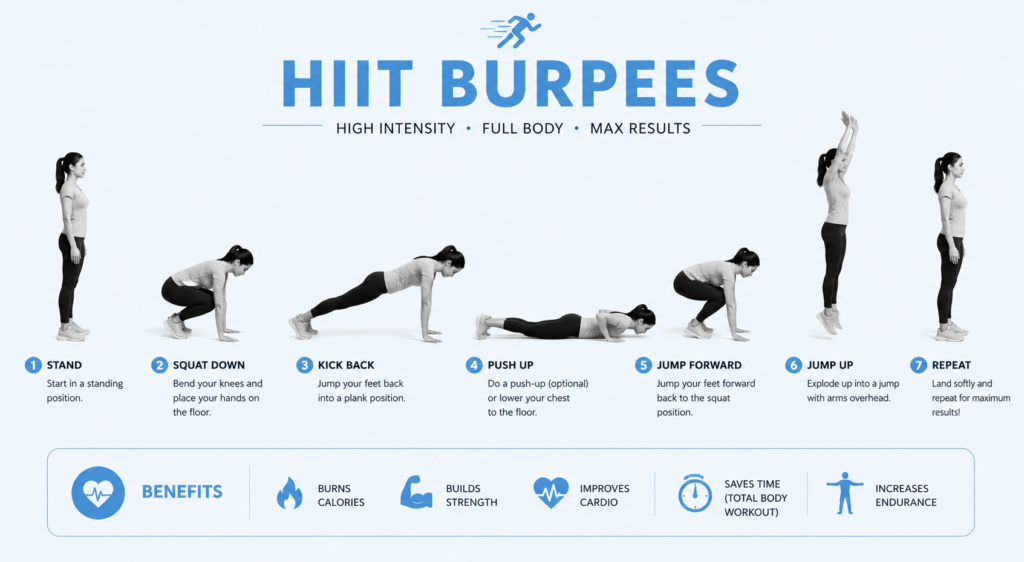
Burpees are one of the most powerful exercises used in HIIT (High-Intensity Interval Training). They combine strength training and cardio in a single movement, making them highly effective for fat burning, improving stamina, and building full-body strength. Burpees increase heart rate quickly, helping burn more calories in a short amount of time.
This exercise works multiple muscle groups at once, including the chest, shoulders, arms, core, glutes, and legs. Because of their intensity, burpees are commonly included in weight-loss workouts, athletic training, and home fitness routines.
4. Glute Bridges
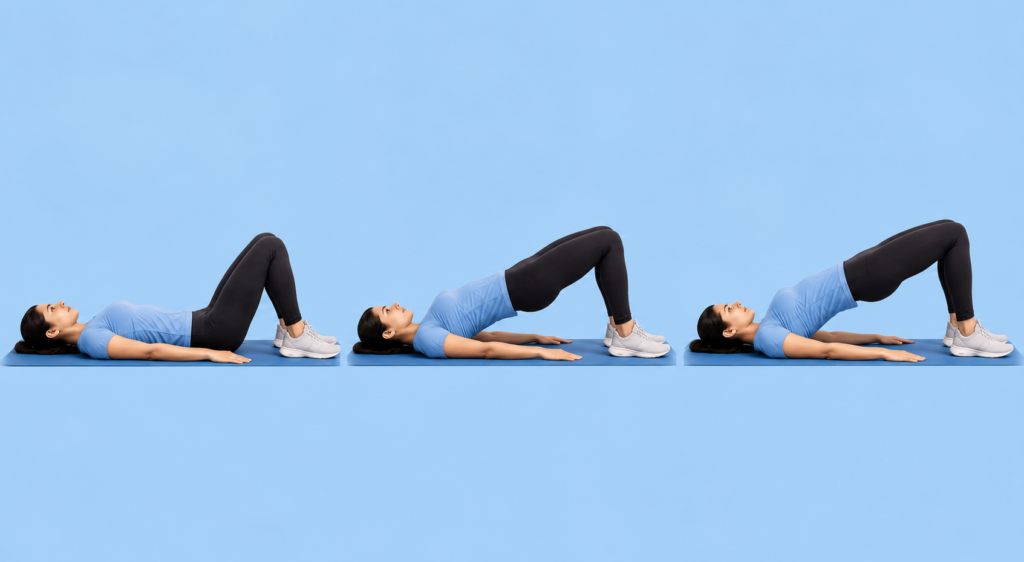
Glute Bridges are one of the best exercises for strengthening the glutes, lower back, hips, and core muscles. This simple yet highly effective movement helps improve posture, lower-body strength, balance, and stability. Glute bridges are beginner-friendly, require no equipment, and can easily be done at home.
This exercise is especially useful for people who sit for long hours because it helps activate weak glute muscles and reduces tightness in the hips and lower back. Glute bridges are also commonly included in weight-loss workouts, lower-body training, rehabilitation exercises, and core-strength routines.
5. Planks
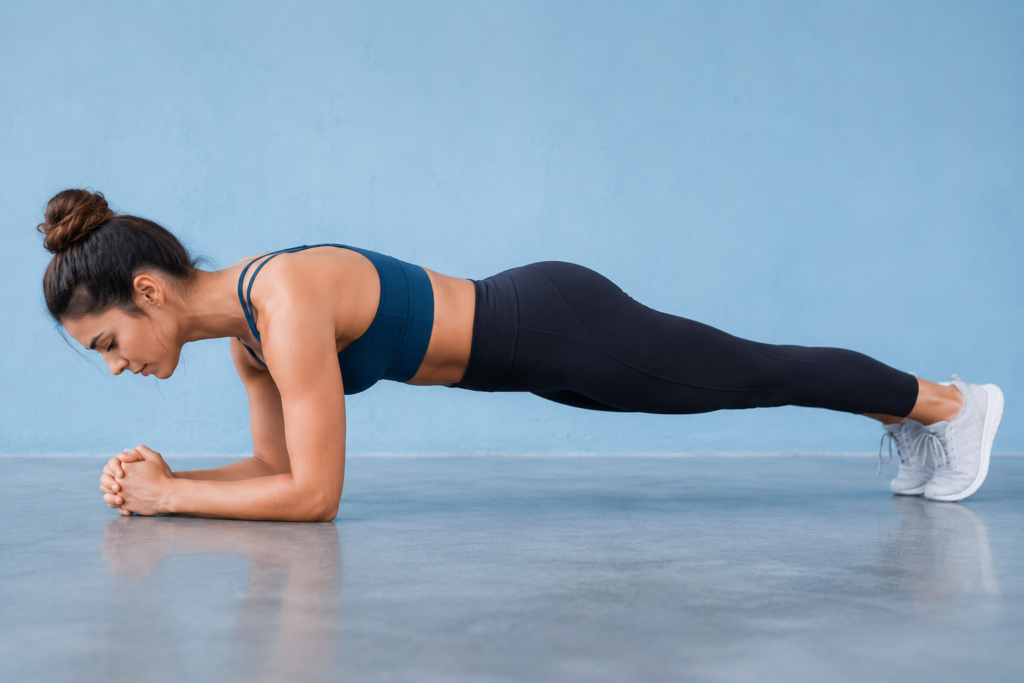
Planks are one of the best exercises for building core strength, improving posture, and increasing overall body stability. This simple bodyweight exercise targets multiple muscle groups at the same time, including the abdominal muscles, shoulders, back, chest, hips, and legs.
Unlike many exercises that involve movement, planks are an isometric exercise, meaning you hold a position while keeping the muscles engaged. Even though planks look simple, they are highly effective for improving endurance, balance, and full-body strength.
Planks are suitable for beginners and advanced fitness enthusiasts because they can be modified according to fitness level and require no equipment.
Yoga for Weight Loss: What Actually Works

Yoga is one of the most effective and sustainable ways to support weight loss naturally. While many people think yoga is only for relaxation and flexibility, certain styles of yoga can also help burn calories, improve metabolism, strengthen muscles, and reduce stress-related weight gain. The key is understanding which yoga practices actually work for weight loss and how to combine them with healthy lifestyle habits.
Yoga focuses on both physical movement and mental balance. Unlike extreme workout programs, yoga creates a long-term fitness routine that improves overall health while supporting gradual and healthy fat loss.
- Vinyasa Yoga (Flow Yoga): Continuous movement linked with breath. Burns significant calories while building strength.
- Power Yoga: Athletic, vigorous, and based on Ashtanga. One of the best fat-burning yoga styles.
- Kapalbhati Pranayama: A breathing technique that boosts metabolism and aids digestion. Practice 5–10 minutes daily in the morning.
- Anulom Vilom: Reduces stress and improves sleep. Since stress is a major driver of weight gain (especially belly fat) for Indian women, this pranayama is non-negotiable.
Aim for 3–5 yoga sessions per week, 30–45 minutes each. Even 15 minutes daily done consistently beats sporadic 1-hour sessions.
What to Eat: Indian Diet Tips to Match Your Workout


Your workout results depend not only on exercise but also on what you eat every day. A healthy Indian diet can provide all the nutrients needed for weight loss, muscle recovery, energy, and overall fitness. The key is choosing balanced meals that support your workout routine instead of eating processed or unhealthy foods.
Many traditional Indian foods are naturally rich in protein, fiber, healthy carbohydrates, vitamins, and minerals. When combined properly, they can help improve stamina, burn fat, build muscle, and maintain long-term health.
Before a workout (30–45 min prior):
- A banana with a small handful of peanuts
- A small bowl of poha
- 1 glass of chaas (buttermilk)
After a workout (within 30–60 minutes):
- Paneer bhurji with a multigrain roti
- Dal with brown rice
- Eggs (2 boiled) with a bowl of curd
Key nutrition principles for Indian women:
Protein is your best friend. Research published in Clinical Nutrition ESPEN (2024) covering over 3,200 participants found that women on weight loss programmes who consumed above 1.3g of protein per kg of body weight daily preserved their muscle mass significantly better. For a 60 kg woman, that’s roughly 78–90g of protein per day.
Good Indian protein sources: eggs, paneer, curd (dahi), dal, moong, rajma, chicken, and soya chunks.
Cooking swaps that matter:
- Replace maida roti with multigrain or jowar atta roti
- Switch white rice to brown rice or millet (bajra, ragi)
- Cook with mustard oil or ghee in controlled portions — avoid refined vegetable oils
- Replace evening snacks with roasted chana, makhana, or cucumber
How Fast Can Indian Women Lose Weight at Home?
Realistic expectations matter. Most women following a consistent home workout plan with a mild caloric deficit can lose 0.5–1 kg per week sustainably. Crash diets or extreme restriction lead to muscle loss, hair fall, and hormonal disruption — problems uniquely common among Indian women who undereat while exercising.
Aim for a 300–500 calorie daily deficit through a combination of diet and exercise. Do not go below 1,200 calories daily.
Common Mistakes Indian Women Make (And How to Avoid Them)

Mistake 1: Only doing cardio Cardio burns calories during the session. Strength training builds muscle, which burns calories even while you sleep. Combine both.
Mistake 2: Skipping rest days Rest is when your muscles rebuild and fat loss consolidates. HIIT should not exceed 2–3 sessions per week — it elevates cortisol, which promotes fat storage if overdone.
Mistake 3: Ignoring sleep Research shows that 7 hours of quality sleep can boost weight loss success by 33%. Poor sleep increases ghrelin (hunger hormone) and reduces leptin (fullness hormone).
Mistake 4: Comparing to Western body standards Indian women naturally have higher body fat percentages compared to Western counterparts at the same BMI, and are approximately 10% more susceptible to visceral fat accumulation. Tailor your expectations to your body type and celebrate non-scale victories — better energy, clearer skin, stronger posture.
Fitness Tips at Home (India) – Complete Guide for Daily Fitness
Your Action Plan Starts Today


Starting a fitness journey may feel difficult in the beginning, but the most important step is simply getting started. You do not need perfect conditions, expensive equipment, or extreme workouts to improve your health. Small daily actions done consistently can create powerful long-term results.
Your action plan begins today — not next Monday, not next month, and not after everything becomes “perfect.” Every healthy choice you make helps move you closer to a stronger, healthier, and more confident version of yourself.
The best workout plan for weight loss is the one you actually do.


Many people spend too much time searching for the “perfect” workout plan for weight loss. They compare different fitness programs, follow difficult routines from social media, or try extreme challenges expecting fast results. But the truth is simple: the best workout plan is the one you can follow consistently.
A workout routine only works when it becomes part of your lifestyle. Even the most effective exercise program will not give results if it feels too difficult, stressful, or impossible to maintain. Consistency always matters more than perfection.



Pingback: Which Dry Fruit is Best For Weight Loss?
Pingback: Home Workout for Women: Complete Indian Fitness Guide (2026)
Pingback: Best Daily Fitness Tips for Beginners at Home 2026-guide